
Who Should Participate in Community Night Watch Activities?
Gusti Ayu Tita P
18 September 2026
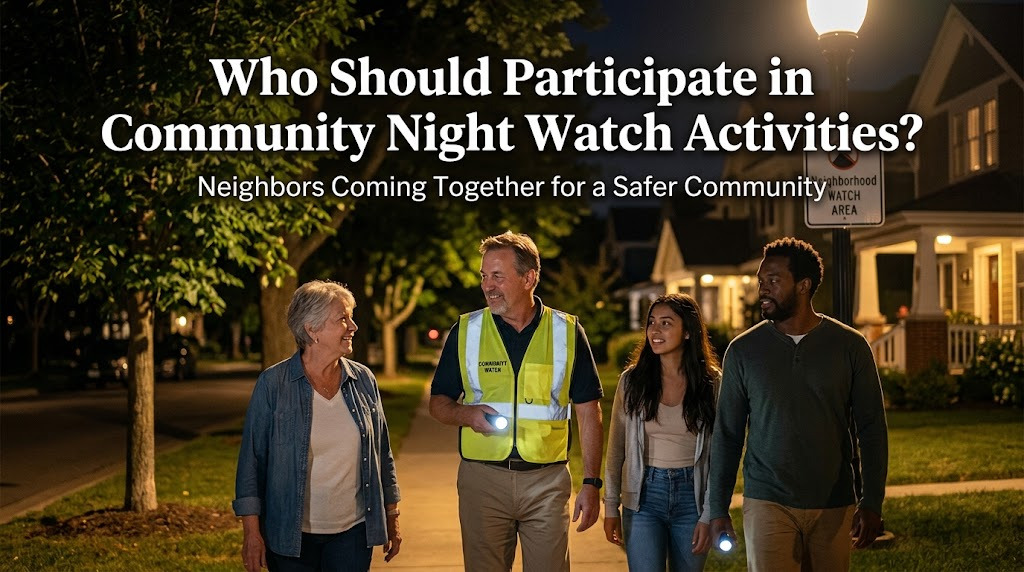
Community Night Watch is a shared neighborhood activity that can involve residents who are willing and able to contribute. Participation does not necessarily need to be limited to a specific group of people. Communities can organize duties according to residents' availability, abilities, and local conditions. A clear participation system can help make Neighborhood Watch activities fair and sustainable.
ADULT RESIDENTS IN THE COMMUNITY
Adult residents are generally suitable participants for Community Night Watch activities because they can take responsibility for assigned shifts. They can work in small groups and follow agreed procedures during their duty. Participation can be arranged according to work schedules, family responsibilities, and other commitments. This helps prevent the same individuals from carrying most of the responsibility.
Residents should understand that participation is based on community cooperation. They should be given clear information about the purpose and basic responsibilities of the activity. Volunteers are expected to observe their surroundings and communicate relevant information rather than confront potentially dangerous situations. This approach helps maintain a responsible community safety program.
COMMUNITY LEADERS AND COORDINATORS
Community leaders can participate by organizing and coordinating the night watch schedule. Their role may include collecting participant information, arranging shifts, and communicating important updates. They can also listen to residents' concerns and adjust the program when necessary. Good coordination can make participation easier for everyone.
Leaders can help ensure that responsibilities are distributed fairly. They can also establish communication procedures for situations that require further assistance. When an incident appears serious or dangerous, community leaders should encourage residents to contact the appropriate authorities rather than handle it themselves. Effective coordination can strengthen community cooperation.
RESIDENTS WITH DIFFERENT AVAILABILITY
People have different daily schedules, so participation can be organized flexibly. Residents who work during the day may prefer certain evening hours, while others may have different availability. A rotating night watch system can accommodate these differences. Flexible scheduling can make more residents willing to contribute.
Communities should also consider individual circumstances when assigning shifts. No participant should be pressured into duties that create unreasonable difficulties or safety concerns. A fair schedule can help maintain participation over a longer period. This makes Neighborhood Watch more practical and inclusive.
VOLUNTEERS WHO UNDERSTAND THEIR RESPONSIBILITIES
Anyone participating in Community Night Watch should understand the basic responsibilities before joining a shift. Volunteers should know the schedule, meeting location, communication method, and appropriate response to safety concerns. Clear guidance can reduce confusion and help participants act responsibly. It also ensures that everyone has a similar understanding of the program.
Volunteers should prioritize personal safety during every shift. They should not confront suspicious individuals or attempt to manage dangerous situations independently. Instead, they can observe from a safe distance, communicate relevant information, and contact appropriate authorities when necessary. Responsible participation is more important than simply having a large number of volunteers.
CONCLUSION
Community Night Watch can involve adult residents, community leaders, coordinators, and other willing participants who can contribute safely. The most important consideration is not a person's position but their ability to follow responsibilities and participate appropriately. A flexible night watch schedule can accommodate different routines and encourage wider participation. Fair organization can also prevent the responsibility from falling on only a few residents.
Every participant should understand that community watch focuses on observation, communication, and cooperation. Serious or dangerous situations should be reported to the appropriate authorities rather than handled through confrontation. With clear responsibilities and strong community cooperation, residents can contribute to a more aware and organized neighborhood. This shared participation can help support a safer and more connected community.
About the Author
Gusti Ayu Tita P
Author — STEKOM University
An active author focused on academic issues, educational technology, and human resource development in the campus environment.















