Why a Culture of Integrity Is the Key to Combating Corruption
Gusti Ayu Tita P
21 Oktober 2026
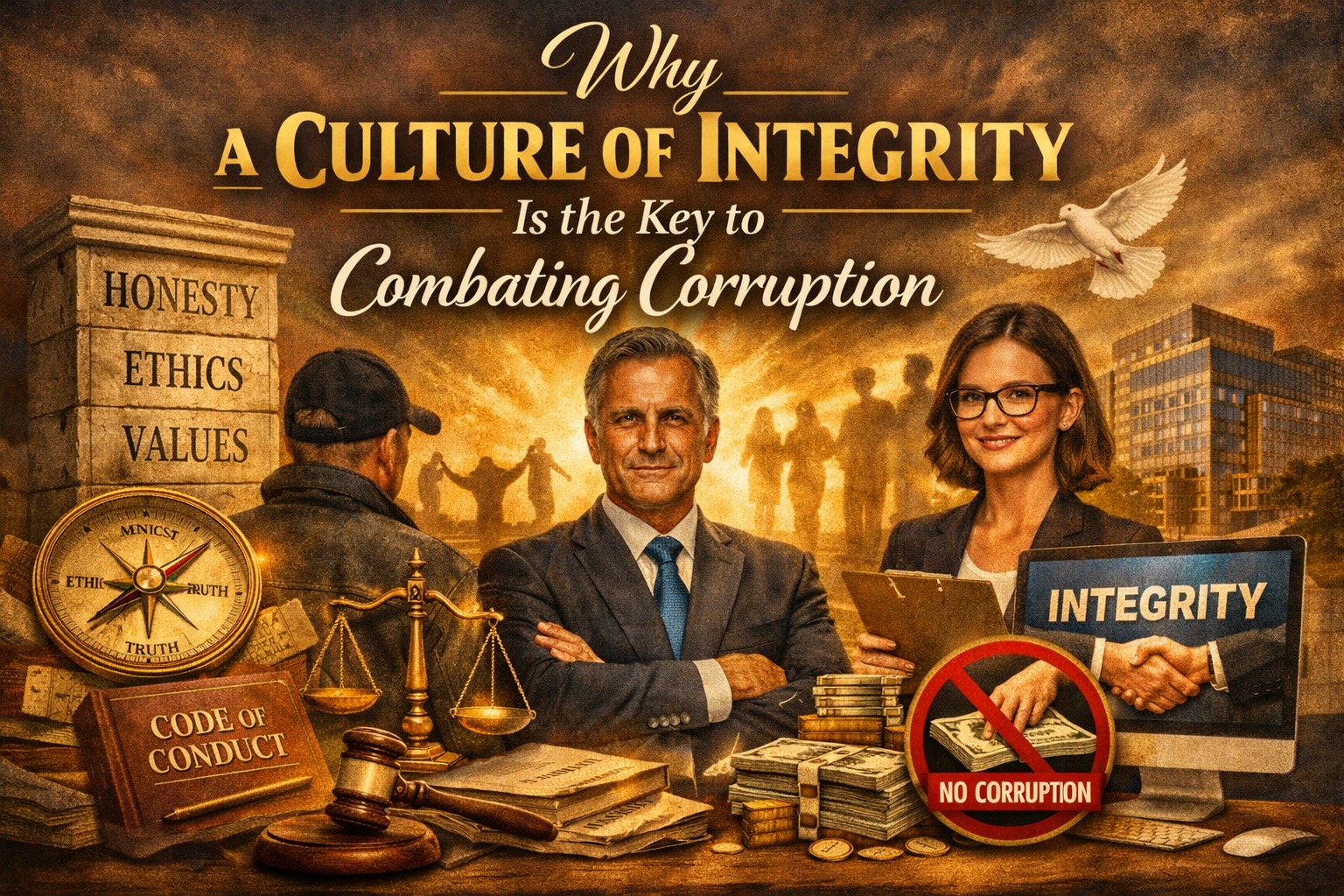
Corruption remains one of the greatest challenges faced by governments, businesses, and societies around the world. It weakens public trust, slows economic growth, increases inequality, and reduces the quality of public services. Although strict laws and regulations are important, they cannot eliminate corruption without the support of ethical values within individuals and organizations.
A strong culture of integrity encourages people to make honest decisions even when no one is watching. It creates an environment where transparency, accountability, and ethical behavior become everyday habits instead of occasional actions. Building this culture is one of the most effective long-term strategies for preventing corruption and creating a fair society.
WHAT IS A CULTURE OF INTEGRITY?
A culture of integrity refers to a shared commitment to honesty, responsibility, fairness, and ethical decision-making. It influences how people behave in schools, workplaces, government institutions, and communities. Instead of focusing only on avoiding punishment, integrity encourages individuals to do what is right because it is morally correct.
Organizations with a strong ethical culture establish clear values that guide employees in handling challenges and making difficult decisions. Leaders set positive examples by acting honestly, keeping promises, and following the same rules as everyone else. When integrity becomes part of daily routines, unethical behavior becomes less acceptable and easier to identify.
HOW INTEGRITY HELPS PREVENT CORRUPTION
A strong culture of integrity reduces opportunities for corruption by promoting openness and personal responsibility. Employees who understand the importance of ethical conduct are less likely to engage in bribery, fraud, embezzlement, or abuse of power. They also become more willing to report suspicious activities through proper channels.
Integrity also strengthens organizational accountability because every individual understands their role in protecting public resources and organizational assets. Instead of hiding mistakes, people are encouraged to admit errors, learn from them, and improve future performance. This creates a healthier work environment built on trust rather than fear.
THE ROLE OF LEADERSHIP IN BUILDING INTEGRITY
Leaders play a crucial role in creating a workplace where integrity is respected and rewarded. Employees often follow the behavior demonstrated by managers and executives. When leaders consistently show honesty, fairness, and transparency, they inspire others to maintain the same standards.
Strong leadership also involves enforcing ethical policies consistently without favoritism. Every employee should be treated equally regardless of position or influence. Fair enforcement of rules builds confidence that integrity is valued throughout the entire organization.
THE IMPORTANCE OF TRANSPARENCY AND ACCOUNTABILITY
Transparency allows information, decisions, and financial activities to be reviewed openly. Clear reporting systems reduce hidden transactions and make it more difficult for corruption to occur unnoticed. Public access to important information also increases confidence in institutions.
Meanwhile, accountability ensures that individuals accept responsibility for their actions and decisions. Performance evaluations, internal audits, and independent oversight help detect irregularities before they become larger problems. Together, transparency and accountability create a powerful defense against unethical practices.
HOW EDUCATION PROMOTES ETHICAL VALUES
Education is one of the strongest tools for building a culture of integrity from an early age. Schools and universities can teach students about honesty, fairness, responsibility, and respect for the law. Learning through real-life examples helps young people understand the long-term consequences of corruption.
Ethics education should continue in professional environments through regular training and awareness programs. Employees who understand anti-corruption principles are more prepared to recognize conflicts of interest and unethical situations. Continuous learning reinforces positive habits throughout a person's career.
THE ROLE OF EMPLOYEES AND CITIZENS
Combating corruption is not only the responsibility of governments or organizational leaders. Every employee and citizen has a role in promoting ethical behavior and rejecting dishonest practices. Reporting corruption, refusing bribes, and following established procedures contribute to a stronger integrity culture.
Communities can also encourage integrity by supporting transparent institutions and participating in public oversight. Citizens who actively monitor public services and government spending help reduce opportunities for misuse of authority. Collective participation strengthens long-term anti-corruption efforts.
BENEFITS OF A STRONG CULTURE OF INTEGRITY
Organizations that prioritize integrity enjoy stronger reputations, improved employee morale, and greater public trust. Customers, investors, and business partners are more likely to work with organizations known for ethical conduct. This reputation can also improve long-term competitiveness and sustainability.
On a national level, reducing corruption encourages economic development, attracts foreign investment, and improves the quality of public services. Honest governance creates better opportunities for education, healthcare, and infrastructure development. Ultimately, integrity supports both social stability and sustainable growth.
CONCLUSION
A strong culture of integrity is far more than a set of written rules—it is a shared commitment to doing what is right in every situation. While laws, regulations, and enforcement remain essential, lasting success in combating corruption depends on ethical values practiced consistently by leaders, employees, and citizens alike.
By promoting transparency, accountability, ethical leadership, and continuous education, organizations and communities can significantly reduce corruption risks. Investing in integrity today creates stronger institutions, healthier workplaces, and a more trustworthy society for future generations.
About the Author
Gusti Ayu Tita P
Author — STEKOM University
An active author focused on academic issues, educational technology, and human resource development in the campus environment.