
Why Are Fingerprints Widely Used in Security Systems?
Gusti Ayu Tita P
14 September 2026
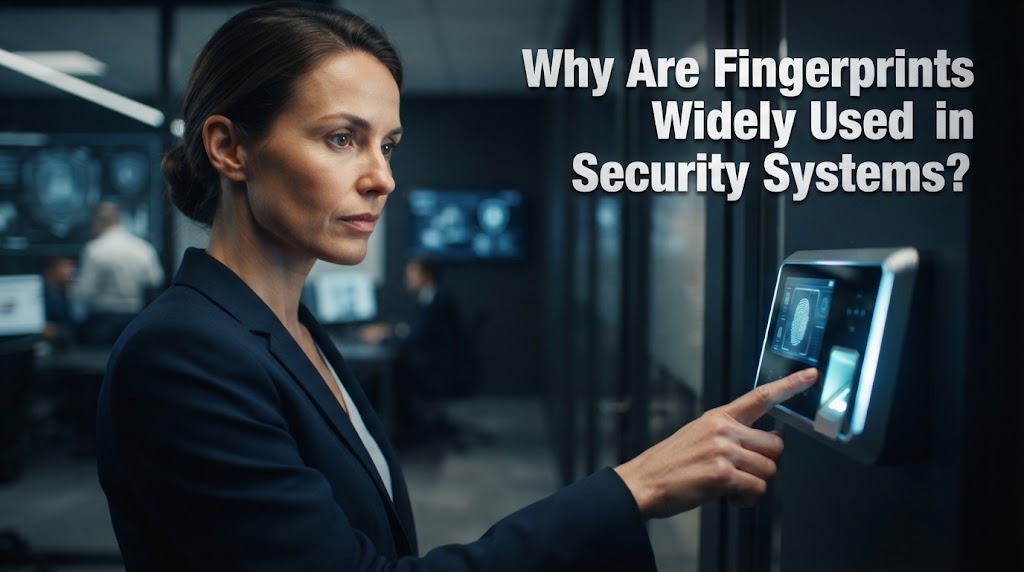
Fingerprints are widely used in security systems because they have unique patterns that can help distinguish one person from another. Unlike passwords or identification cards, fingerprints are a physical characteristic that users always carry with them. Modern scanners can capture fingerprint patterns quickly and compare them with registered biometric data. This technology is used in smartphones, offices, attendance machines, and access control systems. Its combination of convenience, speed, and biometric uniqueness makes it useful for many security applications.
THE ROLE OF FINGERPRINTS IN SECURITY
Fingerprint technology provides a way to verify whether a person is authorized to access a device, system, or location. A registered fingerprint can be stored as biometric data and compared whenever authentication is required. If the new scan matches the registered data within the system's acceptance criteria, access can be granted. If it does not match, the system can deny the request. This process helps reduce unauthorized access.
Fingerprint authentication can also reduce dependence on traditional passwords. A password can be forgotten, shared, or stolen, while a fingerprint is physically connected to the user. However, fingerprints should not be treated as completely risk-free. Biometric security works best when combined with secure software, appropriate access controls, and proper data protection.
CONVENIENCE AND FAST AUTHENTICATION
One important reason fingerprints are popular is their ease of use. Users only need to place a registered finger on the sensor or use a supported fingerprint reader. The system can process the fingerprint and provide an authentication result within a short time. This makes fingerprint technology suitable for situations where many people need to be verified quickly. Employee attendance systems are one example of this application.
Fingerprint authentication also eliminates the need to remember complicated passwords for certain systems. It can make daily activities more efficient because users do not have to carry additional cards or tokens. However, organizations should still provide alternative authentication methods for situations where the scanner cannot read a fingerprint. This ensures that users can access important systems when biometric verification fails.
APPLICATIONS IN MODERN SECURITY SYSTEMS
Fingerprint technology is used in many types of security systems. Smartphones can use fingerprints to unlock screens and authorize specific functions. Offices may use fingerprint readers to control access to restricted rooms or record employee attendance. Some computer systems can also use fingerprint authentication as an additional method of verifying users. These applications show how biometric technology has become part of everyday security.
Fingerprint systems can be adapted to different security requirements. A simple system may be used for attendance, while a more advanced system can support access control and identity verification. The technology can also work alongside passwords, security cards, or other authentication methods. Using multiple security measures can provide stronger overall protection than relying on a single method.
RELIABILITY AND FINGERPRINT UNIQUENESS
Fingerprints are useful because their ridge patterns contain many individual characteristics. Features such as ridge endings, bifurcations, loops, arches, and whorls contribute to the overall fingerprint structure. Modern recognition systems analyze multiple features rather than depending only on the general shape. This allows the system to make more detailed comparisons.
However, fingerprint recognition is not perfect. Wet or dirty fingers, damaged skin, incorrect placement, and poor sensor conditions can cause failed scans. The accuracy of a system also depends on its hardware, software, registration process, and security settings. Proper maintenance and good-quality fingerprint registration can help improve system performance.
BIOMETRIC DATA PROTECTION
Although fingerprints provide useful security features, they also involve sensitive biometric information. A fingerprint cannot be replaced as easily as a password if its biometric data is exposed. Organizations therefore need to protect fingerprint information using appropriate security practices. Access to biometric databases should be restricted to authorized systems and personnel.
Good security management should include secure storage, controlled access, and appropriate handling of biometric templates. Organizations should also explain how fingerprint data is collected and used when required by applicable rules. Responsible data management helps maintain user trust. Privacy protection is therefore an important part of implementing fingerprint security.
CONCLUSION
Fingerprints are widely used in security systems because they provide a convenient and distinctive method of biometric authentication. They can support fast identification, access control, device security, and employee attendance. Fingerprint systems are not completely free from errors or security risks, so proper technology and data protection are necessary. Combining fingerprint authentication with other security measures can provide stronger protection. When implemented responsibly, fingerprint technology can improve both security and convenience in modern environments.
About the Author
Gusti Ayu Tita P
Author — STEKOM University
An active author focused on academic issues, educational technology, and human resource development in the campus environment.















