Why Are Historic Tombs an Important Part of Cultural Heritage?
Gusti Ayu Tita P
4 September 2026
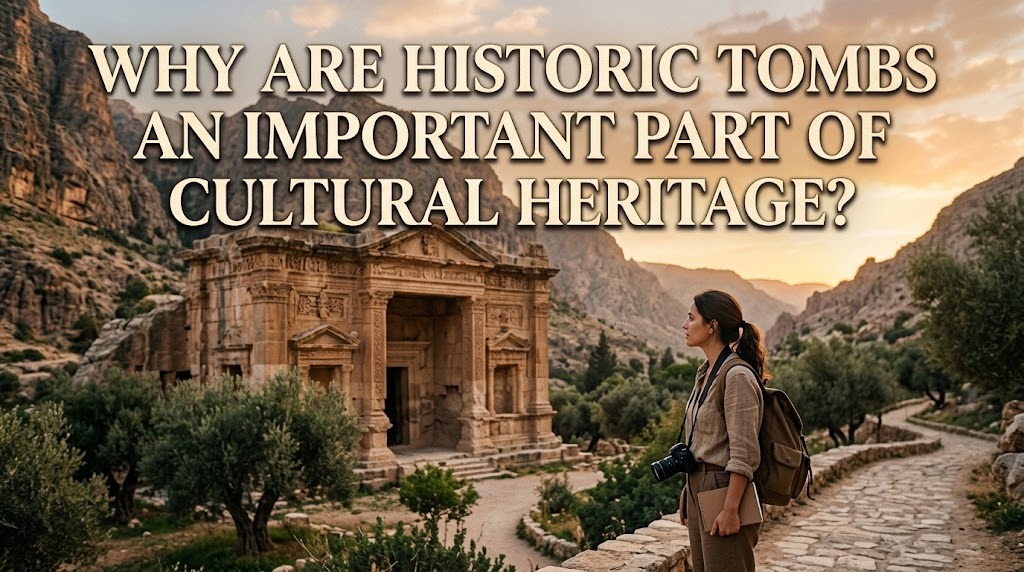
Historic tombs are an important part of cultural heritage because they preserve evidence about people, traditions, beliefs, architecture, and communities from earlier periods. These places can tell stories that may not be fully recorded in written documents. Their value is not limited to the individuals buried there, but also extends to the society and culture connected to them. Protecting historic tombs helps ensure that these stories remain available for future generations.
HISTORIC TOMBS AS CULTURAL HERITAGE
Historic tombs are considered valuable cultural heritage when they have important historical, archaeological, artistic, social, or cultural meaning. A tomb may be significant because of its age, architectural design, connection to an important person, or relationship with a particular community. In many societies, burial places also reflect traditions about death, remembrance, and respect for ancestors.
The physical features of a tomb can provide important information about the past. Inscriptions, carvings, decorations, building materials, and burial arrangements can reveal aspects of the culture that created them. For this reason, historic tombs can be studied alongside other heritage resources such as monuments, religious buildings, manuscripts, and archaeological sites.
EVIDENCE OF PAST SOCIETIES
Historic tombs can serve as historical evidence for understanding earlier communities. Researchers may study inscriptions, names, dates, symbols, and architectural characteristics to identify historical connections. These findings can then be compared with written records and other archaeological evidence to create a more reliable interpretation of the past.
Burial practices can also reveal information about social traditions and beliefs. Differences in tomb design or burial customs may reflect social status, religious practices, technological development, or cultural interaction. However, research involving burial sites must be conducted carefully and ethically, especially when human remains or sacred traditions are involved.
REFLECTIONS OF CULTURAL IDENTITY
Historic tombs can represent an important part of cultural identity for local communities. They may preserve memories of ancestors, leaders, religious figures, or historical events that influenced the development of a region. Communities may continue to maintain traditions connected to these places across generations.
Cultural identity can become stronger when people understand the history behind important heritage sites. Learning about historic tombs can encourage younger generations to appreciate their communities and respect cultural differences. This makes preservation not only a physical responsibility but also an important form of cultural education.
ARCHITECTURAL AND ARTISTIC VALUE
Many historic tombs have unique architectural features that demonstrate the skills and creativity of earlier societies. Their structures may contain distinctive shapes, stonework, inscriptions, decorative patterns, or construction techniques. These features can help researchers understand how architecture developed in a particular period or region.
Tomb decorations can also provide information about artistic traditions. Symbols and motifs may represent religious beliefs, social values, or ideas about life and death. Preserving these elements allows future researchers and students to study historical art without relying entirely on modern reproductions.
THE ROLE OF PRESERVATION AND EDUCATION
Protecting historic tombs requires appropriate heritage conservation and responsible management. Common threats include natural weathering, pollution, vegetation, vandalism, uncontrolled tourism, and construction near heritage areas. Regular documentation and professional conservation can help reduce these risks while maintaining the site's historical character.
Education is equally important because preservation depends partly on public awareness. Schools, museums, heritage organizations, and local communities can introduce students to the value of historic tombs through educational programs, exhibitions, guided visits, and digital resources. When people understand why a site matters, they are more likely to respect and protect it.
THE IMPORTANCE FOR FUTURE GENERATIONS
Historic tombs provide future generations with opportunities to learn directly from authentic historical places. They can help students and researchers examine evidence about culture, architecture, social life, and historical change. Digital documentation, photography, mapping, and virtual experiences can also expand access to these sites while supporting long-term preservation.
Preserving historic tombs is therefore a shared responsibility. Governments, heritage professionals, local communities, researchers, visitors, and younger generations can all contribute to protecting them. When historic tombs are properly preserved, they can continue serving as sources of knowledge, cultural memory, and historical understanding for many years.
CONCLUSION
Historic tombs are an important part of cultural heritage because they preserve evidence of history, culture, architecture, beliefs, and social traditions. Their significance extends beyond burial spaces because they can represent the identity and experiences of entire communities. Through responsible research, conservation, education, and public participation, these sites can be protected from damage and neglect. Preserving historic tombs today means giving future generations the opportunity to understand and appreciate the diverse history of the past.
About the Author
Gusti Ayu Tita P
Author — STEKOM University
An active author focused on academic issues, educational technology, and human resource development in the campus environment.