
Why Are Indonesian Royal Palaces Important to Cultural Heritage?
Gusti Ayu Tita P
4 September 2026
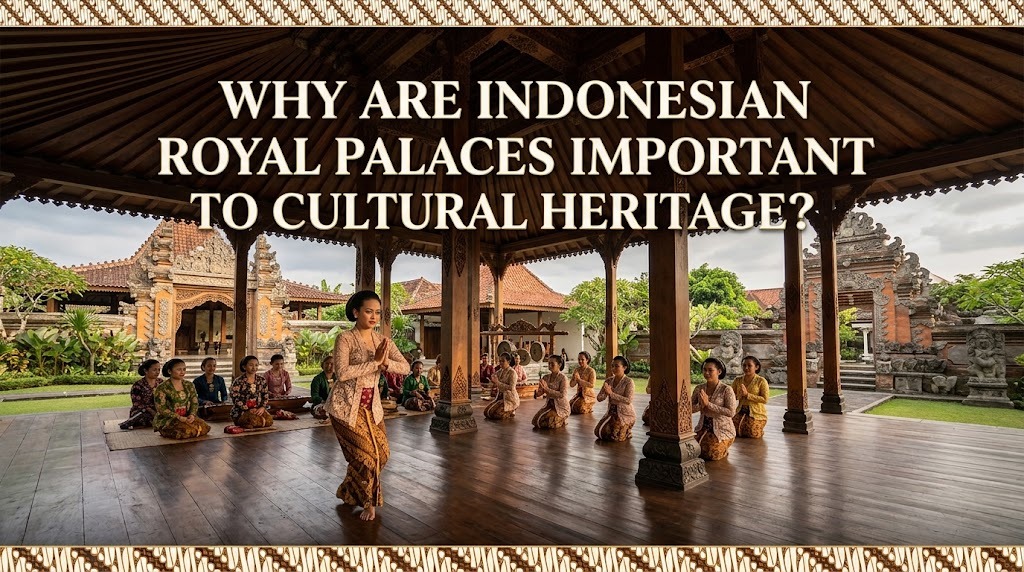
Indonesian royal palaces are more than historic buildings. They are important cultural spaces that preserve traditional values, arts, ceremonies, architecture, and local history from one generation to another. Across Java and other parts of Indonesia, royal palaces continue to demonstrate how communities maintain cultural traditions while adapting to modern society. Understanding their importance can help younger generations appreciate the diversity and identity of Indonesia.
PRESERVING HISTORICAL MEMORY
Royal palaces serve as important places for preserving historical memory. Many palaces are connected to the development of kingdoms, sultanates, political leadership, and social life in different periods of Indonesian history. Their buildings, collections, manuscripts, and traditional objects can provide valuable information about the past. By maintaining these elements, palaces help people understand how earlier generations lived and organized their communities.
The historical value of a palace is not limited to its physical structure. Stories, traditions, and knowledge passed down through generations are also part of its heritage. Palace communities may continue to maintain traditional practices that reflect the history of their ancestors. This makes royal palaces valuable sources for learning about Indonesia's cultural development.
PROTECTING TRADITIONAL ARTS AND CULTURE
Indonesian royal palaces have played an important role in protecting traditional arts. Various forms of dance, music, theater, crafts, and ceremonial practices have historically been associated with palace environments. In Java, traditions involving gamelan music, classical dance, batik, and other forms of artistic expression can be connected to royal cultural institutions. Their continued practice helps prevent traditional knowledge from disappearing.
Palaces can also become places where artists and younger generations learn cultural skills. Cultural transmission is important because traditional arts cannot survive through historical records alone. They need people who understand, practice, and teach them. Through performances, training, ceremonies, and cultural events, palace traditions can remain relevant in contemporary society.
MAINTAINING TRADITIONAL CEREMONIES
Traditional ceremonies are another important part of palace heritage. Some Indonesian palaces continue to hold cultural events that follow customs developed over long periods. These ceremonies may involve specific clothing, music, offerings, processions, language, or symbolic activities. Each element can represent particular cultural values and historical beliefs.
Such ceremonies also strengthen connections between palace communities and the wider public. Visitors can learn about cultural practices by observing events and understanding their meanings rather than simply viewing old buildings. However, cultural ceremonies should be approached respectfully because they may have religious, spiritual, or social significance for the communities involved.
PRESERVING ARCHITECTURAL HERITAGE
Royal palaces are also valuable because their architecture reflects the philosophy and worldview of the societies that created them. Traditional Javanese palace complexes, for example, often contain carefully arranged spaces with particular functions and symbolic meanings. Buildings, courtyards, gates, pathways, and decorative elements can communicate ideas about social order and cultural values.
Preserving palace architecture is important because historic buildings can provide physical evidence of the past. Their design can reveal how people understood space, community, leadership, and tradition. Conservation therefore needs to consider not only the appearance of a building but also its cultural meaning and historical context.
STRENGTHENING INDONESIAN CULTURAL IDENTITY
Indonesia is known for its extraordinary cultural diversity. Royal palaces contribute to this diversity by preserving traditions associated with particular regions, communities, and historical kingdoms. They show that Indonesian cultural identity is made up of many interconnected local identities rather than a single tradition. This makes palaces important places for understanding the richness of Indonesian heritage.
For younger generations, palace heritage can create a stronger appreciation of local history and cultural identity. Cultural education, digital documentation, exhibitions, and responsible tourism can make palace traditions easier to understand. When people recognize the value of their heritage, they are more likely to participate in its preservation and pass it on to future generations.
SUPPORTING CULTURAL TOURISM AND EDUCATION
Royal palaces can also support cultural tourism and education. Visitors can explore historic buildings, traditional collections, artistic performances, and cultural activities while learning about the history behind them. This type of tourism can provide a deeper experience than simply visiting a popular destination for entertainment. It encourages visitors to understand the relationship between historical places and living traditions.
Cultural tourism can also provide economic opportunities for local communities when managed responsibly. Guides, artists, craftspeople, cultural workers, and small businesses may benefit from visitors. At the same time, tourism should not turn cultural traditions into mere attractions. Responsible preservation requires cooperation between palace institutions, local communities, cultural organizations, government bodies, researchers, and visitors.
CONCLUSION
Indonesian royal palaces are important to cultural heritage because they preserve history, traditional arts, ceremonies, architecture, knowledge, and cultural identity. Their significance goes beyond their impressive buildings because many palace traditions remain connected to living communities. By protecting these places and the traditions associated with them, Indonesia can maintain valuable links between the past and the present.
Preservation should involve both physical conservation and the continuation of cultural practices. Education, responsible tourism, documentation, and participation from younger generations can help ensure that palace heritage remains meaningful in the future. In this way, Indonesian royal palaces can continue to serve as important cultural bridges between generations.
About the Author
Gusti Ayu Tita P
Author — STEKOM University
An active author focused on academic issues, educational technology, and human resource development in the campus environment.















