
Why Are Museums Suitable Destinations For Study Tours?
Gusti Ayu Tita P
17 September 2026
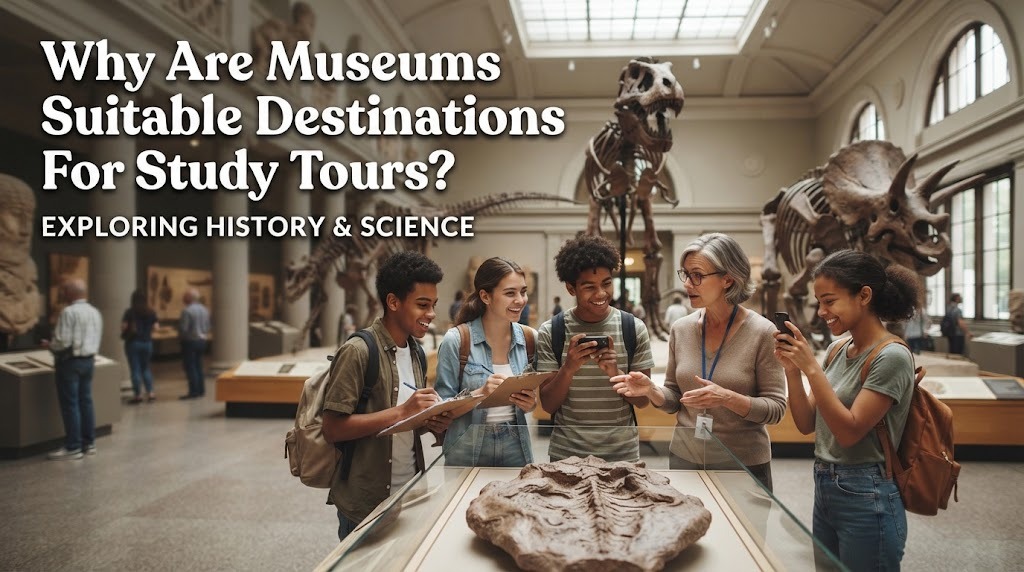
Museums are popular destinations for study tours because they provide students with opportunities to learn through real objects and historical evidence. Instead of studying only from textbooks, students can see artifacts, artworks, documents, scientific collections, and other educational materials directly. This experience can make lessons more interesting and easier to understand. Museums can also connect classroom topics with real examples from history, science, art, and culture.
A museum visit can be designed around the subjects students are learning at school. Teachers can prepare questions, observation tasks, or group assignments before the visit. Students can then explore the museum while looking for information related to their lessons. This makes a museum study tour both educational and interactive.
PROVIDING DIRECT LEARNING EXPERIENCES
One major reason museums are suitable for study tours is that they provide direct learning experiences. Students can observe objects that may be difficult to understand through pictures or written descriptions alone. For example, historical artifacts can help students visualize how people lived in the past. Scientific collections can also demonstrate concepts that students may have previously encountered in class.
Seeing real objects can make information more memorable. Students can examine details, read descriptions, and listen to explanations from museum guides. They can also record important information for later assignments. This type of learning allows students to connect theory with real-world examples.
SUPPORTING DIFFERENT SCHOOL SUBJECTS
Museums can support learning across many different subjects. History museums can help students understand historical events and cultural development, while art museums can introduce them to different artistic styles and techniques. Science museums can provide demonstrations and collections related to physics, biology, technology, or other scientific topics. Some museums also combine several areas of knowledge in one location.
Because museums offer different types of collections, teachers can choose destinations that match their students' learning objectives. A carefully selected museum can complement lessons already taught in the classroom. Students can use the information they discover during the visit to strengthen their understanding. This makes a museum visit a useful extension of classroom learning.
DEVELOPING OBSERVATION SKILLS
Museum visits encourage students to pay attention to details. They may need to observe the shape, material, design, age, or function of an object to understand its importance. Teachers can provide an observation worksheet with questions that guide students through the exhibits. This encourages students to look carefully instead of simply walking through the museum.
Observation activities can also help students organize information. They can compare different objects, identify similarities and differences, and record important facts. These simple tasks develop the ability to collect and analyze information. Over time, students can become better at careful observation and information processing.
ENCOURAGING CURIOSITY AND QUESTIONS
Museums often contain objects and information that can make students curious. Students may discover something unfamiliar and want to know how it was created, where it came from, or why it is important. This natural curiosity can encourage them to ask questions and seek reliable information. Teachers and museum guides can use these questions as opportunities for deeper learning.
Question-based activities can make students more active during the visit. Instead of simply listening to explanations, they can participate by looking for answers and discussing their findings. Students may also discover new topics that they want to explore after returning to school. This can encourage independent learning and continued curiosity.
TEACHING HISTORY AND CULTURAL HERITAGE
Museums play an important role in helping students understand history and cultural heritage. Historical collections can show how people lived, worked, communicated, and created communities in different periods. Students can also learn about traditional art, customs, technology, and important historical developments. Seeing these materials directly can make the past feel more understandable.
Learning about cultural heritage can also encourage students to appreciate the importance of preserving historical objects. Teachers can explain why artifacts need proper care and why museums protect them for future generations. Students can learn that cultural heritage provides information about the identity and experiences of different communities. This can develop historical awareness and cultural appreciation.
IMPROVING STUDENT ENGAGEMENT
A study tour to a museum can make learning more engaging because students are placed in a new environment. Moving through exhibitions and discovering different objects can create a more active learning experience. Students can participate in group discussions, observation tasks, quizzes, or guided tours during their visit. These activities can encourage students to become more involved in the learning process.
Museum activities can also accommodate different learning preferences. Some students may learn effectively by reading exhibit information, while others may benefit more from visual displays or explanations from guides. Teachers can combine several activities to make the visit more inclusive. As a result, students can gain knowledge through multiple learning experiences.
PROVIDING SAFE AND STRUCTURED LEARNING
Museums generally have organized exhibition areas and visitor guidelines that help create a structured learning environment. Students can follow a planned route or schedule prepared by their teachers and museum staff. Clear rules can help students understand how to behave around valuable or fragile collections. This makes it easier to combine student safety with educational activities.
Teachers can also divide students into smaller groups and assign specific tasks. This allows teachers to monitor students while giving them opportunities to explore the exhibits. Before the visit, students should be informed about rules such as not touching restricted objects and respecting other visitors. Good preparation can make the museum experience safe, organized, and meaningful.
CONCLUSION
Museums are suitable destinations for study tours because they combine education, direct experience, and cultural discovery in one environment. Students can observe real objects, improve their observation skills, ask questions, and connect classroom lessons with practical examples. Museums can also support subjects such as history, science, art, and culture. These experiences can make learning more engaging and memorable.
The success of a museum study tour depends on proper preparation and meaningful activities. Teachers can create worksheets, group assignments, discussions, and reflection tasks that match the museum's collections. When students actively explore and reflect on what they see, a museum visit can become more than a simple trip. It can provide a valuable learning experience outside the classroom.
About the Author
Gusti Ayu Tita P
Author — STEKOM University
An active author focused on academic issues, educational technology, and human resource development in the campus environment.















