Why Are Ports Important as Maritime Transportation Hubs?
Gusti Ayu Tita P
10 Agustus 2026
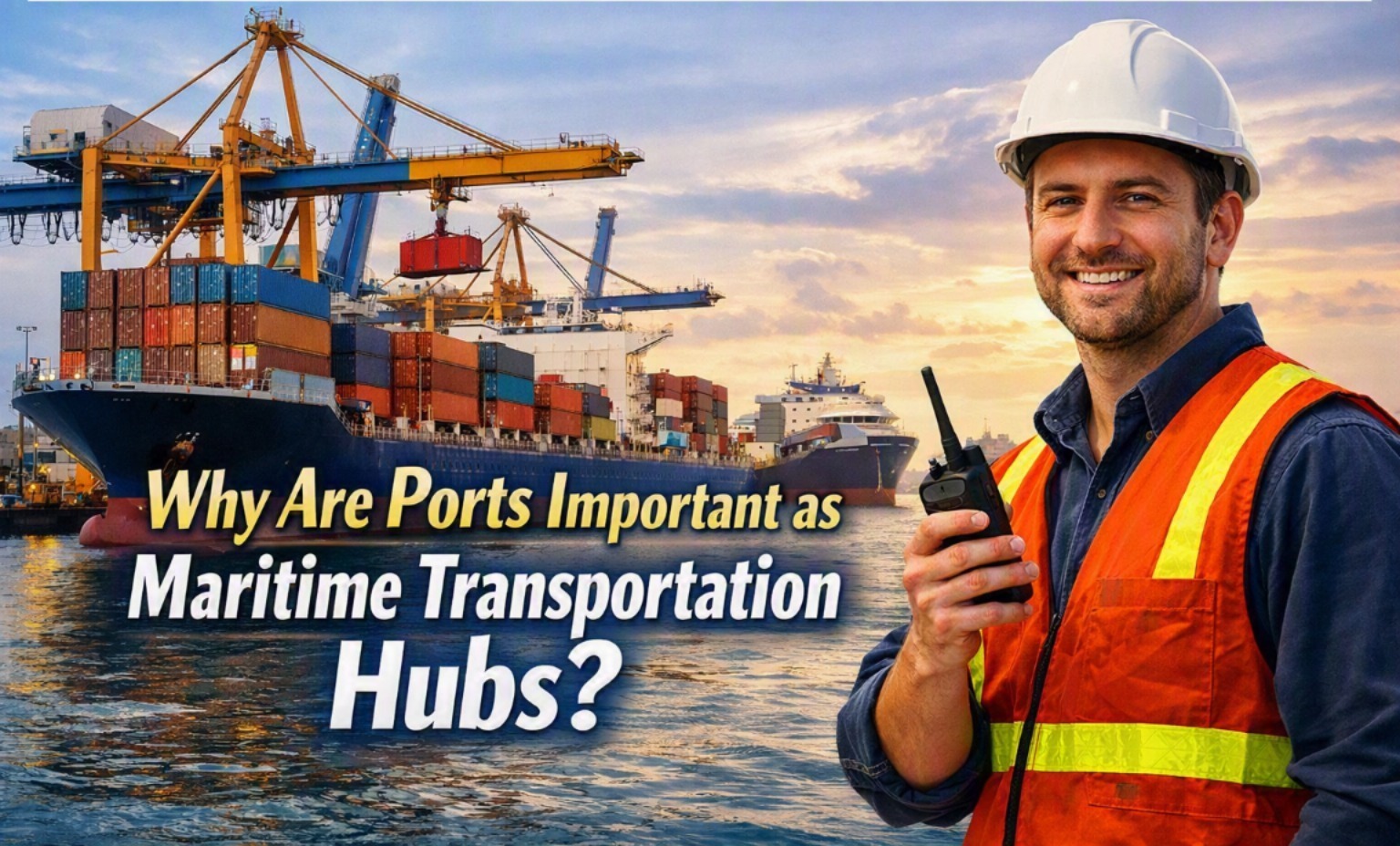
Ports are essential parts of the maritime transportation system because they connect ships with inland transportation networks and supply chains. Through ports, goods can move efficiently between domestic and international markets, while passengers can travel between different regions. Their role is not limited to loading and unloading cargo, as modern ports also support logistics, trade, storage, and economic activities. Efficient ports can reduce transportation delays, improve supply chain performance, and strengthen a country's competitiveness. Therefore, understanding the importance of ports is essential for seeing how maritime transportation supports modern economies.
CONNECTING SEA AND LAND TRANSPORTATION
Ports function as important connections between maritime and land transportation. Ships carry large quantities of goods across oceans and seas, but cargo eventually needs to reach factories, warehouses, businesses, and consumers on land. Ports provide facilities where containers and other cargo can be transferred to trucks, trains, and other inland transport. This connection creates an integrated transportation network that allows goods to travel from their origin to their final destination.
A well-managed port can make this transfer faster and more organized. Container terminals, cargo handling equipment, storage areas, and transportation links help reduce unnecessary waiting time. When sea and land transportation work together efficiently, businesses can receive materials and distribute products more reliably. This makes ports a vital part of the overall logistics chain.
SUPPORTING INTERNATIONAL TRADE
Ports play a major role in international trade because a significant amount of global merchandise is transported by sea. Large ships can carry thousands of containers in a single voyage, making maritime transportation suitable for moving goods over long distances. Products such as machinery, electronics, food, clothing, raw materials, and energy commodities can pass through ports before reaching international markets. As a result, efficient ports help countries participate more effectively in global commerce.
Ports also support the movement of imported and exported goods. Exporters depend on ports to send products to overseas customers, while importers use them to receive materials and finished products from other countries. Customs procedures, cargo inspections, documentation, and security controls are also important parts of this process. When these activities are managed efficiently, ports can help reduce trade costs and improve the reliability of international supply chains.
IMPROVING LOGISTICS AND SUPPLY CHAINS
Modern ports are important because they support the smooth operation of supply chains. Goods often pass through several stages before reaching consumers, including transportation, storage, distribution, and processing. Ports provide facilities that allow cargo to be temporarily stored, consolidated, separated, or transferred between different modes of transportation. These services help businesses manage the movement of products more effectively.
Technology has also changed the way ports manage logistics. Digital tracking systems, automated equipment, electronic documentation, and real-time data can improve cargo visibility and operational efficiency. Better information allows shipping companies, logistics providers, and businesses to plan transportation more accurately. Efficient port operations can therefore reduce delays, unnecessary costs, and disruptions across the supply chain.
REDUCING TRANSPORTATION COSTS
Ports can contribute to lower transportation costs by enabling the movement of large volumes of cargo at once. Maritime transportation is particularly suitable for heavy and bulky goods that may be expensive to transport over long distances by road or air. A single vessel can carry a large quantity of containers, allowing transportation costs to be distributed across many shipments. This can make international and regional trade more economically viable.
However, the cost advantages of maritime transportation depend on efficient port operations. Long waiting times, congestion, inefficient cargo handling, and poor connections to inland transport can increase logistics expenses. Investments in modern infrastructure, skilled workers, efficient procedures, and reliable transportation connections can help ports maintain their cost advantages.
BOOSTING ECONOMIC GROWTH
Ports can become important drivers of economic growth in coastal and regional areas. Port activities create employment in shipping, logistics, warehousing, transportation, customs services, maintenance, and other related industries. Businesses may also develop around ports because they provide access to transportation infrastructure and commercial markets. This can encourage investment and increase economic activity in surrounding areas.
The economic impact of a port can extend beyond its immediate location. Efficient ports can improve access to international markets and help domestic producers compete with businesses in other countries. Manufacturing, distribution, tourism, fisheries, and supporting industries may benefit from reliable maritime connections. For this reason, ports can play a strategic role in strengthening regional and national economies.
SUPPORTING PASSENGER AND REGIONAL MOBILITY
Although ports are strongly associated with cargo transportation, they also support passenger mobility. Passenger terminals can serve ferries, cruise ships, and other vessels that transport people between islands, coastal communities, and international destinations. In countries with extensive coastlines and many islands, maritime transportation can provide an important alternative to land or air travel. Ports therefore contribute to wider connectivity between communities.
Passenger ports also support tourism and local economic activities. Cruise terminals and ferry services can bring visitors to coastal destinations and create demand for hotels, restaurants, transportation, retail, and other services. Reliable passenger facilities are especially important for communities that depend on regular maritime connections. Good port management can make these journeys safer, more comfortable, and more efficient.
STRENGTHENING NATIONAL CONNECTIVITY
Ports are particularly important for countries with long coastlines and many islands. Maritime transportation can connect regions that are separated by water and difficult to reach directly by road. Ports provide the infrastructure needed to move essential goods, construction materials, food, fuel, and other supplies between different areas. This makes them an important component of national connectivity.
Strong maritime connectivity can also help reduce regional isolation. Reliable shipping routes and efficient port facilities allow businesses and communities to access wider markets and essential resources. For island nations, ports may serve as strategic gateways that connect remote regions with major economic centers. Their role is therefore closely linked to balanced development and the movement of goods and people across the country.
ENCOURAGING MODERN AND SUSTAINABLE TRANSPORTATION
The development of modern ports increasingly focuses on efficiency, safety, digitalization, and environmental sustainability. Port authorities and operators can adopt cleaner equipment, improve energy efficiency, manage waste, and reduce emissions from port activities. Digital systems can also help optimize vessel schedules, cargo handling, and traffic management. These improvements can make maritime transportation more efficient while addressing environmental challenges.
Sustainability is becoming increasingly important as global trade continues to grow. Cleaner technologies, efficient logistics, and responsible port management can help reduce the environmental impact of transportation activities. At the same time, ports must maintain high standards for safety and security. Balancing economic activity with environmental responsibility is an important part of developing future-ready maritime transportation hubs.
CONCLUSION
Ports are more than places where ships load and unload cargo. They are strategic maritime hubs that connect sea routes with roads, railways, warehouses, distribution centers, businesses, and consumers. Their performance can influence transportation costs, delivery times, trade efficiency, and regional economic development. A port that operates efficiently can strengthen the competitiveness of businesses and improve the reliability of national supply chains.
As maritime trade continues to evolve, ports must adapt to changing transportation needs and technology. Modern infrastructure, digital systems, skilled workers, strong connectivity, safety measures, and sustainable practices are essential for maintaining efficient operations. By fulfilling these roles, ports help connect economies, support mobility, and facilitate the movement of goods and people. This is why ports remain fundamental to the global maritime transportation network.
About the Author
Gusti Ayu Tita P
Author — STEKOM University
An active author focused on academic issues, educational technology, and human resource development in the campus environment.