
Why Are Ports Important for the Indonesian Economy?
Gusti Ayu Tita P
10 Agustus 2026
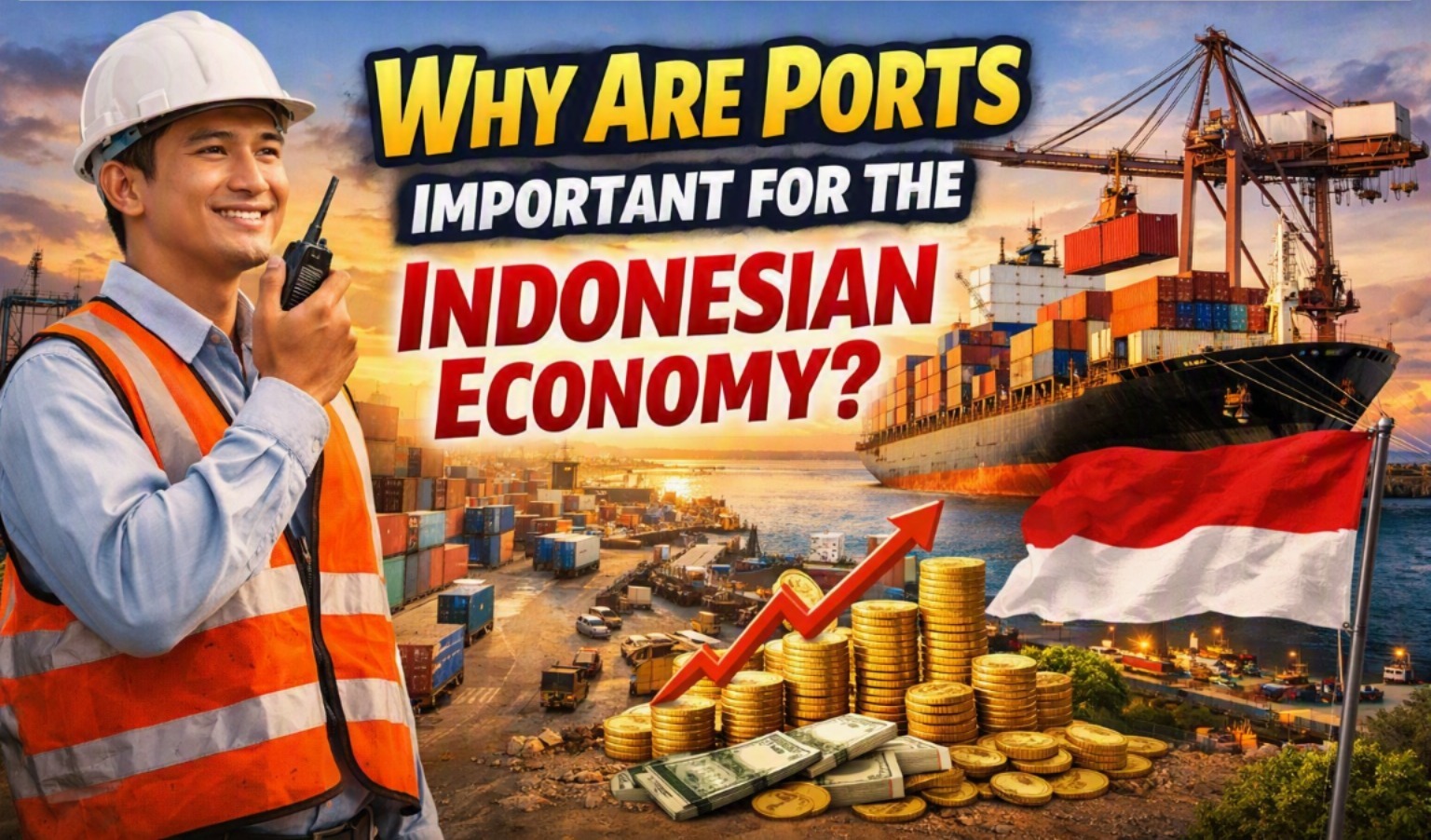
Indonesia is an archipelagic country with thousands of islands separated by seas. This geographical condition makes ports essential for connecting regions and supporting the movement of people and goods. Ports serve as important gateways for domestic and international trade, allowing products to move between islands and across national borders. They also support industries, create employment, and contribute to government revenue. For these reasons, ports play a major role in strengthening the Indonesian economy.
CONNECTING INDONESIAN REGIONS
Ports help connect islands that cannot be linked efficiently by land transportation. Through ports, goods such as food, raw materials, fuel, and manufactured products can be transported from one region to another. This connection is particularly important for remote and outer islands that depend on supplies from other areas. Reliable port services can also help reduce distribution problems and improve the availability of essential goods.
Ports therefore support national economic integration by making trade between regions easier. When transportation becomes more efficient, businesses can reach wider markets and consumers can obtain products from different parts of Indonesia.
SUPPORTING DOMESTIC AND INTERNATIONAL TRADE
One of the most important functions of ports is supporting trade activities. Cargo ships use ports to load and unload products that are transported between Indonesian regions and foreign countries. Export commodities such as minerals, agricultural products, fisheries, and manufactured goods can reach international markets through port facilities. At the same time, Indonesia can receive imported machinery, industrial materials, consumer products, and other goods.
Efficient ports can make the movement of goods faster, safer, and more predictable. This helps businesses manage supply chains and can improve Indonesia's competitiveness in regional and global markets. Ports are especially important because much of international merchandise trade is transported by sea.
REDUCING LOGISTICS COSTS
Transportation and logistics costs can significantly affect the price of goods. Well-managed ports can improve the movement of large volumes of cargo and connect sea transportation with trucks, trains, warehouses, and distribution centers. Better connections between these transportation systems can reduce unnecessary delays and handling costs. Efficient cargo processing can also help businesses manage their inventory more effectively.
Lower logistics costs can benefit both businesses and consumers. Companies may become more competitive because they can distribute products at a more reasonable cost, while consumers can potentially receive goods at more affordable prices.
CREATING JOBS AND BUSINESS OPPORTUNITIES
Ports create employment not only for port workers but also for people in many related industries. Jobs can be found in shipping, logistics, warehousing, transportation, customs services, security, maintenance, and cargo handling. Port activities also encourage the growth of businesses around port areas, including restaurants, transportation services, accommodation, and other supporting services.
The economic impact can extend beyond the port itself. When port activity increases, local businesses and small enterprises may gain new customers and opportunities. As a result, ports can contribute to regional economic development and provide income opportunities for surrounding communities.
SUPPORTING INDUSTRIAL AND NATIONAL DEVELOPMENT
Industries need reliable transportation to obtain raw materials and distribute finished products. Ports provide an important connection between industrial centers, suppliers, and markets. Manufacturing companies, energy businesses, mining industries, agriculture, and fisheries can benefit from efficient maritime transportation. A strong port network can therefore support the development of different economic sectors.
Ports are also important for national infrastructure development. Modern port facilities, digital systems, better roads, and improved cargo handling can strengthen the overall logistics network. Continuous improvement is necessary to ensure that Indonesian ports can respond to growing trade volumes and changing business needs.
INCREASING GOVERNMENT REVENUE
Port-related economic activities can contribute to government revenue through various taxes, duties, fees, and other legal charges. International trade activities also involve government institutions responsible for customs, regulations, and supervision. Proper administration helps ensure that trade activities follow national laws and regulations.
Government revenue generated from economic activities can support public services and infrastructure development. At the same time, effective supervision at ports helps protect legitimate businesses and improve the security of goods entering and leaving Indonesia.
IMPROVING INDONESIA'S ECONOMIC COMPETITIVENESS
Indonesia has a strategic position between major economic regions in Asia and the Indo-Pacific. This creates opportunities for the country to strengthen its role in maritime trade and regional supply chains. Modern and efficient ports can make Indonesia more attractive to businesses that need reliable transportation networks. Strong port infrastructure can also support investment and encourage the development of logistics and industrial activities.
However, port development needs to be accompanied by efficient regulations, skilled workers, digitalization, and good transportation connections. These factors work together to reduce delays and improve the overall quality of logistics services. A strong port system can ultimately help Indonesia compete more effectively in the regional and global economy.
CONCLUSION
Ports are important for the Indonesian economy because they connect islands, support trade, reduce logistics costs, create employment, and strengthen industries. Their role goes beyond loading and unloading cargo because ports are part of a much larger national logistics system. Efficient ports can help businesses reach markets, improve supply chains, and support regional economic growth. Continued investment in infrastructure, technology, human resources, and transportation connections is therefore essential. By developing a strong and efficient port network, Indonesia can maximize its maritime potential and strengthen long-term economic growth.
About the Author
Gusti Ayu Tita P
Author — STEKOM University
An active author focused on academic issues, educational technology, and human resource development in the campus environment.















