
Why Are Temples Important Cultural Heritage Sites in Indonesia?
Gusti Ayu Tita P
4 September 2026
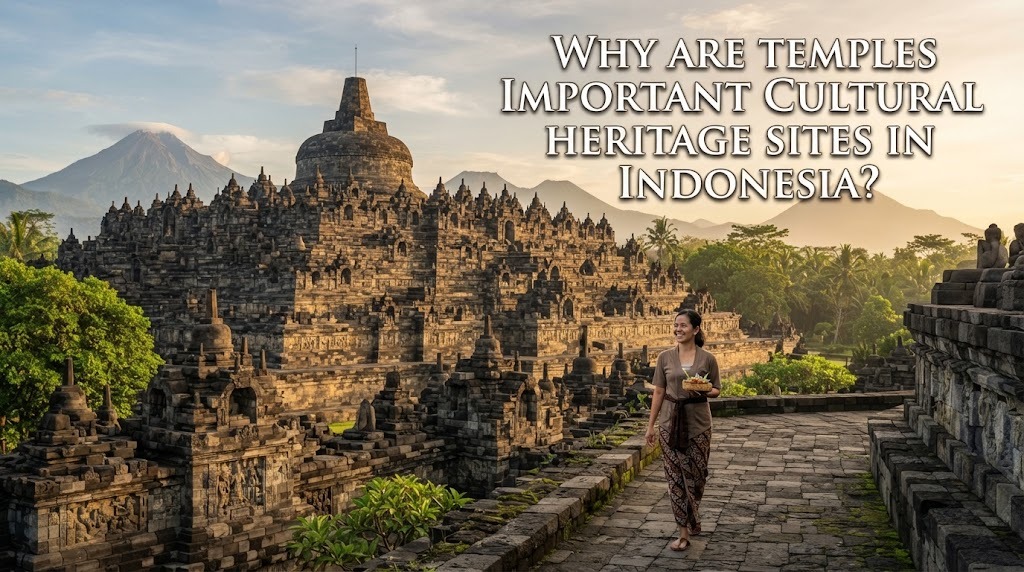
Indonesia has a rich and diverse cultural history that can be seen through its traditional buildings, artifacts, and historical sites. Temples are among the most valuable heritage sites because they preserve evidence of ancient civilizations and the development of religious traditions. Their architecture, carvings, and surrounding landscapes provide important information about how people lived and expressed their beliefs in the past.
Temples such as Borobudur, Prambanan, and many other ancient complexes are also important tourist and educational destinations. Understanding their value can encourage people to appreciate and protect Indonesia’s cultural heritage.
THEY PRESERVE INDONESIAN HISTORY
Temples are important because they provide physical evidence of Indonesia’s past. Their structures can help researchers understand the civilizations, kingdoms, religious traditions, and communities that existed centuries ago. Archaeological findings around temple sites can also provide information about ancient settlements and cultural activities. This makes temples valuable sources for studying Indonesian history.
The architecture and materials used in temples can reveal how advanced ancient societies were in construction and craftsmanship. Their continued existence allows modern generations to see historical evidence directly rather than relying only on written records. For this reason, temples are important parts of Indonesia’s historical heritage.
THEY REFLECT RELIGIOUS AND SPIRITUAL TRADITIONS
Many Indonesian temples were built in connection with Hindu and Buddhist traditions. Their layouts, sculptures, reliefs, and ornaments often contain religious meanings that reflect the beliefs of the communities that created them. Borobudur, for example, contains architectural elements and reliefs associated with Buddhist teachings. Prambanan reflects Hindu traditions through its temple structures, sculptures, and religious symbolism.
These religious elements make temples valuable for understanding the development of spirituality in Indonesian history. They also demonstrate how religious ideas influenced architecture and art. Respecting the religious significance of these sites is therefore an important part of visiting and preserving them.
THEY SHOWCASE ANCIENT ART AND ARCHITECTURE
Indonesian temples demonstrate remarkable artistic and architectural achievements. Detailed carvings, sculptures, reliefs, and carefully arranged structures show the skill of ancient craftsmen. Many decorative elements were created with considerable precision despite the absence of modern construction equipment. The results remain impressive even when viewed many centuries later.
Temple architecture also varies according to location, period, and religious tradition. Buddhist temples may feature stupas and symbolic layouts, while Hindu temples often have tall structures and distinctive decorative elements. These differences contribute to Indonesia’s diverse architectural heritage. Studying them can provide valuable insight into the artistic development of ancient Indonesian societies.
THEY SUPPORT EDUCATION AND RESEARCH
Temples provide valuable opportunities for learning outside the classroom. Students can observe historical structures directly while learning about archaeology, architecture, religion, art, and culture. A visit to a temple can make historical lessons more engaging because visitors can see actual evidence from the past. This makes temples valuable educational resources for different generations.
Researchers also study temple structures, inscriptions, reliefs, and archaeological remains to develop a better understanding of Indonesia’s history. New research can provide additional information about construction methods, cultural interactions, and ancient communities. Protecting temple sites therefore supports both education and academic research.
THEY CONTRIBUTE TO CULTURAL TOURISM
Temples have become important tourist destinations in many parts of Indonesia. Visitors come to admire their architecture, learn about their history, and experience the cultural atmosphere surrounding the sites. Borobudur and Prambanan are particularly well known and attract visitors from Indonesia and abroad. Temple tourism can introduce people to Indonesia’s cultural diversity.
Tourism can also create economic opportunities for communities around heritage sites. Local businesses may benefit from visitors through accommodation, food, transportation, handicrafts, and tour services. However, tourism needs to be managed responsibly to prevent excessive pressure on historical structures. Sustainable tourism can help balance economic benefits with heritage preservation.
THEY STRENGTHEN CULTURAL IDENTITY
Temples are part of Indonesia’s cultural identity because they represent the long history and diversity of the Indonesian archipelago. Their existence demonstrates that ancient communities developed sophisticated forms of art, architecture, religion, and social organization. Learning about these sites can help people develop greater appreciation for their cultural heritage. It can also encourage younger generations to become interested in history.
Cultural heritage is not only about preserving old buildings. It also involves preserving the knowledge, stories, traditions, and values connected to those places. Temples provide a tangible connection between modern society and the people who lived in the past. This connection makes them valuable symbols of Indonesia’s cultural continuity.
WHY TEMPLE PRESERVATION MATTERS
Temples have survived for centuries, but they remain vulnerable to natural weathering, environmental conditions, human activity, and other factors. Regular conservation and careful management are needed to protect their structures and artistic details. Preservation should be based on appropriate archaeological and conservation principles. This helps maintain the authenticity and historical value of the sites.
Visitors also have an important role in protecting temples. They should follow site regulations, avoid damaging or climbing restricted structures, keep the area clean, and respect the cultural significance of the location. Responsible behavior may seem simple, but it can contribute to long-term preservation. Cooperation between authorities, local communities, researchers, and visitors is essential.
CONCLUSION
Temples are important cultural heritage sites in Indonesia because they preserve history, religious traditions, art, architecture, and knowledge from the past. They also provide educational opportunities, support cultural tourism, and strengthen appreciation for Indonesia’s diverse identity.
Protecting temples means preserving more than ancient buildings. It means safeguarding the stories, traditions, artistic achievements, and historical knowledge connected to them. By learning about and respecting these sites, people can help ensure that Indonesia’s cultural heritage remains meaningful for future generations.
About the Author
Gusti Ayu Tita P
Author — STEKOM University
An active author focused on academic issues, educational technology, and human resource development in the campus environment.















