
Why Are Waste Banks Important for Reducing Household Waste?
Gusti Ayu Tita P
20 Agustus 2026
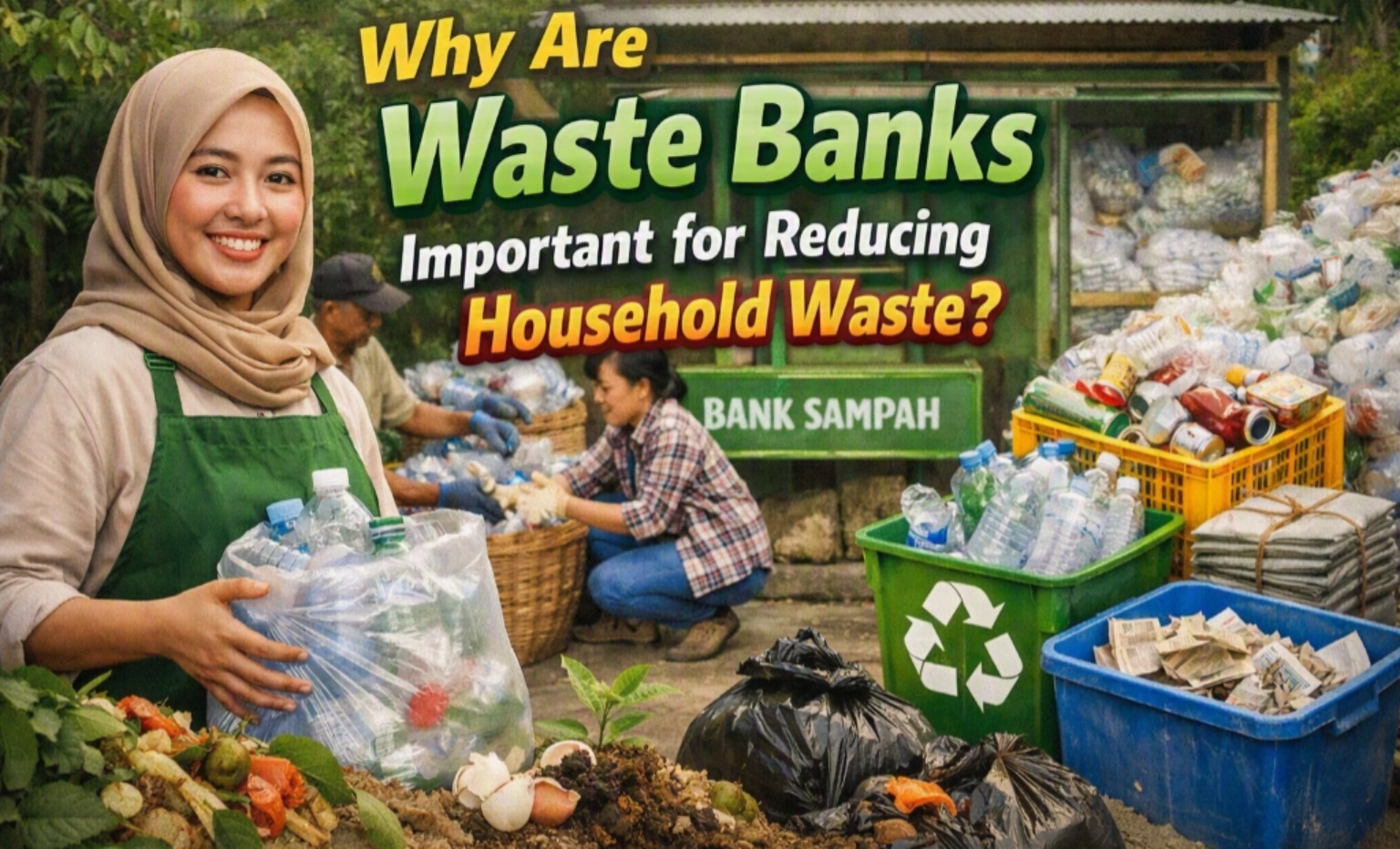
Household waste is a growing environmental challenge in many communities. Every day, homes produce plastic packaging, paper, food containers, bottles, cans, and other discarded materials. If these materials are mixed together and sent directly to landfills, they can increase the amount of waste that must be managed and reduce the opportunity to recover useful materials. One practical approach to addressing this problem is the waste bank, a community-based system that encourages people to sort and collect recyclable waste.
A waste bank does more than collect recyclable materials. It can help households develop better waste management habits, increase public awareness, and create economic value from materials that would otherwise be thrown away. By involving residents directly, waste banks can support a cleaner environment while encouraging more responsible consumption and disposal practices.
WHAT IS A WASTE BANK?
A waste bank is a community-based waste management system where residents collect and sort recyclable materials before submitting them to a waste bank. Depending on the local system, materials such as plastic bottles, cardboard, paper, metal cans, and other recyclables may be accepted. The collected materials are generally recorded and stored before being sold to recycling businesses or other material recovery partners. Some waste banks use a savings-style system in which residents receive a monetary value or other benefit based on the recyclable materials they deposit.
The main idea is to change the way people view waste. Materials that are often considered useless can have recyclable or economic value when they are properly separated. This system also encourages residents to take responsibility for waste from the point where it is generated. As a result, waste management becomes a shared activity involving households, communities, collectors, and recycling businesses.
HOW DO WASTE BANKS REDUCE HOUSEHOLD WASTE?
Waste banks reduce household waste primarily by encouraging waste separation at the source. When residents separate recyclable materials from other household waste, a larger portion of useful materials can be recovered instead of being mixed with waste destined for disposal. This makes recycling processes more efficient because recyclable materials are less contaminated by food waste and other unwanted materials. The amount of material requiring final disposal can therefore be reduced.
Waste banks can also encourage households to reduce unnecessary disposal. When people understand that bottles, paper, cardboard, and certain types of plastic can have value, they may become more careful about sorting and handling these materials. Over time, regular participation can turn waste separation into a daily habit. This behavioral change is an important part of reducing household waste in the long term.
WHY IS WASTE SEPARATION IMPORTANT?
Waste separation is essential because different types of waste require different handling methods. Organic waste, recyclable materials, and residual waste should not automatically be treated as one category. When recyclable materials are mixed with wet or contaminated waste, their quality can decrease and some materials may become difficult or impossible to recycle. Separating waste at home helps preserve the value and usability of recyclable materials.
Proper separation also supports a more efficient waste management system. Recyclable materials can be directed toward recovery and recycling, while organic materials may be suitable for composting or other biological treatment where appropriate. Only waste that cannot reasonably be recovered should proceed to final disposal. This approach can help communities use resources more efficiently and reduce pressure on landfills.
WHAT ARE THE ENVIRONMENTAL BENEFITS?
Waste banks can provide several environmental benefits by increasing the amount of recyclable material that is recovered. Recycling suitable materials can reduce the need to extract and process some virgin resources. It can also help prevent recyclable materials from being unnecessarily disposed of or becoming litter in public spaces and waterways. The overall environmental benefit depends on effective collection, sorting, recycling infrastructure, and responsible management.
Waste banks can also contribute to a cleaner community environment. Regular collection and sorting can reduce the amount of recyclable waste accumulating around homes and neighborhoods. Community participation may further increase awareness of litter prevention and responsible disposal. However, waste banks are not a complete solution to environmental problems and work best as part of a broader waste reduction, reuse, recycling, and proper disposal strategy.
HOW CAN WASTE BANKS BENEFIT HOUSEHOLDS?
One important benefit is that waste banks can provide economic value from recyclable materials. Households may receive payment, savings credits, or other benefits depending on the operating model of the waste bank. Although the financial return from household recyclables may be modest, it can provide an additional motivation for residents to sort waste consistently. The system can also help people recognize that responsible waste management may have economic as well as environmental value.
Waste banks can also provide educational and social benefits. Residents learn how to identify recyclable materials, separate waste, and participate in community-based environmental programs. Families can involve children in simple sorting activities, helping them develop responsible habits from an early age. Community cooperation can strengthen awareness that waste management is not only an individual responsibility but also a shared community concern.
CAN WASTE BANKS SUPPORT RECYCLING AND THE CIRCULAR ECONOMY?
Waste banks can support the principles of the circular economy by helping keep useful materials in circulation for longer. Instead of treating every discarded item as waste, recyclable materials can be collected and directed toward recovery and recycling. These recovered materials can become inputs for new products, reducing the need to rely entirely on newly extracted resources. In this way, waste banks can serve as one link between households and the recycling sector.
Their effectiveness depends on what happens after collection. Recyclable materials need reliable buyers, appropriate sorting, transportation, and recycling facilities. If collected materials cannot enter a suitable recycling or recovery process, the environmental benefits may be limited. Therefore, strong cooperation between communities, waste banks, recyclers, businesses, and local authorities is important.
WHAT ARE THE CHALLENGES OF WASTE BANKS?
Despite their potential, waste banks can face several challenges. These may include limited public participation, inconsistent waste sorting, fluctuating recyclable material prices, inadequate storage facilities, and transportation difficulties. Some communities may also struggle to maintain regular operations when volunteers or funding are limited. These challenges can reduce the effectiveness of waste bank programs if they are not addressed systematically.
Another challenge is contamination. Recyclable materials that contain food residue, moisture, or other unwanted materials may have lower value or become unsuitable for certain recycling processes. Waste banks therefore need clear guidelines about which materials are accepted and how they should be prepared. Regular education, transparent management, reliable partnerships, and convenient collection systems can help improve participation and operational performance.
HOW CAN HOUSEHOLDS SUPPORT WASTE BANKS?
Households can begin by reducing waste before it is created. Choosing reusable products, avoiding unnecessary packaging, and purchasing only what is needed can reduce the amount of waste generated. After that, residents can separate recyclable materials according to the rules provided by their local waste bank. Materials should generally be kept clean and dry when required by the collection system.
Consistency is more important than making occasional efforts. Families can prepare separate containers for recyclable, organic, and residual waste based on the system available in their community. They can also learn which materials are accepted by their local waste bank because acceptance rules vary between locations. Simple daily habits, when practiced by many households, can create a meaningful community-level impact.
CONCLUSION
Waste banks matter because they connect household behavior with community waste management and resource recovery. They encourage people to see waste separation as a practical responsibility rather than an unnecessary extra task. When properly managed, they can reduce the volume of recyclable waste sent for final disposal while creating opportunities for material recovery. They can also strengthen environmental awareness through direct community participation.
However, waste banks should be viewed as one part of a wider waste management strategy. Reducing consumption, reusing products, improving recycling systems, managing organic waste, and ensuring proper disposal of residual waste are equally important. The strongest results occur when households, communities, businesses, recyclers, and governments work together. By supporting waste banks and practicing responsible waste management at home, communities can take practical steps toward a cleaner and more resource-efficient future.
About the Author
Gusti Ayu Tita P
Author — STEKOM University
An active author focused on academic issues, educational technology, and human resource development in the campus environment.















