
Why Can Adiwiyata Schools Become Examples of Environmentally Friendly Schools?
Gusti Ayu Tita P
15 September 2026
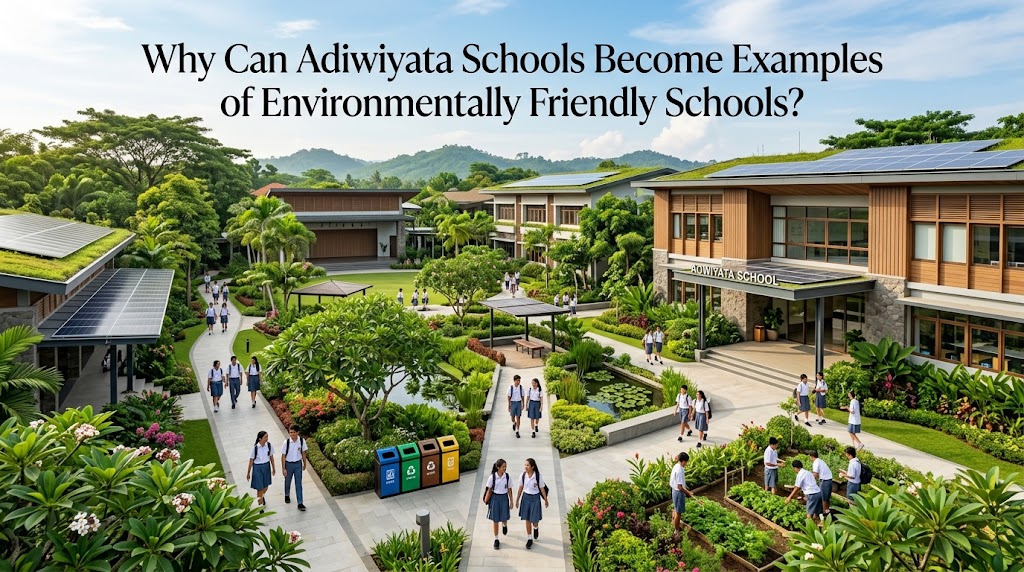
An Adiwiyata School is an educational institution that encourages students, teachers, and school staff to care for the environment through daily activities and responsible habits. The program promotes cleanliness, waste management, conservation, and environmental education as part of school life. Because these practices are carried out consistently, Adiwiyata Schools can become examples for other educational institutions. They show that environmental protection can be integrated into learning and daily school activities. This makes the Adiwiyata School Program an important approach for creating a cleaner and more sustainable educational environment.
WHAT MAKES AN ADIWIYATA SCHOOL ENVIRONMENTALLY FRIENDLY?
An environmentally friendly school does more than maintain a clean appearance. It develops habits and policies that encourage students and staff to protect natural resources and reduce environmental problems. Activities such as waste separation, recycling, water conservation, energy saving, and plant care can become part of everyday school routines. These practices help create a school environment where environmental responsibility is visible and easy to understand. As a result, students can learn about sustainability through direct experience.
Another important characteristic is the involvement of the entire school community. Environmental responsibility should not depend only on teachers or cleaning staff. Students, teachers, school leaders, and other employees can work together to maintain facilities and follow environmental rules. This cooperation creates a stronger environmental culture and makes sustainable habits easier to maintain. A school becomes a good example when environmental care is practiced consistently by everyone.
HOW CAN ADIWIYATA SCHOOLS INSPIRE OTHER SCHOOLS?
Adiwiyata Schools can inspire other schools by showing practical examples of environmental management. A school can demonstrate how simple activities, such as separating organic and inorganic waste, can reduce the amount of rubbish sent to disposal sites. It can also show how gardens, trees, and green spaces can improve the school atmosphere. Other schools can observe these practices and adapt them according to their own conditions. In this way, successful environmental activities can encourage wider participation.
Sharing experiences is another way to influence other educational institutions. Schools can organize environmental campaigns, exhibitions, competitions, workshops, or student presentations to introduce their programs. Students can also explain the activities they participate in and the lessons they learn from them. These experiences can motivate other students and teachers to start similar programs. Therefore, an environmentally friendly school can become a source of ideas and inspiration for its surrounding community.
WHAT ROLE DOES ENVIRONMENTAL EDUCATION PLAY?
Environmental education is an important part of making an Adiwiyata School a strong example for others. Students need to understand not only what they should do but also why environmental protection is important. Teachers can introduce topics such as pollution, waste reduction, conservation, biodiversity, and sustainable lifestyles through classroom lessons. These topics can also be connected with practical activities around the school. This approach makes environmental education more meaningful and easier for students to understand.
Environmental education can also encourage students to develop responsible attitudes. When students understand the effects of their actions, they may become more careful about wasting water, using electricity, or throwing rubbish. They can also learn to cooperate with others when solving environmental problems. Over time, these lessons can become habits that continue outside the school environment. This is one reason why Adiwiyata Schools can influence students beyond academic learning.
HOW DO WASTE MANAGEMENT AND CONSERVATION SUPPORT THE PROGRAM?
Good waste management is one of the visible practices that can demonstrate a school's commitment to environmental protection. Schools can provide separate waste bins, encourage recycling, reduce single-use products, and teach students how to manage waste correctly. Organic waste can also be processed into useful materials when suitable facilities are available. These practices can reduce unnecessary waste while teaching students about responsible consumption. Effective school waste management can therefore become an example that other schools can learn from.
Conservation activities are equally important because schools use resources such as water and electricity every day. Students and staff can help by turning off lights and electronic equipment when they are not needed and using water carefully. Schools can also maintain plants and green areas to support a healthier environment. Although these actions may seem simple, consistent implementation can create significant positive habits. Together, waste management and resource conservation demonstrate how environmental responsibility can become part of everyday school life.
HOW CAN STUDENTS HELP MAKE THEIR SCHOOL AN EXAMPLE?
Students are an important part of the success of an Adiwiyata School because they directly practice environmental habits every day. They can keep classrooms clean, separate waste, care for plants, save water, and participate in environmental campaigns. Students can also create posters, videos, articles, or other creative projects to spread environmental messages. These activities give students opportunities to develop responsibility, creativity, cooperation, and leadership skills. Their participation can make environmental programs more active and engaging.
Students can also bring environmental habits from school into their homes and communities. For example, they can encourage family members to reduce plastic waste, save electricity, or avoid wasting water. They can share what they learn at school with friends and people around them. When students consistently practice these habits, they can become young examples of environmental responsibility. Their actions can help show that an eco-friendly lifestyle is possible through simple daily choices.
WHAT ARE THE LONG-TERM BENEFITS OF BECOMING AN EXAMPLE?
When environmental practices are maintained over time, an Adiwiyata School can develop a strong and lasting environmental culture. Students may become more disciplined in maintaining cleanliness and using resources responsibly. Teachers and staff can also become more aware of the importance of sustainable school management. These habits can improve the learning environment while supporting broader environmental goals. A consistent program can therefore provide benefits that continue from one generation of students to the next.
Being an example can also strengthen the school's relationship with the surrounding community. Environmental programs can encourage parents, local organizations, and other schools to participate in similar activities. The school can become a place where people learn practical ways to protect the environment. This wider influence can help create a stronger culture of sustainability beyond the school itself. In the long term, Adiwiyata Schools can contribute to building environmentally responsible communities.
CONCLUSION
Adiwiyata Schools can become examples of environmentally friendly schools because they combine environmental education, waste management, conservation, student participation, and sustainable daily habits. Their success depends on cooperation among students, teachers, school management, staff, and the wider community. Practical activities make environmental responsibility easier to understand and apply. When these activities are carried out consistently, schools can inspire other educational institutions to develop similar programs. Ultimately, the Adiwiyata School Program can help create schools that are not only cleaner but also capable of encouraging responsible and sustainable lifestyles.
About the Author
Gusti Ayu Tita P
Author — STEKOM University
An active author focused on academic issues, educational technology, and human resource development in the campus environment.















