Why Can Blood Types Be Different from One Person to Another?
Gusti Ayu Tita P
14 September 2026
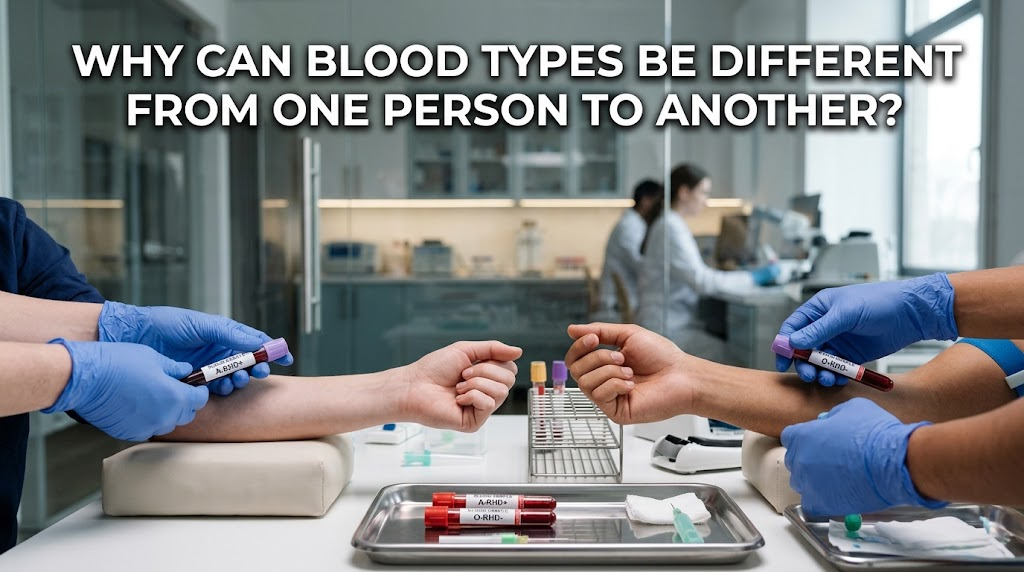
Blood types can be different from one person to another because of genetic differences that are inherited from parents. Each person's red blood cells can have different antigens, which are substances found on the cell surface. These antigens help determine whether a person has blood type A, B, AB, or O. The Rh factor, such as Rh-positive or Rh-negative, is another inherited characteristic that adds to a person's blood type.
Although blood types are invisible during everyday life, they are very important in medical situations. The immune system can recognize unfamiliar blood antigens and produce reactions against them. This is why blood type compatibility is carefully considered during transfusions. Understanding the reason for different blood types can help explain why every person may have a unique blood group.
HOW DO GENES DETERMINE BLOOD TYPES?
The ABO blood group system is mainly controlled by genes inherited from both parents. A person receives one ABO gene variant from each parent, and the combination determines the resulting blood type. The major variants are commonly called A, B, and O, with A and B affecting the red blood cell antigens while O generally does not produce A or B antigens. Because children receive genetic information from both parents, their blood type may be the same as, or different from, either parent's type.
For example, a child can inherit an A-related variant from one parent and an O-related variant from the other and have type A blood. A combination of A and B variants can result in type AB blood, while two O variants usually result in type O blood. This inheritance pattern explains why family members can have different blood types. It also shows why blood type is a biological characteristic rather than something created by lifestyle.
WHAT ROLE DO ANTIGENS PLAY IN BLOOD TYPE DIFFERENCES?
Antigens are structures found on the surface of red blood cells that can be recognized by the immune system. In the ABO system, people with type A blood have A antigens, while people with type B blood have B antigens. Type AB blood has both A and B antigens, whereas type O blood has neither A nor B antigens on its red blood cells. These differences are the main reason blood types are classified into separate groups.
The presence or absence of these antigens also affects blood transfusion safety. A person's plasma contains antibodies that may react against certain antigens that are not naturally present on their own red blood cells. For example, a person with type A blood normally has anti-B antibodies. Therefore, giving incompatible blood can trigger an immune response, making accurate blood typing essential before transfusion.
WHY IS THE RH FACTOR ALSO DIFFERENT BETWEEN PEOPLE?
The Rh factor is another inherited blood characteristic that can differ between individuals. The most important part of the Rh system for routine blood typing is the RhD antigen. People who have this antigen are classified as Rh-positive, while those who do not have it are classified as Rh-negative. This creates combinations such as A positive, B negative, AB positive, and O negative.
Rh differences are important because the immune system can develop antibodies against RhD in certain circumstances. This can happen when an Rh-negative person is exposed to Rh-positive red blood cells, including during some pregnancies or blood transfusions. Because of this, healthcare professionals consider both the ABO blood group and Rh status when assessing transfusion compatibility. Rh testing is therefore an important part of routine blood typing.
CAN PARENTS AND CHILDREN HAVE DIFFERENT BLOOD TYPES?
Yes, parents and children can have different blood types because children inherit one gene variant from each parent. The final blood type depends on the specific combination of inherited variants rather than simply copying the blood type of one parent. For example, parents with certain combinations can have children with A, B, AB, or O blood types. This is a normal result of genetic inheritance.
However, not every possible blood type combination is equally likely for every family. The exact possibilities depend on the parents' genetic variants, including variants that may not be obvious from their blood type alone. This is why blood type inheritance can sometimes seem surprising. Professional genetic or medical testing is more appropriate when a precise inheritance question needs to be answered.
CAN BLOOD TYPE CHANGE BECAUSE OF LIFESTYLE?
In general, a person's blood type does not change because of diet, exercise, stress, age, or other everyday lifestyle factors. The ABO and Rh characteristics are determined mainly by inherited genes and remain stable throughout life. This means that eating certain foods or changing daily habits does not normally turn one blood type into another. Claims about changing blood type through lifestyle are not supported by standard medical understanding.
Rare medical situations can make blood typing more complicated or cause temporary changes in how blood cells appear during testing. For example, some bone marrow or stem cell transplants can result in the recipient eventually having the donor's blood-forming system, which may change the ABO type detected. Certain diseases and treatments can also affect laboratory results. These uncommon situations are very different from ordinary lifestyle changes.
WHY CAN BLOOD TYPES MATTER IN MEDICAL CARE?
Different blood types matter because they influence transfusion compatibility, organ and tissue care, pregnancy management, and some laboratory procedures. Before a blood transfusion, healthcare professionals usually check the recipient's ABO and Rh type and perform additional testing to reduce the risk of an incompatible reaction. Correct matching helps protect the patient from potentially serious complications. Blood banks also use careful testing to ensure donated blood is suitable for the intended recipient.
Blood type can also provide useful biological information, but it does not determine a person's complete health condition. Research has identified some statistical associations between certain blood groups and health risks, but these relationships do not mean that blood type directly causes a disease. Many other factors have a much stronger influence on health. Therefore, blood type should be viewed as one biological characteristic rather than a complete measure of someone's health.
WHY IS UNDERSTANDING BLOOD TYPE DIFFERENCES IMPORTANT?
Understanding why blood types differ helps people recognize the importance of genetics, antigens, antibodies, and Rh status. It also explains why two healthy people can naturally have different blood groups without anything being wrong with either person. This knowledge is especially useful when learning about blood donation and blood transfusion. It can also reduce confusion about how blood types are inherited within families.
Knowing your blood type can be useful, but it should always be confirmed through a reliable blood typing test. In medical emergencies, healthcare providers do not rely only on a person's memory or a family member's blood type because accurate laboratory testing is safer. Blood type information is valuable, but proper medical procedures remain essential. Understanding these differences can help people become more informed about their own health and the importance of safe blood care.
CONCLUSION
Blood types differ from one person to another mainly because of inherited genetic variations that affect red blood cell antigens. The ABO blood group system creates the main types A, B, AB, and O, while the Rh factor adds positive or negative status. These differences are natural and can be passed from parents to children in different combinations.
Blood type does not normally change because of lifestyle, but rare medical conditions and treatments can create unusual situations. Understanding blood type genetics and compatibility is especially important for safe transfusions, blood donation, and certain aspects of pregnancy care. By learning how blood groups work, people can better understand an important part of human biology and medical safety.
About the Author
Gusti Ayu Tita P
Author — STEKOM University
An active author focused on academic issues, educational technology, and human resource development in the campus environment.