Why Can LDKS Help Develop Students’ Independence?
Gusti Ayu Tita P
19 September 2026
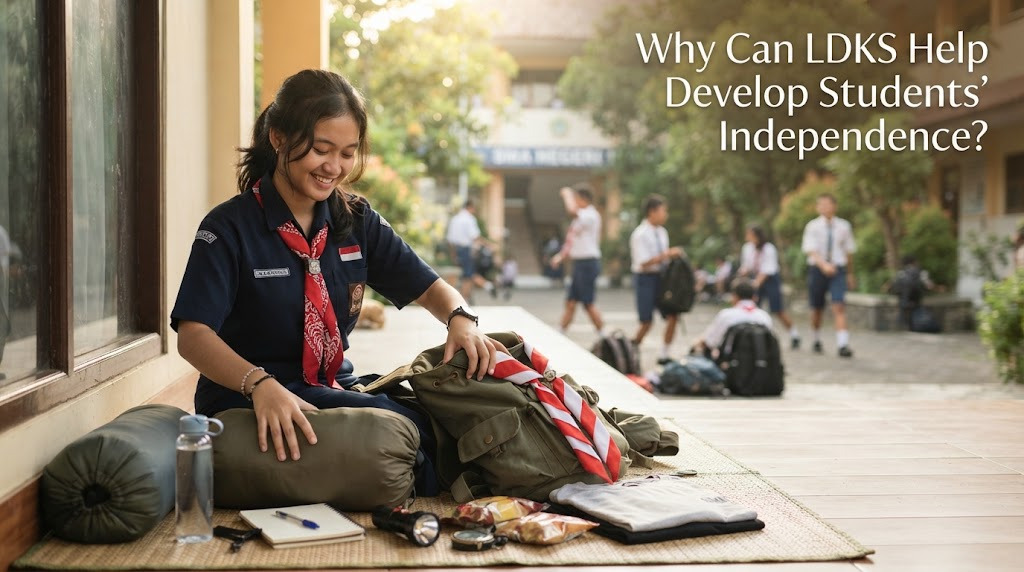
LDKS, or Student Leadership Training, is a school activity that helps students develop leadership, responsibility, communication, and teamwork skills. Besides these abilities, LDKS can also encourage students to become more independent in handling different situations. Through practical activities, students may be encouraged to make decisions, complete tasks, and solve problems with less dependence on others. These experiences can support the development of student independence in school and daily life.
WHAT IS STUDENT INDEPENDENCE AND WHY IS IT IMPORTANT?
Student independence refers to the ability to manage tasks, make decisions, and take responsibility without always depending on other people. Independent students can organize their activities, identify what needs to be done, and make reasonable choices. This ability is important because students face different academic, social, and organizational responsibilities. Developing independent learning and behavior can also prepare students for future challenges.
Independence does not mean refusing help from others. Instead, it means knowing when to try something independently and when to ask for appropriate support. LDKS can provide situations where students need to take initiative while still working with their teams. This balance can help students understand the meaning of responsible independence.
HOW DOES LDKS ENCOURAGE STUDENTS TO TAKE RESPONSIBILITY?
Responsibility is closely connected to independence because students need to understand the consequences of their actions. During LDKS, students may receive individual or group assignments that must be completed within a certain period. They are expected to follow instructions and contribute to the success of their team. These activities can teach students to take ownership of their assigned responsibilities.
Students can also learn that completing a task should not always depend on constant reminders from teachers or teammates. They may need to organize their own time and determine the steps needed to finish an assignment. This experience can encourage them to become more responsible in other areas of school life. Over time, responsibility skills can support stronger independence.
HOW DOES LDKS HELP STUDENTS MAKE THEIR OWN DECISIONS?
Decision-making is an important part of developing independence. LDKS may include activities where students have to choose strategies, divide tasks, or determine solutions to certain problems. These situations encourage students to think about different options before making a decision. Such experiences can develop decision-making skills in a practical environment.
Students may sometimes make decisions that do not produce the expected results. Instead of seeing this only as a failure, they can use the experience to understand what could be improved. Learning from decisions can help students become more careful and confident when facing similar situations. This process can gradually strengthen their independent thinking.
HOW DOES PROBLEM-SOLVING SUPPORT STUDENT INDEPENDENCE?
Problem-solving activities can teach students how to respond when they face challenges. During LDKS, students may encounter group tasks or situations that require them to identify a problem and find a suitable solution. They can learn to analyze the situation, discuss possible choices, and take action. These experiences provide opportunities to practice problem-solving skills.
Although teamwork may be involved, students can still learn to contribute their own ideas instead of waiting for someone else to solve the problem. They become more comfortable expressing suggestions and taking initiative when appropriate. This habit can be useful when students face academic or personal challenges outside LDKS. Independent problem-solving can therefore become an important part of their personal development.
HOW CAN LDKS BUILD STUDENTS’ INITIATIVE?
Initiative means being willing to take action without always waiting for someone to give detailed instructions. LDKS can encourage students to take initiative through leadership tasks, group activities, and practical assignments. Students may be asked to organize responsibilities, help teammates, or suggest ideas for completing an activity. These experiences can develop student initiative.
Taking initiative also requires students to understand their responsibilities and consider the needs of others. Students can learn that being proactive does not mean acting carelessly or ignoring group decisions. Instead, they should communicate their ideas and consider the situation before taking action. This can help develop confidence and independence at the same time.
HOW DOES LDKS PREPARE STUDENTS FOR FUTURE RESPONSIBILITIES?
The independence developed through LDKS can be useful in many areas of students' lives. Students may become more prepared to manage school assignments, organizational activities, group projects, and other responsibilities. They can also learn to organize their time and respond to challenges more thoughtfully. These abilities can support their preparation for future responsibilities.
Independence is a skill that develops gradually through repeated experiences. LDKS can provide an environment where students practice responsibility, decision-making, problem-solving, and initiative. The lessons gained from these activities can continue to be applied after the training ends. In this way, LDKS and independence can be connected through practical learning and personal experience.
CONCLUSION
LDKS can help develop students' independence by giving them opportunities to take responsibility, make decisions, solve problems, and take initiative. These activities encourage students to become more active in managing tasks instead of depending entirely on others. At the same time, students can learn that independence should be balanced with cooperation and respect for other people.
The experience gained from LDKS can support students in handling responsibilities at school and in everyday situations. By practicing independent thinking and responsible action, students can gradually become more prepared to face new challenges. Student independence can therefore become one of the useful personal skills developed through LDKS.
About the Author
Gusti Ayu Tita P
Author — STEKOM University
An active author focused on academic issues, educational technology, and human resource development in the campus environment.