
Why Commuter Trains Are Gaining Popularity?
Gusti Ayu Tita P
11 Agustus 2026
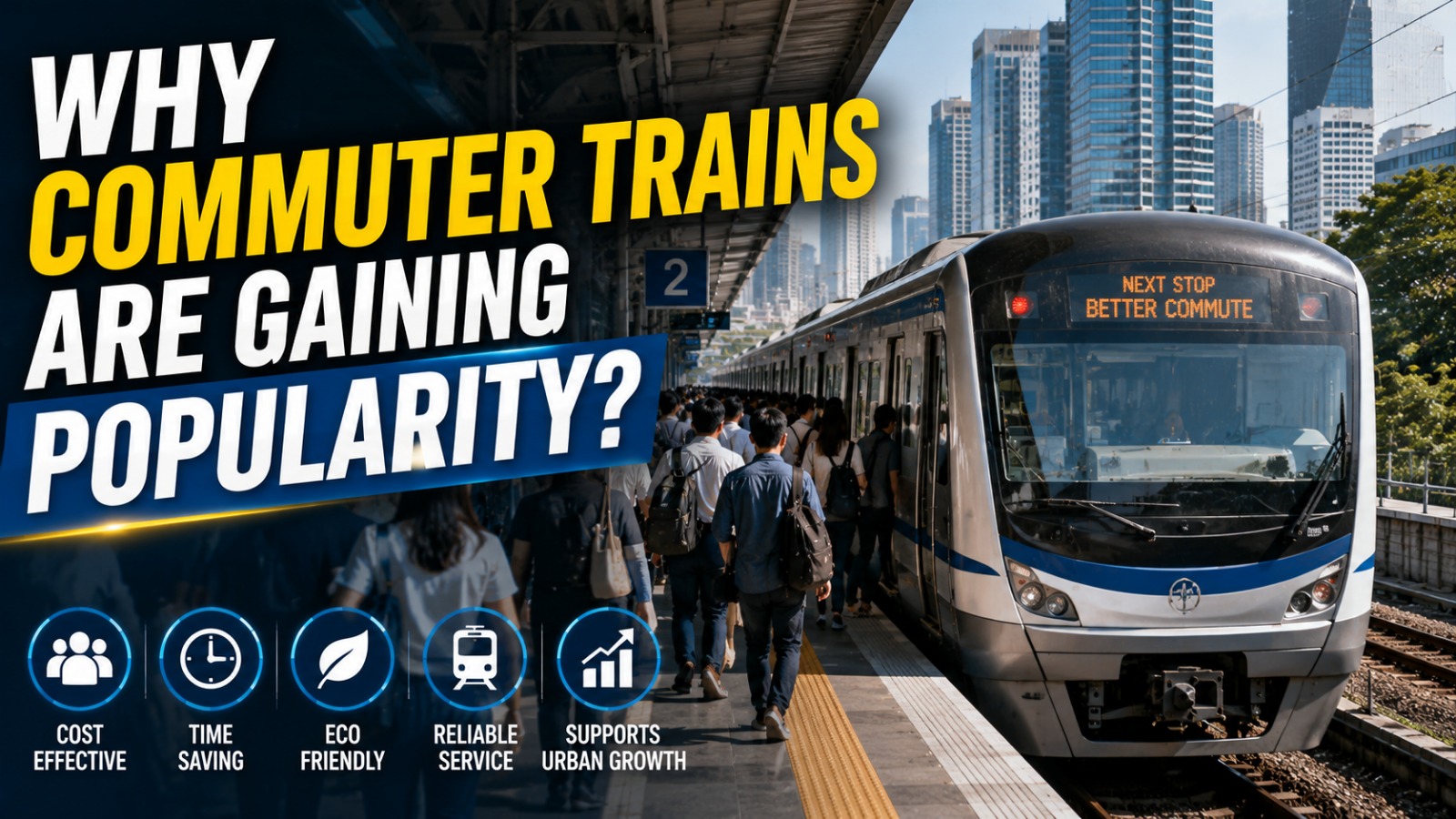
In many growing cities, commuter trains are becoming an increasingly important part of daily transportation. As urban populations expand, roads become more crowded, travel times increase, and people look for transportation that is practical and reliable. Commuter trains offer an efficient way to move large numbers of passengers between residential areas and city centers. Their growing popularity is also connected to improvements in technology, public transportation systems, and environmental awareness.
The shift toward rail-based transportation is not simply a trend. It reflects changing travel needs and the need for cities to develop more efficient mobility systems. From faster journeys to lower transportation costs, commuter trains provide several advantages for workers, students, and other daily travelers.
REDUCING DAILY TRAFFIC CONGESTION
One of the main reasons commuter trains are gaining popularity is their ability to reduce pressure on busy roads. A single train can carry hundreds or even thousands of passengers during peak hours, replacing a large number of private cars and motorcycles. This makes rail transportation particularly useful in densely populated urban areas where road space is limited. When more people choose trains instead of private vehicles, traffic congestion can potentially become easier to manage.
Commuter trains also provide a more predictable travel experience in areas where road traffic is highly variable. Passengers do not have to worry as much about traffic jams affecting every part of their journey. This reliability is especially valuable for employees and students who need to arrive at their destinations on time. As a result, reliable transportation can make daily commuting less stressful and more manageable.
SAVING TIME FOR DAILY PASSENGERS
Time is another important factor behind the increasing popularity of commuter trains. Rail services often operate on dedicated tracks, allowing trains to avoid many of the delays experienced by road vehicles. In cities with extensive rail networks, passengers can travel between suburban areas and business districts relatively quickly. This can make trains an attractive option for people who commute long distances every day.
Modern commuter rail systems may also provide frequent services during busy periods. Passengers can plan their journeys according to published schedules and, in many systems, use digital applications to check arrival information. These features make daily commuting more convenient. For people who spend hours traveling to work or school, even small time savings can make a significant difference over the course of a week.
OFFERING A MORE AFFORDABLE TRAVEL OPTION
Transportation costs can have a major impact on household budgets. Owning and operating a private vehicle involves expenses such as fuel, parking, maintenance, insurance, and repairs. By comparison, commuter trains can provide a more economical alternative for people who travel regularly along established routes. Affordable fares are therefore one reason public transportation continues to attract daily passengers.
The financial advantage can become more noticeable when commuters travel during the same route for many days each month. Some rail operators also provide monthly passes, integrated tickets, or other fare options that can reduce the cost of frequent travel. Although prices and fare structures differ between cities, the overall cost of using public transportation can be competitive with private vehicle ownership. This makes commuter trains particularly appealing to workers and students seeking practical transportation.
SUPPORTING A MORE SUSTAINABLE CITY
Environmental concerns are also influencing transportation choices. Road transportation produces significant emissions, particularly when many vehicles are carrying only one or two people. Trains can move large numbers of passengers in a single journey, which can improve transportation efficiency. When rail systems use cleaner energy sources and attract passengers away from private vehicles, they can contribute to efforts to reduce transportation-related emissions.
The environmental benefits of rail depend on factors such as energy sources, passenger numbers, infrastructure, and operational efficiency. Electrified railway systems can reduce direct exhaust emissions along railway routes, although the overall environmental impact also depends on how the electricity is generated. For cities seeking sustainable mobility, investing in efficient public transportation can therefore be an important part of a broader environmental strategy.
PROVIDING GREATER TRAVEL CONVENIENCE
Modern commuter trains are becoming more comfortable and convenient for passengers. Many systems now offer digital ticketing, electronic payment methods, real-time service information, and mobile applications. These technologies help passengers plan journeys, purchase tickets, and respond to service changes more easily. Improvements in stations, seating, lighting, accessibility, and passenger information can also improve the overall travel experience.
Another advantage is that passengers can use their travel time differently from when they are driving. During a train journey, people may read, listen to music, study, or prepare for work instead of concentrating on traffic. This can make long-distance commuting feel more productive. When smart transportation technology is combined with dependable rail services, commuter trains become more attractive to modern passengers.
CONNECTING SUBURBS WITH CITY CENTERS
Commuter trains play an important role in connecting residential communities with major employment and educational centers. Many people live outside city centers because housing can be more affordable or because they prefer quieter neighborhoods. Rail networks can provide these communities with access to jobs, universities, shopping areas, and public services. This connection can strengthen economic and social activity across a wider metropolitan area.
Well-connected rail networks can also encourage people to consider alternatives to private vehicles. Stations often connect with buses, taxis, bicycles, walking routes, and other forms of transportation. This creates a connected transit network in which different transportation modes support one another. The easier it is to transfer between services, the more useful public transportation becomes for everyday journeys.
CONCLUSION
The growing popularity of commuter trains is driven by several connected factors, including traffic congestion, travel time, affordability, convenience, and environmental concerns. They offer cities an efficient way to transport large numbers of people while supporting more organized urban mobility. Technological improvements are also making train services easier to access and more convenient for passengers.
As cities continue to grow, demand for efficient public transportation is likely to remain important. Commuter trains cannot solve every transportation problem by themselves, but they can become a strong part of an integrated mobility system. With reliable services, accessible fares, modern facilities, and good connections with other transport modes, commuter trains can continue to play an important role in the future of urban travel.
About the Author
Gusti Ayu Tita P
Author — STEKOM University
An active author focused on academic issues, educational technology, and human resource development in the campus environment.















