Why Differences Of Opinion Can Cause Family Conflict?
Gusti Ayu Tita P
8 September 2026
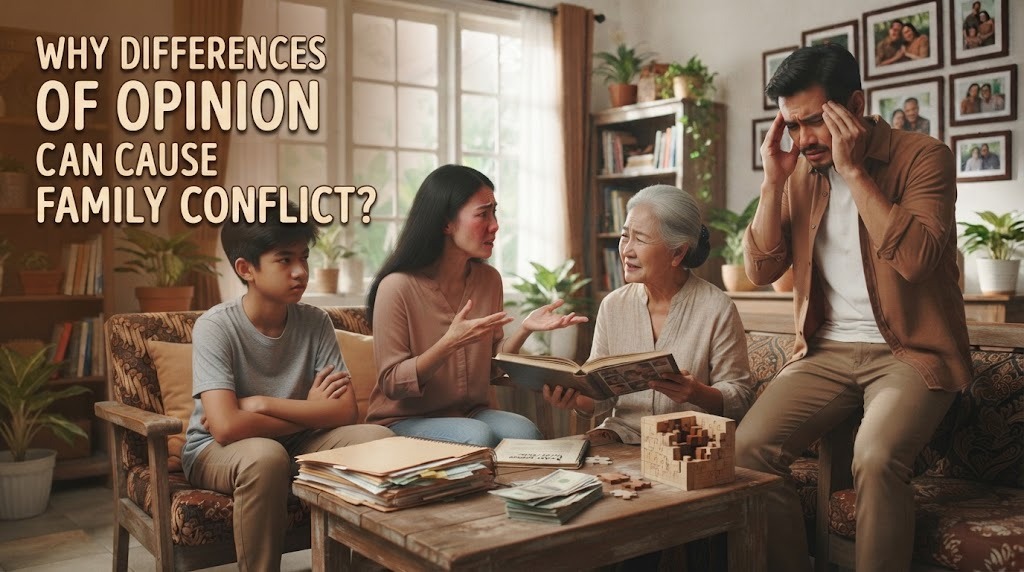
Family members do not always think in the same way. Differences in age, personality, experiences, values, and personal goals can influence how people understand a situation. These differences are normal in family life, but they can become a problem when people refuse to respect each other's perspectives. Strong disagreements may lead to arguments, emotional distance, and damaged trust. Understanding why differences of opinion can cause family conflict can help families respond to disagreements in a healthier way.
DIFFERENT PERSONALITIES CREATE DIFFERENT PERSPECTIVES
Every family member has a unique personality that influences how they think and behave. Some people are more direct, while others prefer to remain quiet when facing a problem. These differences can make the same situation appear very different to each person. When family members fail to understand these differences, they may assume that another person is being difficult or unreasonable. Accepting different personalities can help reduce unnecessary tension during disagreements.
DIFFERENT LIFE EXPERIENCES AFFECT OPINIONS
People develop their opinions based on their experiences, education, environment, and relationships. Parents may have different views from their children because they grew up in different periods and faced different challenges. Children and teenagers may also have experiences that their parents do not fully understand. These differences can create different ways of seeing the same problem. Listening to each person's experience can make disagreements easier to understand and manage.
DIFFERENT VALUES AND PRIORITIES
Family members may have different ideas about what is most important in life. One person may prioritize education, while another may focus more on financial stability, personal freedom, or family responsibilities. These different values and priorities can influence decisions about everyday life. Conflict may occur when one person expects others to follow their priorities. Respecting individual values while discussing shared family responsibilities can help prevent serious disagreements.
POOR COMMUNICATION MAKES DISAGREEMENTS WORSE
A difference of opinion does not automatically create a serious conflict. Problems often become worse when family members communicate through shouting, insults, accusations, or silence. Poor communication can cause people to misunderstand the real meaning behind another person's words. Instead of asking for clarification, they may make assumptions and become defensive. Using calm and clear communication can prevent ordinary disagreements from becoming larger family conflicts.
THE DESIRE TO ALWAYS BE RIGHT
Some disagreements become serious because people focus more on winning than understanding each other. A family member may feel that accepting another person's opinion means admitting defeat. This attitude can create ego and defensiveness during conversations. When both sides refuse to compromise, even a small issue can turn into a long argument. Learning to accept that different opinions can exist at the same time is important for maintaining healthy relationships.
EMOTIONAL REACTIONS CAN INTENSIFY CONFLICT
Strong emotions can influence how people respond to different opinions. Anger, disappointment, fear, or frustration may cause someone to react before thinking carefully. During an emotional argument, people may say hurtful things that they later regret. Emotional control can help family members respond more thoughtfully to disagreements. Taking a short break and continuing the conversation when everyone is calmer can reduce unnecessary tension.
UNREALISTIC EXPECTATIONS CAN CREATE TENSION
Family members may expect others to think, behave, or make decisions in a certain way. When those expectations are not met, disappointment can turn into frustration. Parents may expect children to follow certain choices, while children may want more independence. Unrealistic expectations can make people feel pressured or misunderstood. Discussing expectations openly can help family members find reasonable solutions without forcing everyone to think alike.
LACK OF EMPATHY MAKES DIFFERENCES HARDER TO ACCEPT
Empathy allows people to understand feelings and perspectives that are different from their own. Without empathy, family members may quickly judge another person's opinion as wrong or selfish. This can create emotional distance and make communication more difficult. Empathy does not require complete agreement, but it encourages people to understand why someone thinks differently. Practicing empathy can make disagreements more respectful and productive.
HOW TO HANDLE DIFFERENT OPINIONS IN A HEALTHY WAY
Differences of opinion can be managed through active listening, respectful communication, compromise, and mutual understanding. Family members should allow everyone to explain their perspective without unnecessary interruption. Instead of focusing on who is right, they can identify the main issue and look for a solution that considers everyone's needs. It is also important to recognize which issues require agreement and which differences can simply be accepted. This approach allows family members to disagree without damaging their relationship.
CONCLUSION
Differences of opinion can cause family conflict when they are combined with poor communication, strong emotions, unrealistic expectations, or a lack of respect. However, disagreement itself is not necessarily harmful to a family relationship. With active listening, empathy, emotional control, and a willingness to compromise, family members can handle different perspectives more peacefully. Respecting differences does not mean agreeing with everything, but it allows everyone to feel heard and valued. By developing healthy communication habits, families can turn disagreements into opportunities to understand one another and strengthen their relationships.
About the Author
Gusti Ayu Tita P
Author — STEKOM University
An active author focused on academic issues, educational technology, and human resource development in the campus environment.