
Why Do Firstborn Children Often Feel Responsible for Others?
Gusti Ayu Tita P
7 September 2026
INTRODUCTION
Being the firstborn child often comes with a unique position in the family. As the oldest sibling, a child may receive more attention and guidance from parents during the early years. As younger siblings arrive, the firstborn may gradually become more aware of their role within the family. This experience can make them feel responsible not only for themselves but also for the people around them. However, every firstborn child is different, and family environment plays an important role in shaping this feeling.
The sense of responsibility can become a positive quality when it is balanced with personal freedom and emotional support. Firstborn children may learn to become dependable, caring, and organized from their experiences at home. At the same time, too many expectations can create unnecessary pressure. Understanding why firstborn children often feel responsible for others can help parents and siblings build healthier family relationships.
THE ROLE OF THE FIRSTBORN CHILD IN THE FAMILY
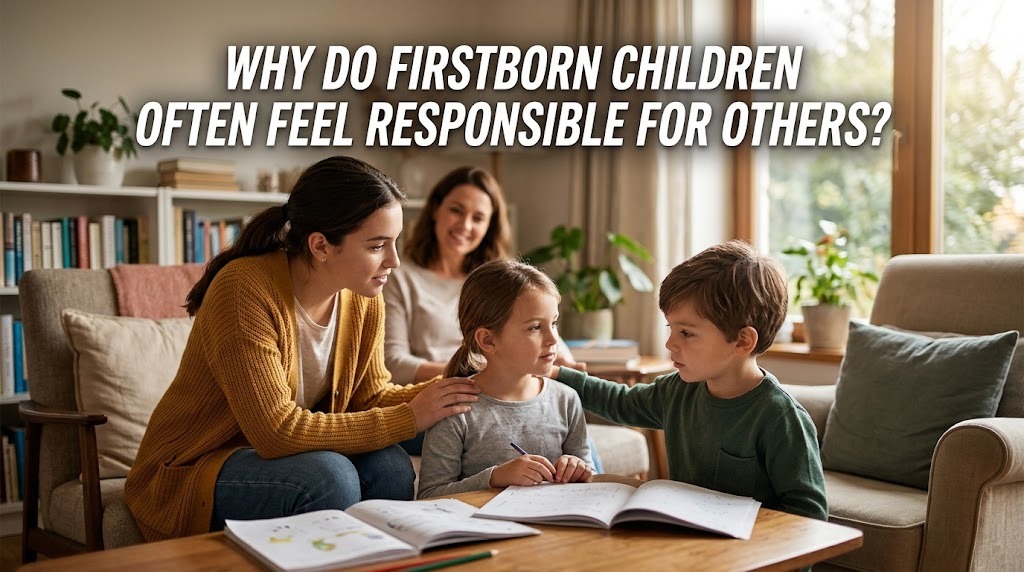
The firstborn child often experiences family life differently because they are usually the first child to receive their parents attention and guidance. When younger siblings are born, parents may naturally ask the oldest child to help with simple tasks. These tasks can include watching a younger sibling, helping with household activities, or setting a good example. Although these responsibilities may seem small, they can influence how the child understands their position in the family. Over time, the firstborn may begin to see themselves as someone who should help and protect others.
Parents may also place greater expectations on the oldest child because they believe the firstborn is more mature. This can encourage the child to develop independence and responsibility at an early age. However, parents should remember that the firstborn is still a child and needs opportunities to play, rest, and make mistakes. Being the oldest does not mean being a second parent. A healthy family environment allows the firstborn to help others without making them feel responsible for every family problem.
WHY FIRSTBORN CHILDREN MAY FEEL RESPONSIBLE FOR OTHERS
One important reason firstborn children may feel responsible for others is their early experience with younger siblings. They may see their parents taking care of the family and gradually learn to copy that behavior. When parents ask them to help with their younger brothers or sisters, they can develop a strong sense of duty. Positive feedback from parents can make this behavior even stronger. As a result, the firstborn may become accustomed to thinking about other people's needs before their own.
Family communication can also influence this feeling. Statements such as asking an older child to understand their younger sibling or to behave as an example can unintentionally increase their sense of responsibility. In moderation, these expectations can encourage emotional maturity and empathy. However, constant pressure may make a child believe they must always be strong and reliable. This is why parents should clearly communicate that helping the family is valuable, but the child's own needs and feelings are important too.
COMMON CHARACTERISTICS OF RESPONSIBLE FIRSTBORN CHILDREN
Firstborn children who frequently experience responsibility may develop several noticeable characteristics. They may become organized, dependable, protective, and independent because these qualities help them manage expectations at home. Some may naturally take initiative when a problem occurs or when their siblings need assistance. They may also become comfortable making decisions and guiding younger family members. These characteristics can later become useful in school, friendships, work, and other social situations.
However, responsibility does not affect every firstborn child in exactly the same way. Some may become confident leaders, while others may become quiet because they feel pressure to meet family expectations. Personal temperament, parenting style, family relationships, and cultural values can all influence development. Therefore, birth order alone cannot determine someone's personality. Firstborn children should be understood as individuals rather than being defined only by their position in the family.
THE POSITIVE AND NEGATIVE SIDES OF FEELING RESPONSIBLE
A healthy sense of responsibility can provide many benefits for a firstborn child. It can help them develop leadership, empathy, problem solving, and independence from everyday family experiences. They may become more aware of how their actions affect other people. These skills can support them when working in teams, managing responsibilities, or building relationships. Feeling trusted can also strengthen a child's confidence when expectations are reasonable.
On the other hand, excessive responsibility can become stressful. A firstborn child may feel guilty when they cannot help everyone or may believe that making mistakes will disappoint their family. They may also have difficulty saying no because they are used to putting other people's needs first. Too much responsibility can turn a positive quality into emotional pressure. Parents can reduce this risk by giving age appropriate responsibilities while making it clear that children are not responsible for solving adult problems.
HOW FAMILIES CAN SUPPORT A FIRSTBORN CHILD
Families can support firstborn children by recognizing their contributions without placing excessive expectations on them. Parents should appreciate their help while also giving them enough freedom to enjoy childhood and develop their own interests. It is important to avoid comparing the firstborn with younger siblings or expecting them to always behave perfectly. Every child needs permission to make mistakes, express emotions, and ask for help. This approach can help the firstborn develop responsibility without feeling overwhelmed.
Siblings can also contribute to a healthier relationship by sharing responsibilities and respecting each other's boundaries. Parents can encourage younger children to become independent instead of relying on the oldest sibling for everything. Regular family conversations can help everyone understand what each person needs and expects. When the firstborn feels supported rather than pressured, responsibility can become a source of confidence instead of stress. Balanced expectations and open communication are key to creating a positive family environment.
CONCLUSION
Firstborn children often feel responsible for others because their position in the family can expose them to responsibilities at an early age. Helping younger siblings, receiving expectations from parents, and becoming an example for others can gradually shape their sense of duty. This experience can help develop valuable qualities such as empathy, independence, leadership, and reliability.
However, being the oldest child should not mean carrying the emotional or practical burden of the entire family. Parents need to provide support, realistic expectations, and enough personal freedom. When responsibility is balanced with care and understanding, firstborn children can grow into confident individuals while maintaining healthy relationships with their families.
About the Author
Gusti Ayu Tita P
Author — STEKOM University
An active author focused on academic issues, educational technology, and human resource development in the campus environment.















