
Why Do Humans Continue to Wonder About the Afterlife
Gusti Ayu Tita P
9 September 2026
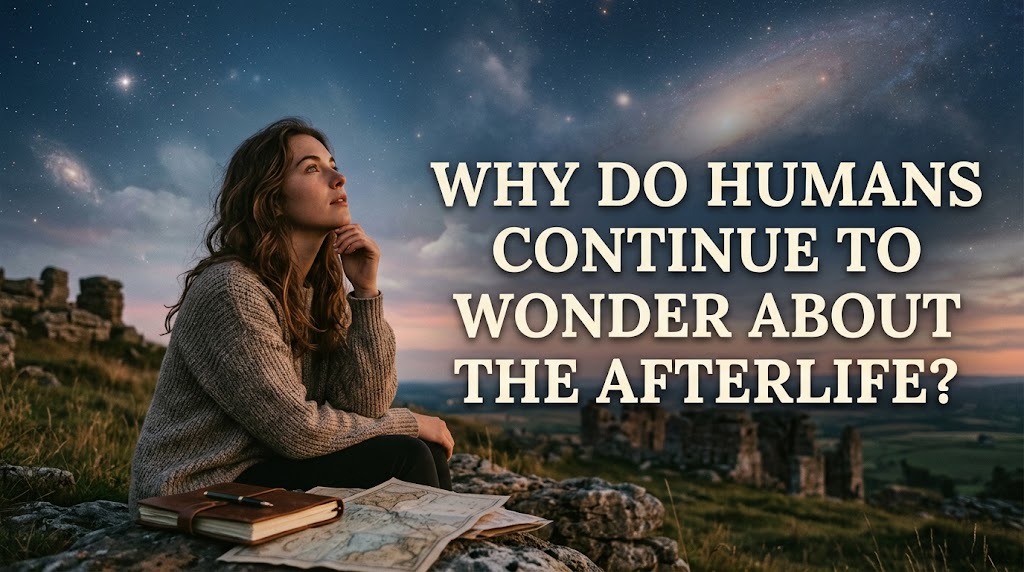
Questions about what happens after death have existed throughout human history. People from different cultures and belief systems have tried to understand whether life continues after physical death or whether death marks the complete end of existence. Although the answers vary widely, the question remains important because death is a universal experience that every human being eventually faces.
The idea of an afterlife is connected to religion, spirituality, philosophy, culture, and personal experience. Some people believe that consciousness continues in another form, while others understand death through ideas such as resurrection, reincarnation, spiritual existence, or an eternal world. Exploring these perspectives can help explain why humans continue to wonder about what may exist beyond physical life.
THE HUMAN DESIRE TO UNDERSTAND LIFE AFTER DEATH
One major reason humans wonder about the afterlife is the natural desire to understand the unknown. Death is one of the greatest mysteries of human existence, because no living person can provide universally accepted proof of exactly what happens after death. People therefore use religious teachings, philosophical ideas, cultural traditions, and personal beliefs to make sense of this mystery.
The question also comes from the human desire for meaning and continuity. Many people find comfort in believing that death is not necessarily the end of existence. Beliefs about an afterlife can provide hope during times of grief and help individuals understand the loss of someone they love. At the same time, some people do not believe in an afterlife and instead find meaning in the life they are living now.
DIFFERENT BELIEFS ABOUT THE AFTERLIFE
Beliefs about life after death differ greatly around the world. In some religious traditions, people believe that individuals experience a form of judgment after death, followed by a spiritual destination based on their beliefs and actions. Other traditions describe reincarnation, in which a person is believed to be born again in another life. There are also belief systems that focus less on a permanent destination and more on spiritual transformation or liberation.
These differences show that there is no single cultural explanation for the afterlife. Religion and spirituality strongly influence how people understand death, but family traditions and local culture can also shape these beliefs. Some people combine traditional teachings with personal interpretations, creating individual views about what may happen after death. Understanding these differences encourages people to respect perspectives that may not be the same as their own.
HOW CULTURE SHAPES IDEAS ABOUT DEATH
Human cultures have developed many traditions to help people deal with death and remember those who have passed away. Funeral ceremonies, memorial practices, prayers, and rituals can provide emotional support for families and communities. These practices often reflect beliefs about the relationship between the living and the dead.
Ancient civilizations also created stories and traditions about worlds beyond physical life. These stories helped communities explain death, morality, and the unknown. Even today, literature, films, art, and popular culture continue to explore ideas about life beyond death. This shows that the human fascination with the afterlife is not limited to religious discussion but is also deeply connected to creativity and storytelling.
WHY AFTERLIFE BELIEFS CAN INFLUENCE HUMAN BEHAVIOR
Beliefs about what happens after death can influence how people understand right and wrong. In some traditions, actions during life are believed to have consequences beyond death. This can encourage people to practice values such as honesty, kindness, responsibility, compassion, and respect for others.
However, people do not need to share the same afterlife beliefs to develop strong moral values. Human behavior can also be influenced by social responsibility, empathy, family relationships, laws, and personal principles. For many people, thinking about death encourages reflection on how they use their time and how they treat others. In this way, questions about the afterlife can influence everyday decisions even when people have different explanations for what comes after death.
WHAT THE QUESTION ABOUT THE AFTERLIFE TEACHES US
The continuing interest in the afterlife reveals something important about human nature. People naturally seek answers to questions about existence, identity, meaning, and mortality. Even when certainty is impossible, asking these questions can encourage deeper reflection about life itself.
Different perspectives also teach people the value of respecting diverse beliefs. No single cultural tradition completely represents the way every person understands death. Learning about different views can broaden our understanding of human history and encourage thoughtful conversations about spirituality and mortality. Ultimately, the question of what happens after death may be impossible to answer universally, but the search for understanding remains an important part of being human.
CONCLUSION
Humans continue to wonder about the afterlife because death is universal but its meaning is interpreted in many different ways. Religious beliefs, cultural traditions, philosophical ideas, and personal experiences all contribute to how people imagine life beyond physical existence. For some, the afterlife provides hope and spiritual meaning, while others focus on making the most of the present life.
Although people may never agree on what happens after death, exploring the question can help us better understand human values, culture, spirituality, and the meaning of life. The mystery of the afterlife continues to inspire questions because the desire to understand existence is deeply connected to human curiosity.
About the Author
Gusti Ayu Tita P
Author — STEKOM University
An active author focused on academic issues, educational technology, and human resource development in the campus environment.















