
Why Do Ministers Have an Important Role in Government?
Gusti Ayu Tita P
12 Agustus 2026
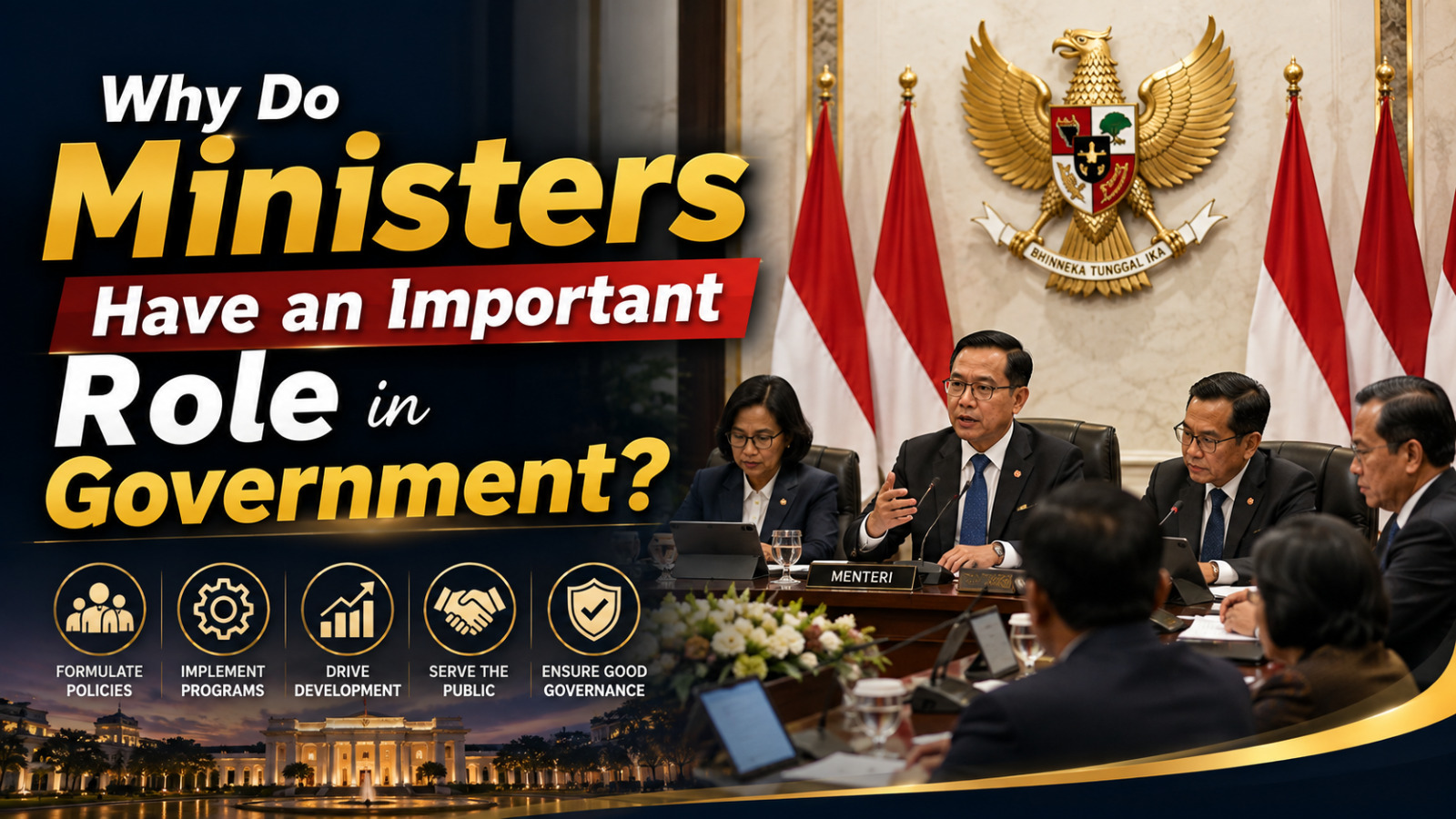
Ministers have an important role in government because they assist the President in managing specific areas of national administration. Each minister leads a ministry with responsibilities determined by laws and government regulations. Ministers help formulate policies, manage government programs, and ensure that public affairs are handled within their respective fields. Their work affects many aspects of government and public services. Without clear leadership and coordination, government programs can become less effective.
LEADING GOVERNMENT MINISTRIES
One of the main reasons ministers are important is that they lead ministries responsible for specific government affairs. A ministry may focus on areas such as education, health, finance, trade, transportation, or other national priorities. The minister provides direction so that the ministry can carry out its responsibilities effectively. Leadership helps organize officials, programs, and resources within the ministry.
Ministers also need to ensure that their ministries follow government priorities and applicable laws. They make strategic decisions within their authority and coordinate the work of different units. Effective leadership can help ministries respond to challenges in their respective sectors. This makes the role of ministers essential to organized government administration.
IMPLEMENTING GOVERNMENT POLICIES
Government policies need to be translated into programs and activities that can be implemented. Ministers help direct their ministries in carrying out these policies according to their areas of responsibility. They connect government priorities with practical actions that can produce results for society. This process requires planning, coordination, and appropriate use of resources.
Implementation may involve cooperation with other ministries, agencies, and regional governments. Ministers help maintain coordination when programs involve multiple sectors. They also need to monitor whether policies are being implemented as intended. Through this process, government decisions can be transformed into concrete programs and public services.
MANAGING PUBLIC RESOURCES
Government programs require resources such as personnel, funding, facilities, and information. Ministers have a responsibility to ensure that their ministries manage these resources according to applicable rules. Responsible resource management supports effective and accountable government programs. Proper planning is necessary so that available resources can be directed toward established priorities.
Ministers also need to oversee the performance of their ministries. Monitoring can help identify inefficiencies, implementation problems, or areas that require improvement. When resources are managed responsibly, government programs can operate more effectively. This contributes to better administration and public service delivery.
SERVING PUBLIC NEEDS
Many responsibilities of ministries are directly connected to people's everyday lives. Education, healthcare, economic services, infrastructure, and social programs are examples of areas that can affect public welfare. Ministers help ensure that policies and programs within their fields respond to public needs. Understanding these needs is important when developing and implementing government policies.
Evaluation and public feedback can provide information about whether government programs are achieving their objectives. Ministers can use this information to improve policies and programs within their authority. Cooperation with communities and other institutions can also strengthen implementation. Through responsive leadership, ministries can provide services that are more relevant to society.
CONCLUSION
Ministers have an important role in government because they lead ministries, implement policies, manage public resources, coordinate programs, and support public services. Each minister has different responsibilities depending on the ministry they lead. However, all ministers contribute to the broader work of government and assist the President in administering the country. Effective leadership and coordination are necessary to ensure that government programs achieve their objectives. For this reason, ministers are an essential part of Indonesia's government administration.
About the Author
Gusti Ayu Tita P
Author — STEKOM University
An active author focused on academic issues, educational technology, and human resource development in the campus environment.















