
Why Do Social Media Algorithms Determine What Appears on Your Feed?
Gusti Ayu Tita P
7 Agustus 2026
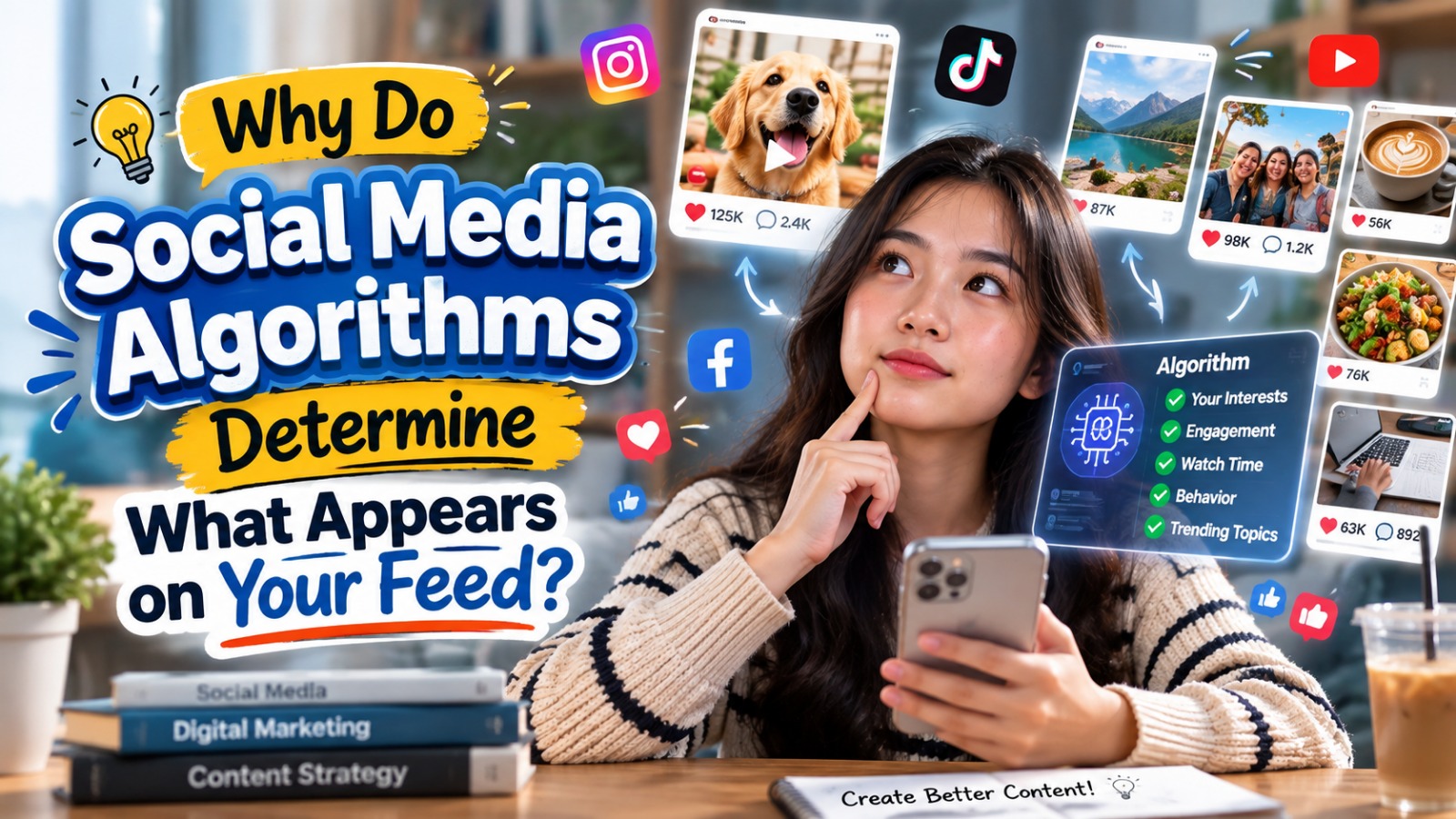
Social media platforms contain an enormous amount of content that is uploaded every day. It would be difficult for users to view every post, video, photo, or update from all the accounts they follow. Social media algorithms help solve this problem by selecting and organizing content that may be most relevant to each user. Understanding how these algorithms work can explain why certain posts appear on your feed more often than others.
Algorithms can consider many signals, including user activity, interactions, content information, and viewing behavior. The exact system differs between platforms and can change over time. Therefore, there is no single formula that determines what everyone sees. Instead, social media feeds are generally personalized according to each user's interests and behavior.
WHAT ARE SOCIAL MEDIA ALGORITHMS?
Social media algorithms are systems that help platforms organize and recommend content to users. Rather than displaying every post in a simple chronological order, platforms can rank content based on signals that suggest what a particular user may find useful or interesting. These signals can include likes, comments, shares, saves, clicks, and viewing activity. The system then uses these signals to create a more personalized feed.
Different social media platforms use different ranking systems. A platform focused on short videos may pay close attention to viewing and retention behavior, while another platform may place more emphasis on relationships and interactions. Algorithms can also work differently across features within the same platform. This is why content may perform differently across social networks.
WHY ALGORITHMS CONTROL WHAT APPEARS ON YOUR FEED?
The main reason algorithms organize feeds is to help users find relevant content without having to search through everything that has been published. If every post were displayed in the exact order it was uploaded, users could quickly become overwhelmed. Algorithms can prioritize content based on signals that indicate potential interest. This creates a more personalized browsing experience.
Personalization also helps platforms keep users engaged with content that matches their interests. For example, someone who frequently watches cooking videos may see more recipes and food related posts. Someone who regularly interacts with sports content may receive more updates about sports. The feed therefore changes based on individual behavior rather than being identical for everyone.
USER BEHAVIOR INFLUENCES YOUR FEED
Your activity on social media provides important information about your interests. Watching a video, liking a post, commenting, sharing content, saving information, or clicking a profile can all provide signals. Even the amount of time spent viewing certain content may help a platform understand what attracts your attention. These signals can influence what appears in future recommendations.
Your behavior can also change over time. If you suddenly start interacting with travel content, for example, the platform may gradually show more travel related posts. If you stop engaging with a particular topic, its presence in your recommendations may decrease. This makes social media feeds dynamic rather than permanently fixed.
ENGAGEMENT HELPS ALGORITHMS UNDERSTAND INTEREST
Engagement gives platforms additional information about how users respond to content. Likes can indicate approval or interest, while comments can show that a post encouraged discussion. Shares and saves may provide stronger signals in some contexts because they indicate that users found content worth keeping or recommending. However, the importance of each signal varies depending on the platform and feature.
Content with strong engagement may have more opportunities to be recommended to other relevant users, but engagement alone does not guarantee widespread distribution. Algorithms can consider multiple factors at the same time. Content must still be relevant to the people receiving it. This is why a post with many interactions may not appear equally often for every user.
CONTENT RELEVANCE AFFECTS WHAT YOU SEE
Algorithms need to understand what a piece of content is about before deciding which users may be interested in it. Captions, keywords, hashtags, visual elements, audio, and other available information can help provide context. The platform can then compare this information with signals from user behavior. If the content matches a user's interests, it may have a greater chance of appearing in recommendations.
For creators, this means clear and relevant content can be important for reaching the right audience. Using accurate descriptions and keywords helps communicate the subject of a post. However, misleading keywords or unrelated hashtags do not guarantee better visibility. Relevance should remain the main priority.
WATCH TIME CAN SHAPE VIDEO RECOMMENDATIONS
Video platforms can use viewing behavior to understand whether users find content interesting. Watch time can show how long someone stays with a video, while retention can indicate whether viewers continue watching. If many people leave shortly after a video starts, this provides different information from a video that keeps viewers watching. These signals can influence future recommendations.
Creators can improve viewing behavior by making videos clear and engaging from the beginning. The main subject should be introduced without unnecessary delays. A strong opening should also match what the rest of the video actually provides. Misleading hooks may attract initial clicks but can create a poor viewing experience if the content does not meet expectations.
YOUR CONNECTIONS CAN INFLUENCE YOUR FEED
Social media platforms may consider relationships between users when organizing content. If you frequently interact with a particular account, the platform may recognize that the account is relevant to you. Posts from people, creators, or communities you regularly engage with may therefore become more prominent in your experience. This can help users stay connected with content and people they care about.
However, following an account does not always mean every post from that account will appear in your feed. There may be too much content to display everything. The platform may prioritize some posts based on predicted relevance, recent activity, or other signals. This explains why users sometimes miss posts from accounts they follow.
ALGORITHMS LEARN FROM YOUR ACTIONS
One important characteristic of social media algorithms is their ability to adapt. As users continue interacting with content, platforms can collect new signals about changing interests. The recommendations shown today may therefore differ from those shown several weeks or months ago. A user's feed can evolve as their behavior changes.
This personalization can be useful because people do not always have the same interests forever. Someone who previously watched entertainment content may later become interested in education, fitness, technology, or travel. New interactions can gradually influence recommendations. In this way, the feed reflects both previous behavior and more recent signals.
WHY TWO PEOPLE SEE DIFFERENT CONTENT?
Two people can follow many of the same accounts but still receive different feeds. This happens because their individual behaviors, interests, interactions, and viewing histories may not be identical. One person may regularly engage with educational content, while another may prefer entertainment or sports. The algorithm can use these differences to personalize recommendations.
Location, language, content availability, and platform features can also affect what users see. Some content may be relevant to one audience but not another. As a result, there is no single universal feed for everyone. Personalization is a central part of how modern social media platforms organize information.
HOW TO INFLUENCE WHAT APPEARS ON YOUR FEED?
Users can often influence their recommendations by changing how they interact with content. Engaging with topics they genuinely enjoy can provide stronger signals about their interests. Following relevant accounts and using available controls to indicate preferences can also help. In contrast, repeatedly interacting with content a user does not want may contribute to more similar recommendations.
Users should also review the settings and controls provided by their social media platform. Some platforms offer options to manage recommendations, hide certain content, unfollow accounts, or indicate that a post is not relevant. These features can help make the feed more useful. The available controls depend on the platform and may change over time.
CONCLUSION
Social media algorithms determine what appears on your feed because platforms need an efficient way to organize huge amounts of content. They use signals such as user behavior, engagement, content relevance, viewing activity, and relationships to predict what a person may want to see. Because these signals differ from one user to another, feeds are highly personalized.
Understanding social media algorithms can help users become more aware of why certain content appears repeatedly. For creators, it also highlights the importance of producing relevant, useful, and engaging content for a specific audience. Algorithms can change over time, but focusing on genuine audience interest and meaningful content remains a practical approach to navigating social media.
About the Author
Gusti Ayu Tita P
Author — STEKOM University
An active author focused on academic issues, educational technology, and human resource development in the campus environment.