Why Do Stories About Black Magic Survive Across Generations?
Gusti Ayu Tita P
10 September 2026
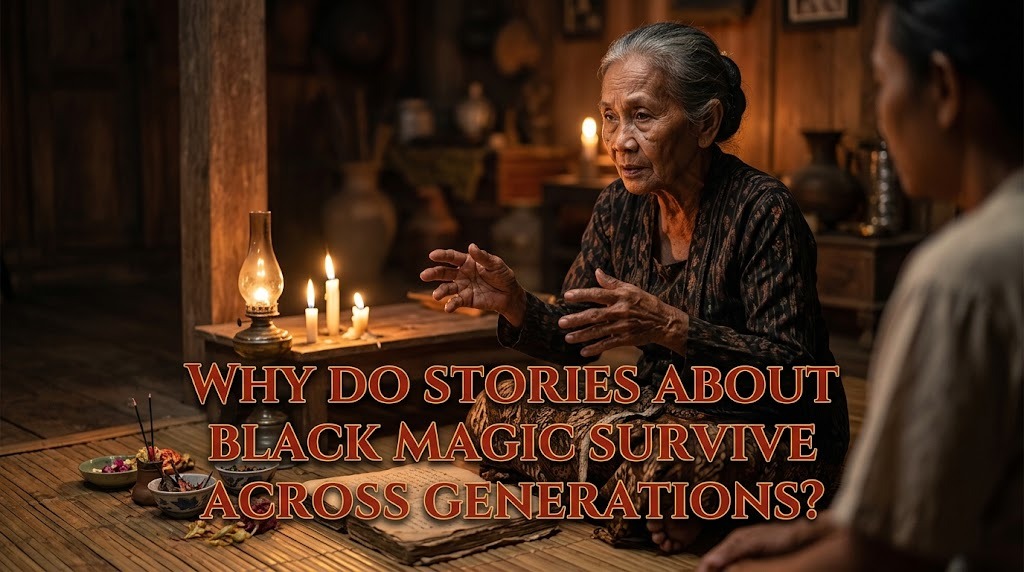
Stories about black magic have existed in many societies for centuries. They often describe mysterious powers, supernatural events, curses, magical objects, or people believed to possess unusual abilities. Although the details differ from one culture to another, these stories continue to attract attention because they connect with human curiosity about the unknown. Folklore, cultural traditions, religion, and social beliefs have all influenced the way such stories are created and remembered. Even in modern society, black magic remains a popular subject in books, films, television, games, and online discussions.
THE ROLE OF FEAR AND THE UNKNOWN
One important reason stories about black magic survive is their connection with fear of the unknown. In the past, people did not always have scientific explanations for diseases, accidents, natural disasters, or unexpected deaths. Supernatural beliefs sometimes provided a way to explain events that seemed impossible to understand. Stories about curses or magical forces could therefore reflect concerns about danger, uncertainty, and events beyond human control. These stories were often remembered because they created strong emotional reactions.
Fear also makes stories easier to remember and share. A tale involving a mysterious curse, a forbidden ritual, or an unexplained event can become a memorable warning for a community. However, believing in a story and telling a story are not necessarily the same thing. Some people may pass down supernatural tales as cultural traditions or entertainment without considering them literally true. This distinction helps explain why black magic stories can remain popular even when society changes.
BLACK MAGIC IN FOLKLORE AND ORAL TRADITIONS
Folklore has played a major role in preserving stories about supernatural practices. Before books and mass media became widely available, many stories were passed from one generation to another through spoken traditions. Parents, grandparents, storytellers, and community leaders could adapt stories while keeping their central themes. As a result, the same general idea could develop into different versions in different regions. Local customs and beliefs often shaped the characters, settings, and supernatural elements.
Traditional stories frequently served purposes beyond entertainment. Some were used to teach children about social rules, morality, forbidden behavior, or community values. A frightening story could warn people against entering dangerous places, breaking traditions, or trusting strangers. In this way, supernatural stories could become part of a community's cultural memory. Even when the original purpose was forgotten, the story itself could continue to be repeated.
CULTURAL BELIEFS SHAPE THE STORIES
Stories about black magic are strongly influenced by the cultures in which they develop. Different societies have their own ideas about magic, spirits, curses, protection, and supernatural forces. Practices viewed as ordinary or religious in one community might be described as dangerous magic by another. Historical conflicts between religious groups, communities, or social classes could also influence how certain magical practices were portrayed. Therefore, the term black magic does not have exactly the same meaning everywhere.
Historical context is especially important when studying these stories. In some periods, accusations of witchcraft were connected to social fear, religious concerns, political conflict, or attempts to explain misfortune. Such stories should therefore be examined carefully rather than treated as universal facts. Understanding the culture behind a legend helps explain why particular magical beliefs developed. It also shows that supernatural traditions often reflect the values and fears of the societies that created them.
STORIES ADAPT TO MODERN SOCIETY
Black magic stories have survived because they are capable of changing with the times. Traditional tales that once existed mainly through oral storytelling can now appear in novels, movies, television shows, video games, podcasts, and social media. Modern creators may combine traditional supernatural ideas with fictional characters and contemporary settings. This allows old themes to reach audiences who may have little connection with the original folklore. The basic idea may remain familiar even when the story itself becomes completely different.
Popular culture has also changed the way audiences understand black magic. Fiction can present magical practices as frightening, mysterious, heroic, or morally complex depending on the story. Because entertainment often exaggerates supernatural elements, fictional representations should not automatically be treated as accurate descriptions of historical beliefs. Nevertheless, these modern adaptations help keep older themes visible. Cultural adaptation is one of the main reasons supernatural stories continue to find new audiences.
HUMAN CURIOSITY AND THE APPEAL OF MYSTERY
Another reason these stories survive is human curiosity. People naturally become interested in subjects that appear mysterious, unusual, or difficult to explain. Black magic stories combine mystery with questions about power, morality, danger, and the limits of human knowledge. They can encourage audiences to wonder whether there are forces beyond ordinary experience. This curiosity can keep supernatural topics relevant even in highly technological societies.
The internet has strengthened this interest by making supernatural stories easier to discover and share. A legend that was once known only in a small community can now reach people around the world. However, online popularity does not prove that a supernatural claim is historically accurate or scientifically supported. Readers should distinguish between folklore, personal belief, historical evidence, and fictional storytelling. Doing so allows people to appreciate these stories while understanding their cultural context.
WHY BLACK MAGIC STORIES CONTINUE TO SURVIVE
Ultimately, stories about black magic survive because they are more than simple tales about supernatural powers. They preserve aspects of human fear, imagination, morality, cultural identity, and curiosity. Each generation can reinterpret older stories according to its own experiences and interests. Some people may view them as traditional beliefs, while others enjoy them as fiction or entertainment. Their ability to change while retaining familiar themes gives these stories a long cultural life.
The continuing popularity of black magic also demonstrates the importance of storytelling itself. Stories can preserve memories, communicate warnings, and provide entertainment long after the societies that created them have changed. Although modern science offers explanations for many phenomena once considered supernatural, interest in mysterious stories has not disappeared. Instead, these stories have moved into new forms and media. Their survival across generations reflects the enduring human fascination with mystery and the unknown.
CONCLUSION
Stories about black magic continue across generations because they are closely connected to fear, curiosity, folklore, cultural beliefs, and storytelling traditions. They have changed as societies developed, moving from oral traditions into books, films, television, games, and digital media. Their meanings can also differ significantly between cultures and historical periods. Understanding these differences is important because supernatural stories are not automatically evidence of supernatural events. Instead, they can provide valuable insight into the beliefs, concerns, imagination, and cultural history of the people who created and preserved them.
About the Author
Gusti Ayu Tita P
Author — STEKOM University
An active author focused on academic issues, educational technology, and human resource development in the campus environment.