
Why Do Youngest Children Often Have High Creativity In Solving Problems?
Gusti Ayu Tita P
7 September 2026
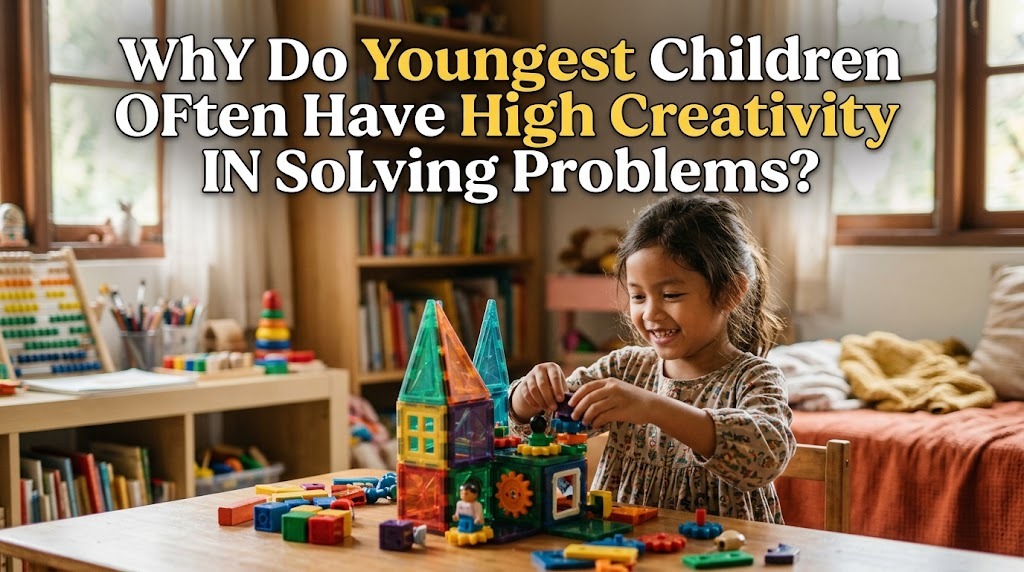
Being the youngest child in a family can create unique experiences that influence the way a person interacts with others and handles different situations. Youngest children often grow up observing older siblings and learning from their experiences. This environment may encourage them to develop creative ways of thinking and find different approaches when facing challenges.
However, creativity is not determined only by birth order. Family environment, education, personal interests, and individual experiences also play important roles. Still, the experiences commonly associated with being the youngest child can provide opportunities to develop strong problem-solving skills.
OBSERVING OLDER SIBLINGS
Youngest children often have the opportunity to observe their older siblings while growing up. They can see how their siblings solve problems, make decisions, communicate, and respond to challenges. These observations can become valuable learning experiences that help them understand different ways of handling situations.
Instead of experiencing every situation from the beginning, younger children may learn from what they see around them. They can identify which approaches work well and which ones may create problems. This experience can encourage them to develop their own methods and become more flexible when solving problems.
DEVELOPING FLEXIBLE THINKING
Growing up with older siblings can expose youngest children to different personalities, opinions, and habits. They may need to adjust their behavior depending on the situation and the people around them. This experience can support the development of flexible thinking.
When facing a problem, flexible thinking allows someone to consider several possible solutions instead of depending on only one approach. Youngest children may become accustomed to adapting to changing situations within the family. This ability can later become useful in school, social environments, and professional settings.
USING CREATIVITY TO STAND OUT
Youngest children may sometimes try to find their own identity within the family. Having older siblings who already have their own achievements and personalities can encourage them to explore different interests. This exploration can become an opportunity to develop personal creativity.
Creativity can appear in many forms, such as finding unusual solutions, expressing ideas, creating new activities, or approaching tasks differently. When children are given enough freedom to explore, they can discover their strengths and develop confidence in their own ideas. Therefore, a supportive environment can help turn creativity into a valuable personal skill.
LEARNING FROM FAMILY EXPERIENCES
Family life provides many opportunities for children to learn from everyday experiences. Youngest children can observe how parents and older siblings deal with disagreements, responsibilities, successes, and failures. These experiences can help them understand that problems can have more than one possible solution.
Learning from other people's experiences does not mean simply copying them. Youngest children can take useful lessons and adapt them to their own circumstances. This process may encourage them to think critically and create solutions that are suitable for their own needs.
BUILDING STRONG PROBLEM SOLVING SKILLS
Creativity becomes more useful when it is combined with effective problem-solving skills. Youngest children can develop these skills by being encouraged to make decisions, take responsibility, and solve age-appropriate problems independently. Family members can support this process without solving every problem for them.
Giving children opportunities to try, make mistakes, and improve can strengthen their confidence. They learn that mistakes are part of the process rather than something that should always be avoided. Over time, this experience can help them become more independent problem solvers.
SUPPORTING CREATIVITY THROUGH POSITIVE ENVIRONMENTS
A positive environment plays an important role in developing creativity regardless of birth order. Parents and family members can encourage youngest children to ask questions, share ideas, experiment, and explore new interests. Giving appreciation for effort can also help children feel comfortable expressing their thoughts.
Schools and communities can provide additional opportunities through projects, teamwork, creative activities, and practical challenges. When children receive support while still having space to make their own decisions, their creativity can grow naturally. The most important factor is not being the youngest child but having opportunities to learn and develop individual abilities.
CONCLUSION
Youngest children may develop creative problem-solving abilities through experiences such as observing older siblings, adapting to family situations, and learning from everyday challenges. These experiences can encourage flexibility, creativity, and independent thinking. However, birth order alone does not determine a person's creativity.
With proper support and opportunities to explore, every child can develop strong problem-solving skills. The combination of family support, personal effort, education, and experience can help youngest children turn their creativity into a valuable strength for the future.
About the Author
Gusti Ayu Tita P
Author — STEKOM University
An active author focused on academic issues, educational technology, and human resource development in the campus environment.