Why Does Illegal Parking Often Cause Traffic Congestion?
Gusti Ayu Tita P
26 Agustus 2026
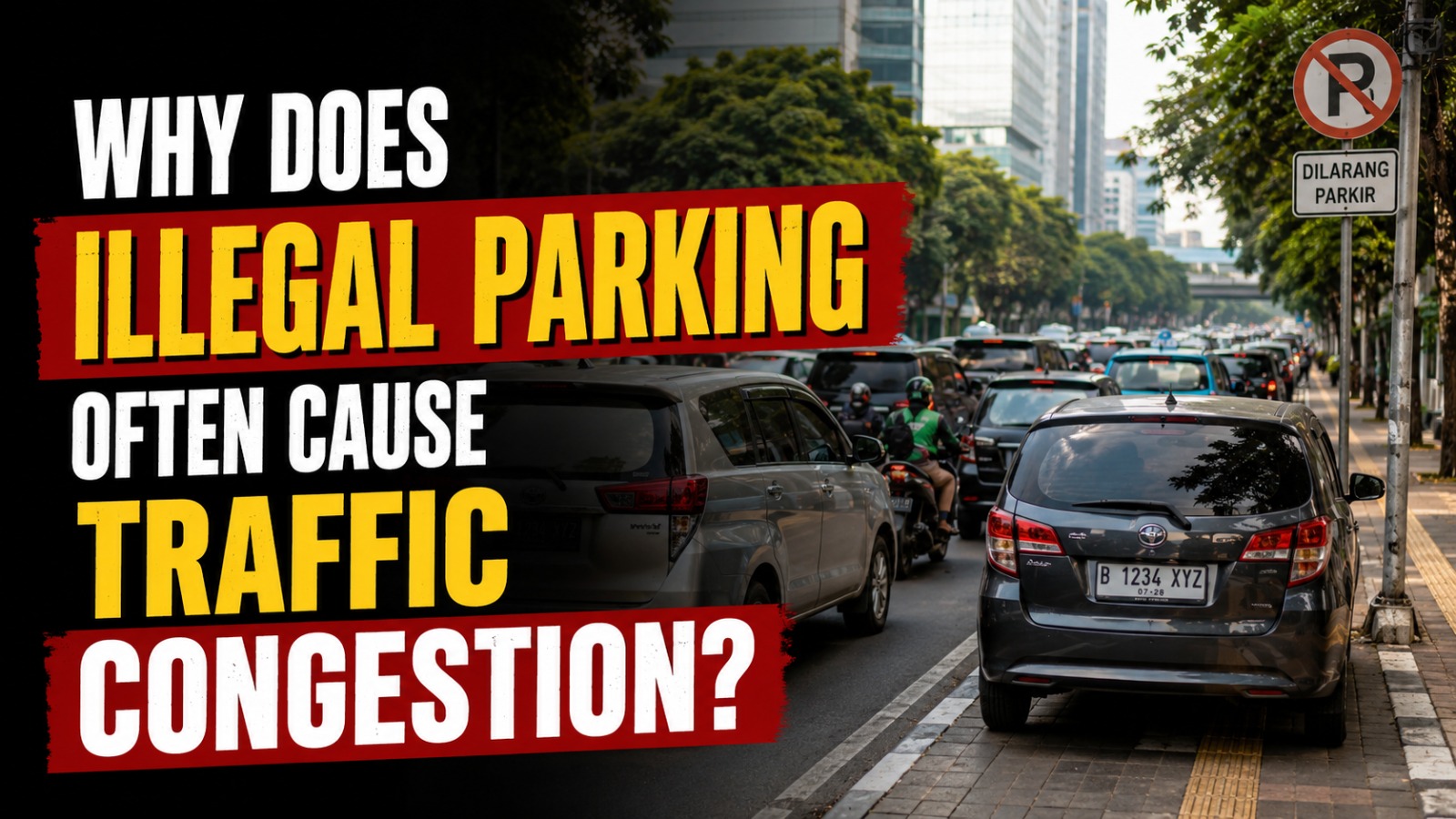
Traffic congestion is a common problem in busy urban areas, especially on roads with limited space. One factor that is often overlooked is illegal parking, which can reduce the usable road area and interfere with normal traffic movement. Vehicles parked in prohibited locations may force other drivers to slow down, change lanes, or stop suddenly. These actions can create delays that affect many road users, not just the people near the illegally parked vehicle. Understanding the connection between illegal parking and congestion is important for creating safer and more efficient roads.
ILLEGAL PARKING REDUCES ROAD CAPACITY
One of the main reasons illegal parking causes congestion is that it reduces the available road space. A road designed for two or three moving lanes can lose part of its capacity when a vehicle occupies one of those lanes. Drivers then have fewer spaces to pass through, particularly during busy hours. This can create slower traffic even when the number of vehicles on the road has not changed significantly. The narrower the usable road area becomes, the greater the possibility of traffic delays.
Illegal parking can be especially disruptive when it occurs near intersections, narrow streets, bus stops, or commercial areas. These locations already require drivers to adjust their speed and position frequently. When a parked vehicle blocks part of the road, drivers may need to merge into another lane or wait for an opportunity to pass. As a result, traffic flow becomes less stable and road capacity is used inefficiently.
ILLEGAL PARKING FORCES DRIVERS TO CHANGE LANES
Another important problem is that illegally parked vehicles can force moving drivers to change lanes unexpectedly. A driver who encounters a blocked lane may need to move into the next lane, often while other vehicles are approaching. This creates additional interactions between vehicles and can reduce the average speed of traffic. If several cars encounter the same obstacle, the lane change can affect a much larger group of road users.
Sudden lane changes may also increase the risk of braking, conflicts, and minor collisions. Even when no accident occurs, drivers may slow down to find a safe gap before passing the parked vehicle. Repeated braking and acceleration can make traffic less smooth and contribute to longer queues. Therefore, illegal parking can create congestion indirectly by disrupting predictable driving patterns.
ILLEGAL PARKING CREATES BOTTLENECKS
Illegal parking often creates traffic bottlenecks, particularly in areas where roads are already narrow. A bottleneck occurs when traffic must pass through a smaller or more restricted section of a road. For example, one vehicle parked on the roadside can reduce a two-lane road to a single effective lane. When many vehicles reach that point at the same time, a queue can quickly form.
The effect can become larger during peak traffic hours when roads are already operating close to their practical capacity. Once a queue forms, vehicles behind it may continue to accumulate even after the illegally parked vehicle is no longer directly visible. This is why a small obstruction can sometimes cause a surprisingly long traffic jam. Removing such bottlenecks is an important part of maintaining smooth traffic movement.
ILLEGAL PARKING DISRUPTS PUBLIC TRANSPORT
Illegal parking can also interfere with public transportation, particularly buses that need to stop close to the curb. When a bus stop is blocked, buses may have to stop in the traffic lane instead of at the designated stopping area. Other vehicles may then need to slow down or move around the bus. This can create additional congestion on already busy roads.
The problem may become more serious when several buses operate along the same route. Delays at one location can affect the bus schedule and cause passenger boarding delays at later stops. Illegal parking can therefore affect not only private vehicles but also the efficiency of public transportation. Keeping bus stops and designated loading areas clear helps traffic move more consistently.
ILLEGAL PARKING CAN BLOCK INTERSECTIONS AND ACCESS
Parking near an intersection can have a particularly strong impact because intersections depend on clear movement paths. A parked vehicle near a corner may limit visibility and make it harder for drivers to turn safely. It can also prevent vehicles from positioning correctly before entering or leaving the intersection. When turning vehicles are delayed, queues can develop in multiple directions.
Illegal parking may also block driveways, side roads, emergency access, and loading areas. Drivers entering or leaving these locations may have to wait or make difficult maneuvers. Emergency vehicles can face even greater problems if access routes are obstructed. For this reason, parking restrictions are not only about keeping roads visually tidy but also about protecting mobility and public safety.
ILLEGAL PARKING AFFECTS TRAFFIC FLOW AND ROAD SAFETY
Traffic congestion caused by illegal parking is closely connected to road safety. Drivers who suddenly encounter an obstruction may brake, swerve, or change lanes without much preparation. These movements can increase the possibility of conflicts with motorcycles, bicycles, pedestrians, and other vehicles. On busy roads, even a small obstruction can create complicated traffic situations.
In addition, repeated congestion can increase driver stress and travel time. Drivers who experience frequent delays may become impatient and take unnecessary risks when trying to overtake obstacles. Better parking discipline can help create a more predictable road environment. This benefits both traffic efficiency and the safety of people using the road.
HOW CAN ILLEGAL PARKING BE REDUCED?
Reducing illegal parking requires cooperation between drivers, local authorities, businesses, and communities. Drivers should use designated parking areas and avoid stopping in locations where parking is prohibited. Authorities can improve signs, road markings, parking facilities, and enforcement in areas with frequent violations. Clear information about parking rules can also help people understand where they are allowed to leave their vehicles.
Technology can provide additional support through digital parking systems, surveillance cameras, and electronic enforcement where appropriate and legally permitted. Businesses can also help by providing suitable customer parking instead of encouraging customers to use road shoulders or traffic lanes. Consistent enforcement is important because rules are less effective when violations are rarely addressed. A combination of infrastructure, education, and enforcement can produce better long-term results.
CONCLUSION
Illegal parking often causes traffic congestion because it reduces road capacity, disrupts lane movement, creates bottlenecks, and blocks important access points. Its impact can become more serious during peak hours when traffic volumes are already high. Illegal parking can also interfere with buses, emergency vehicles, pedestrians, and other road users. What appears to be a simple parking violation can therefore create wider problems for traffic efficiency and safety.
Maintaining smooth traffic requires more than simply building wider roads. Responsible parking behavior and effective enforcement are also essential parts of traffic management. Drivers should respect parking restrictions and choose legal parking facilities whenever possible. With better parking discipline and well-planned traffic management, communities can reduce unnecessary congestion and create roads that are safer and more comfortable for everyone.
About the Author
Gusti Ayu Tita P
Author — STEKOM University
An active author focused on academic issues, educational technology, and human resource development in the campus environment.