Why Does Return Traffic Often Feel More Crowded?
Gusti Ayu Tita P
10 Agustus 2026
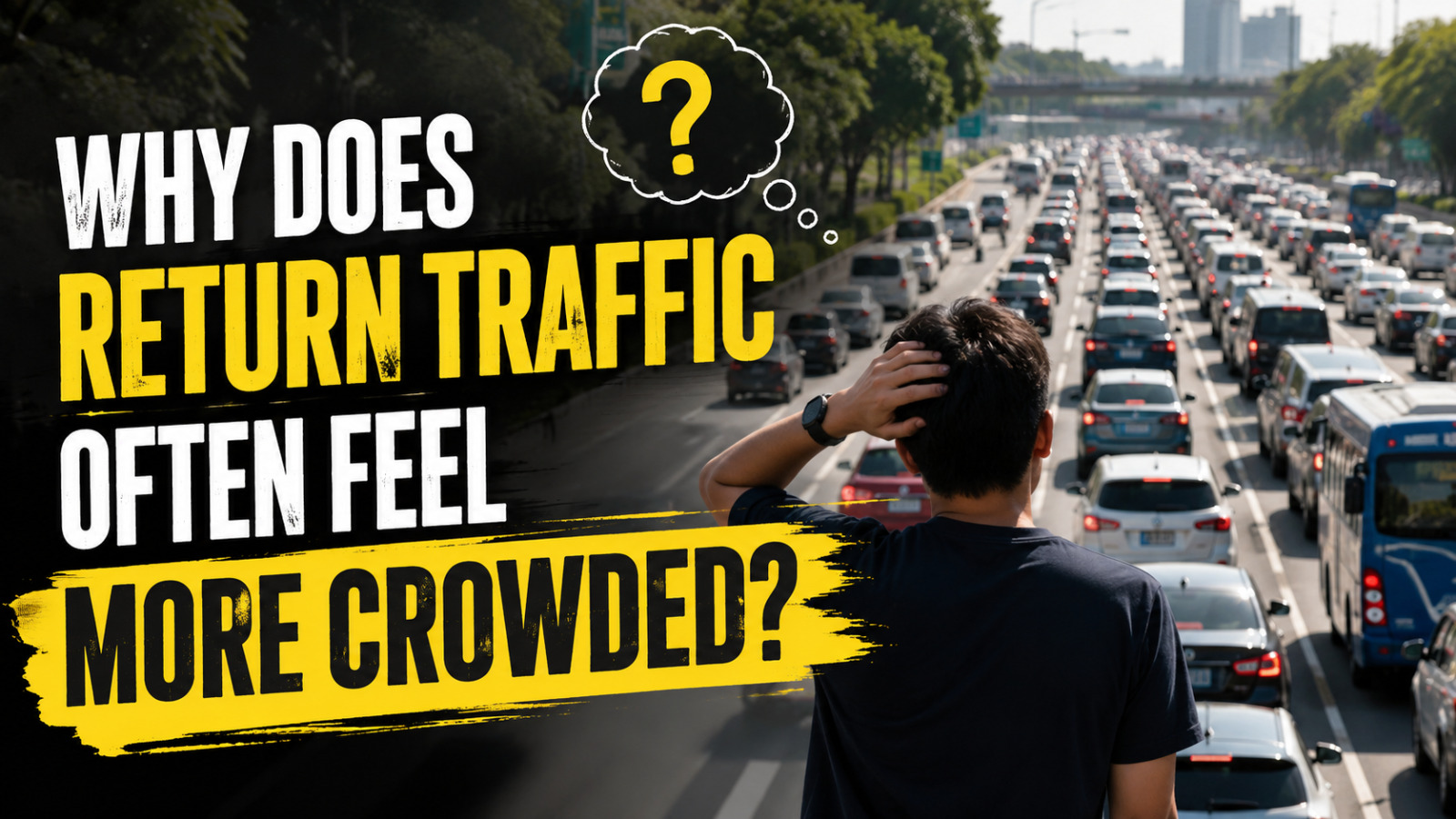
Holiday return traffic in Indonesia often feels more crowded than the outbound journey. This happens because many travelers return home within a limited period after spending their holidays in their hometowns or tourist destinations. When thousands of vehicles use major roads at nearly the same time, traffic density can increase significantly. Understanding the reasons behind this situation can help travelers prepare for a safer and more comfortable journey.
HIGH TRAVELER CONCENTRATION
One of the main reasons return traffic feels more crowded is the high concentration of travelers during the same period. Many families choose to return home after the holiday ends, making certain days much busier than normal. Unlike ordinary daily traffic, holiday return trips involve travelers from different cities using the same major roads. This creates a significant increase in the number of private cars, motorcycles, buses, and other vehicles.
The situation becomes more noticeable when people have similar work and school schedules. Many travelers want to arrive home before normal activities begin again, so they may leave at similar times. As a result, roads that are usually manageable can quickly become congested. Choosing a less crowded departure time can therefore make a major difference to the overall journey.
LIMITED TRAVEL TIME
Another factor is the limited amount of time available for travelers to return home. After a long holiday, employees, students, and families usually have to resume their regular activities on specific dates. This creates a narrow travel window in which many people must complete their journeys.
For example, travelers who need to work or attend school on Monday may prefer to return on Saturday or Sunday. This causes traffic volume to increase sharply during the weekend before normal activities resume. Limited travel flexibility makes it difficult for everyone to spread their journeys across several days. Consequently, certain hours can experience much heavier traffic than others.
MAJOR ROUTES ATTRACT MORE VEHICLES
Return traffic also feels crowded because many travelers depend on the same major routes. Toll roads, national highways, arterial roads, and routes connecting major cities often become the main choices for long-distance travelers. These roads provide important connections between regions, but their capacity can become strained when vehicle numbers increase significantly.
Traffic can become even heavier around toll gates, rest areas, intersections, merging points, and urban entrances. A small slowdown in one location can affect vehicles behind it and create a longer traffic queue. Bottlenecks are especially problematic during peak return periods because vehicles continue arriving faster than they can pass through the affected area.
REST AREAS CAN CREATE SLOWDOWNS
Rest areas are important for long-distance travelers because drivers need to stop, rest, eat, refuel, or use restroom facilities. However, during busy return periods, rest areas can become extremely crowded. When parking spaces are full, some drivers may slow down or wait before entering, which can affect traffic on the main road.
The problem can become more noticeable when several rest areas along the same route reach capacity at approximately the same time. Travelers should therefore consider planning rest stops before departure instead of relying only on the nearest facility. Taking regular breaks is still essential, but choosing suitable stopping times can help reduce unnecessary delays.
DIFFERENT DRIVING SPEEDS AFFECT TRAFFIC FLOW
Traffic flow is also influenced by differences in vehicle speed. During long-distance journeys, cars, motorcycles, buses, and trucks often travel at different speeds. When faster vehicles approach slower vehicles, drivers may change lanes or reduce speed, which can affect vehicles around them.
Frequent lane changes, sudden braking, and insufficient following distances can make traffic less predictable. Smooth and consistent driving helps maintain a better traffic flow, especially when roads are already crowded. Drivers should avoid unnecessary overtaking and maintain a safe distance from the vehicle ahead.
WEATHER AND ROAD CONDITIONS MATTER
Weather can make return traffic feel even more crowded. Rain, strong winds, poor visibility, or wet road surfaces may cause drivers to reduce their speed. Even when the number of vehicles remains the same, slower movement can increase travel time and create longer queues.
Road conditions can have a similar effect. Construction, accidents, damaged road surfaces, temporary lane closures, or other obstacles can reduce road capacity. Drivers should therefore monitor traffic and weather information before leaving and remain prepared to adjust their route when necessary.
SMART PLANNING CAN REDUCE TRAVEL STRESS
Although heavy return traffic cannot always be avoided, travelers can reduce its impact through careful preparation. Checking traffic conditions before departure can help travelers identify potentially congested routes and choose better travel times. Drivers should also make sure their vehicles are in good condition before starting a long journey.
It is equally important to prepare enough food, drinking water, emergency equipment, and other essential supplies. Travelers should avoid rushing simply because they want to arrive quickly. Safety should remain the highest priority, especially when driving long distances in crowded conditions.
CONCLUSION
Return traffic often feels more crowded because many travelers return within the same limited period, while major routes have limited capacity. High vehicle concentration, limited travel time, bottlenecks, crowded rest areas, weather conditions, and differences in driving speed can all contribute to slower journeys. These factors can combine and make holiday return traffic much heavier than normal daily traffic.
Travelers can make the journey more comfortable by planning their departure time, checking road conditions, preparing their vehicles, and taking sufficient rest. Following traffic regulations and maintaining a safe driving distance are also essential. With better preparation and responsible driving, travelers can reduce unnecessary stress and complete their return journey more safely.
About the Author
Gusti Ayu Tita P
Author — STEKOM University
An active author focused on academic issues, educational technology, and human resource development in the campus environment.