
Why Does Social Anxiety Often Appear In Social Situations?
Gusti Ayu Tita P
11 September 2026
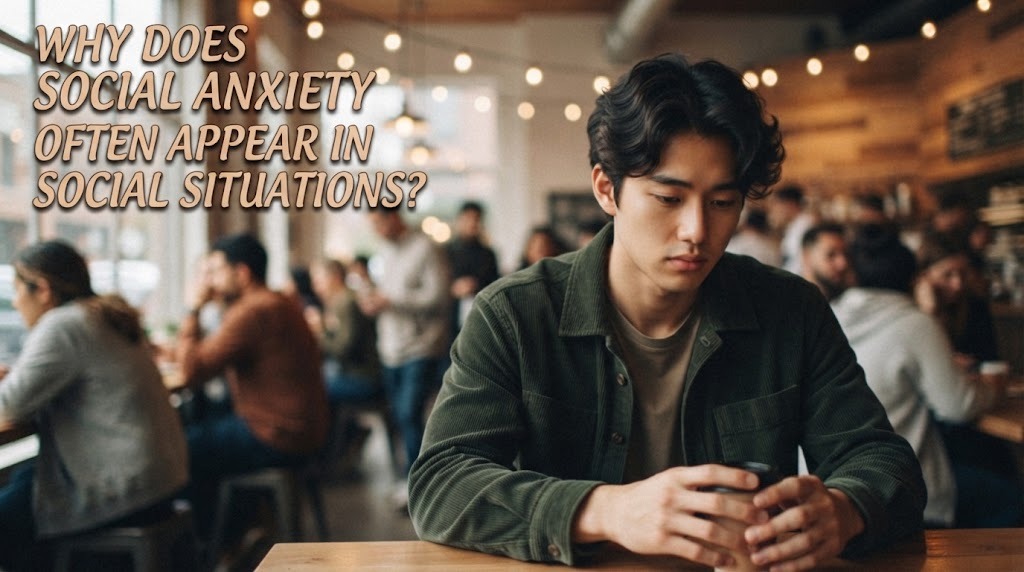
Social anxiety often appears in social situations because people with this condition may strongly fear being judged, embarrassed, rejected, or negatively evaluated. Ordinary interactions such as talking to classmates, meeting new people, or speaking in a group can therefore feel threatening. The brain and body may respond to these situations with anxiety even when there is no actual danger. Understanding why this happens can help people recognize their reactions and manage them more effectively.
Social anxiety can be influenced by several factors rather than one single cause. Past experiences, negative thoughts, low self confidence, stress, and learned avoidance can all play a role. The intensity of anxiety can also vary from person to person.
FEAR OF NEGATIVE JUDGMENT
One major reason social anxiety appears during social situations is the fear of being judged negatively. A person may worry that others will think they are strange, boring, unintelligent, or embarrassing. This fear can make even simple conversations feel highly stressful.
The person may constantly monitor what they say, how they look, or how they behave. They may also assume that other people are paying close attention to their mistakes. This strong concern about other people's opinions can increase anxiety before and during social interactions.
NEGATIVE THOUGHTS ABOUT SOCIAL SITUATIONS
Social anxiety is often connected to negative predictions about what might happen. Someone may think that they will forget their words, say something embarrassing, or receive a negative reaction. These predictions can make a situation seem more dangerous than it actually is.
Anxious thoughts can also become automatic. A person may immediately expect a negative outcome without considering other possibilities. Learning to question these thoughts can help create a more realistic view of social situations.
LOW SELF CONFIDENCE
Low self confidence can make social situations feel more threatening. Someone may believe they are not interesting enough, intelligent enough, or capable enough to communicate with others. These beliefs can increase self-consciousness and make conversations more difficult.
A person may also compare themselves with people who appear more confident. However, outward confidence does not always show what someone is experiencing internally. Focusing on personal strengths rather than constant comparison can help reduce some social pressure.
PAST NEGATIVE EXPERIENCES
Past experiences can influence how someone responds to social situations. Bullying, rejection, harsh criticism, or embarrassing experiences may make a person more afraid of experiencing something similar again. They may begin to associate social interaction with negative outcomes.
Not everyone who experiences these events develops social anxiety. Other factors, including personality, environment, and ongoing stress, can influence the response. Still, understanding how past experiences affect current fears can help explain why certain situations feel especially difficult.
FEAR OF MAKING MISTAKES
People with social anxiety may have a strong fear of making mistakes in front of others. They may believe that a small error will make them look foolish or cause people to remember them negatively. This fear can make them hesitate before speaking or participating.
In reality, mistakes are a normal part of communication. Most people make occasional mistakes and quickly move on from them. Accepting that communication does not have to be perfect can reduce pressure and make social interaction more comfortable.
PHYSICAL RESPONSES TO ANXIETY
Social situations can trigger physical reactions when someone feels anxious. These may include a fast heartbeat, sweating, trembling, blushing, muscle tension, nausea, or difficulty speaking. Such reactions can make the person feel even more uncomfortable.
The physical symptoms may then create additional fear. Someone might worry that others will notice their shaking or nervousness and judge them because of it. This can create a cycle in which physical symptoms increase self-consciousness and self-consciousness increases anxiety.
AVOIDANCE CAN MAKE ANXIETY STRONGER
Avoiding social situations may provide immediate relief. However, repeated social avoidance can maintain or strengthen anxiety over time because the person has fewer opportunities to learn that the situation may be safe. The brain may continue to associate social interaction with danger.
For example, someone who always avoids speaking in class may never discover that making a small mistake is usually not a serious problem. Gradual participation can provide new experiences and build confidence. Facing manageable situations step by step can be more helpful than avoiding everything that causes anxiety.
STRESS CAN INCREASE SOCIAL ANXIETY
High levels of stress can make anxiety more difficult to manage. School pressure, work responsibilities, major life changes, lack of rest, or personal problems may increase overall emotional tension. During stressful periods, social situations may feel more difficult than usual.
Stress does not necessarily cause social anxiety by itself. However, it can make existing worries feel stronger and reduce a person's ability to cope with them. Maintaining healthy routines, getting enough rest, and seeking support can help reduce the overall burden.
WHY DOES ANXIETY FEEL SO REAL?
Social anxiety can feel extremely real because the body's threat response can activate even when there is no physical danger. The brain may interpret social judgment or embarrassment as a serious threat. As a result, the body can prepare to respond through increased heart rate, muscle tension, and other stress reactions.
This does not mean that the person is imagining their symptoms. The feelings and physical reactions are real, even when the perceived threat is exaggerated. Understanding this response can help someone approach anxiety with self compassion rather than self criticism.
WHEN SHOULD SOMEONE SEEK HELP?
Occasional nervousness in social situations is common. However, professional support may be appropriate when social anxiety is persistent, intense, or interferes with school, work, relationships, or daily activities. Frequent avoidance can also be a sign that the anxiety is becoming difficult to manage independently.
A qualified mental health professional can help identify the patterns behind the anxiety and provide appropriate strategies. Cognitive behavioral therapy and other evidence based approaches can help many people manage social anxiety. Seeking help is a practical step and does not mean someone is weak.
CONCLUSION
Social anxiety often appears in social situations because the brain may interpret judgment, embarrassment, or rejection as a significant threat. Fear of judgment, negative thinking, low confidence, past experiences, perfectionism, physical stress responses, and avoidance can all contribute to the problem. Different people may experience different combinations of these factors.
Understanding the reasons behind social anxiety is an important first step toward managing it. Gradual social practice, realistic thinking, supportive relationships, healthy routines, and professional help when needed can reduce its impact. With patience and consistent practice, social situations can become more manageable.
About the Author
Gusti Ayu Tita P
Author — STEKOM University
An active author focused on academic issues, educational technology, and human resource development in the campus environment.















