
Why Does Social Media Trigger Feelings of Envy?
Gusti Ayu Tita P
1 Oktober 2026
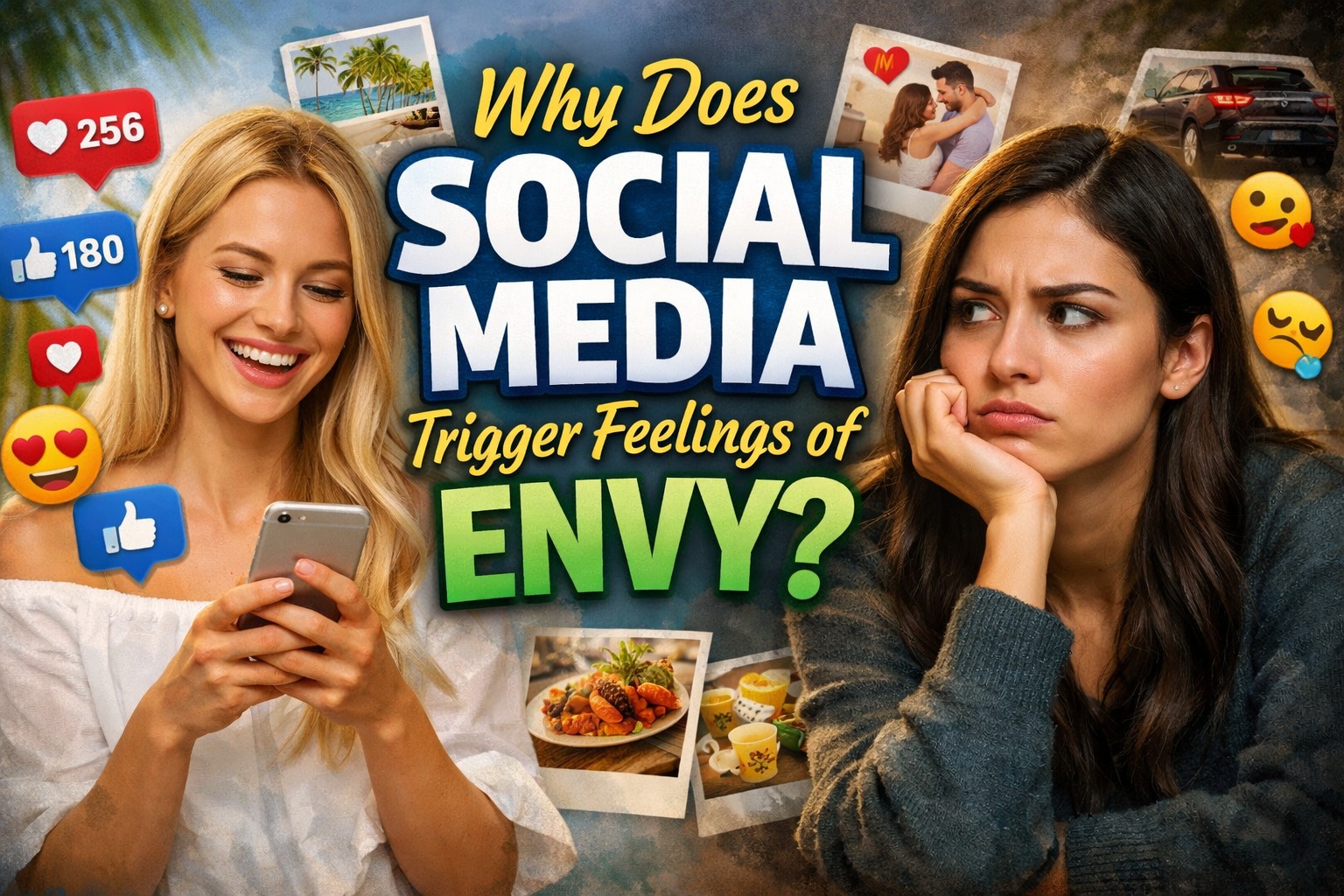
Social media has become an important part of modern life. People use it to connect with friends, share experiences, and discover new information every day. However, spending too much time scrolling through carefully selected photos and success stories can often lead to feelings of envy. Many users start comparing their own lives with what they see online, even when those online images do not represent reality. Understanding why this happens can help people use social media in a healthier and more balanced way.
THE HIGHLIGHT REEL EFFECT ON SOCIAL MEDIA
One of the biggest reasons social media triggers envy is because people usually share only the best moments of their lives. Vacation photos, career achievements, expensive purchases, and happy relationships receive more attention and engagement than ordinary daily activities. As a result, users are constantly exposed to what appears to be a perfect lifestyle. This creates the illusion that everyone else is happier, richer, or more successful.
In reality, social media often acts as a highlight reel rather than a complete picture of someone's life. Failures, disappointments, and struggles are usually hidden from public view. When people compare their everyday experiences to someone else's carefully curated content, feelings of dissatisfaction and envy become more likely to appear.
SOCIAL COMPARISON HAPPENS NATURALLY
Human beings naturally compare themselves with others to understand their own position in society. Social media makes this comparison process much faster and more frequent because users can view hundreds of lives within a few minutes. Seeing friends achieve career goals or influencers enjoy luxurious lifestyles can make people question their own progress. This can create the impression that they are falling behind.
The problem becomes even stronger when comparisons involve areas that are personally important, such as income, appearance, relationships, or career success. Constant exposure to these comparisons can reduce self-confidence and increase emotional stress. Over time, users may begin to focus more on what they lack instead of appreciating what they already have.
ALGORITHMS OFTEN AMPLIFY ENVY
Social media platforms are designed to keep users engaged for as long as possible. Their algorithms often promote content that receives high levels of interaction, such as luxury lifestyles, travel experiences, fitness transformations, and personal achievements. Because these posts attract attention, they appear more frequently in users' feeds. This repeated exposure can create unrealistic expectations about normal life.
Many people eventually believe that these exceptional moments are common or standard. This can lead to unhealthy expectations about success, beauty, and happiness. When real life does not match these expectations, envy and frustration can become stronger emotions.
ENVY CAN AFFECT MENTAL WELLBEING
Occasional envy is a normal human emotion, but excessive envy can negatively affect mental health. Studies have shown that heavy social media use is associated with increased feelings of anxiety, loneliness, and lower life satisfaction. Users who spend long periods comparing themselves with others are more likely to experience emotional exhaustion. They may also develop negative thoughts about their own achievements and personal value.
The impact can be especially significant among teenagers and young adults who are still developing their identity and self-esteem. During this stage of life, external validation often feels very important. As a result, social media comparisons can influence confidence and emotional wellbeing more strongly than many people realize.
HOW TO USE SOCIAL MEDIA IN A HEALTHIER WAY?
Reducing feelings of envy does not necessarily mean abandoning social media completely. Instead, users can become more aware that most online content shows only selected moments rather than reality. Following accounts that provide educational, inspirational, or realistic content can create a healthier online environment. Limiting screen time may also reduce unnecessary comparisons.
Another useful strategy is focusing on personal growth instead of competing with others. Everyone has different opportunities, challenges, and timelines in life. Practicing gratitude for personal achievements and progress can help shift attention away from envy and toward self-improvement. Social media becomes much healthier when it is used as a tool for connection rather than comparison.
CONCLUSION
Social media triggers feelings of envy because it encourages constant comparison, promotes idealized lifestyles, and hides the struggles that exist behind the scenes. The combination of human psychology and engagement-driven algorithms makes these emotions more common than ever before. Recognizing that online content is often incomplete can help people view social media more realistically. By focusing on personal goals and maintaining healthy digital habits, users can enjoy the benefits of social media without allowing envy to control their emotions.
About the Author
Gusti Ayu Tita P
Author — STEKOM University
An active author focused on academic issues, educational technology, and human resource development in the campus environment.