
Why Hydropower Matters for Indonesia’s Energy Transition?
Gusti Ayu Tita P
31 Agustus 2026
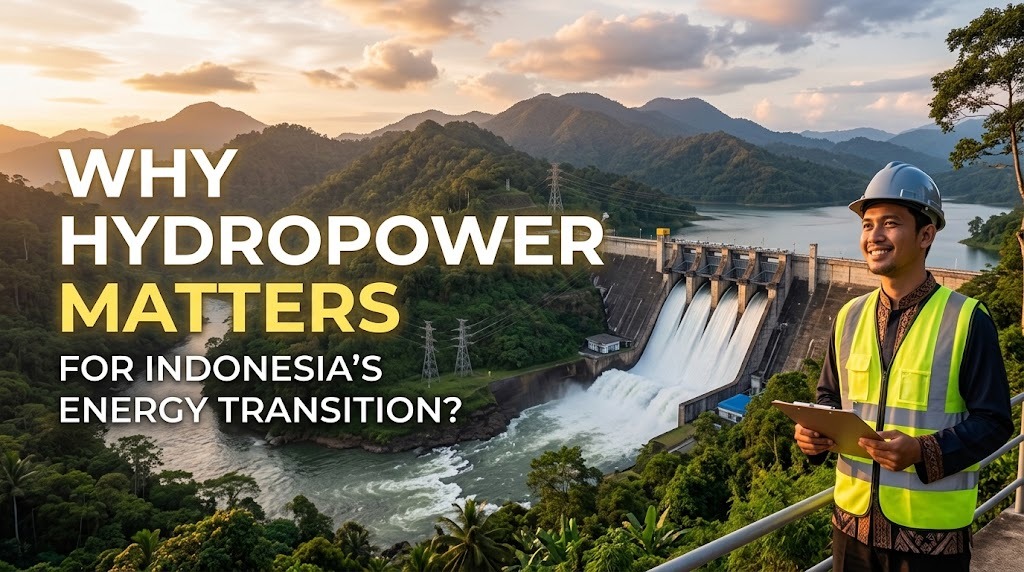
Hydropower has an important role in Indonesia’s transition toward a cleaner and more reliable energy system. Indonesia has significant water resources and a large potential for renewable energy, including hydropower. At the same time, the country still relies heavily on fossil fuels for electricity generation. This makes hydropower an important option for gradually increasing the share of renewable electricity.
Indonesia’s energy transition is not simply about replacing one power plant with another. The country needs an electricity system that is cleaner, reliable, affordable, and flexible. Hydropower can contribute to all of these goals when projects are carefully planned and managed. The latest electricity supply plan also shows the growing importance of hydropower in Indonesia’s future energy mix.
INDONESIA NEEDS A CLEANER POWER SYSTEM
Indonesia’s electricity demand continues to grow as households, industries, transportation, and digital infrastructure become increasingly dependent on electricity. At the same time, the power sector remains an important source of emissions because fossil fuel generation still plays a major role. The International Energy Agency has highlighted Indonesia’s large renewable energy potential, particularly in hydropower, geothermal, and solar power.
The energy transition therefore requires a gradual shift toward cleaner electricity sources. Hydropower can help replace part of the electricity that would otherwise come from fossil fuel plants. Increasing renewable generation can reduce the carbon intensity of the electricity system while supporting growing electricity demand. However, hydropower needs to be developed alongside other renewable technologies rather than treated as the only solution.
HYDROPOWER USES RENEWABLE WATER RESOURCES
Hydropower generates electricity by using the movement or elevation of water. Water flows through a turbine, causing it to rotate, while a generator converts the mechanical energy into electricity. Unlike coal-fired power plants, hydropower does not require continuous combustion of fossil fuels during normal electricity generation.
Indonesia’s geography provides many rivers, waterfalls, reservoirs, and mountainous areas that can potentially support hydropower development. The suitability of a location depends on factors such as water flow, elevation, geology, environmental conditions, and proximity to the electricity grid. Proper assessment is essential because not every river or water resource is suitable for a hydropower project.
HYDROPOWER CAN REDUCE FOSSIL FUEL DEPENDENCE
A major goal of Indonesia’s energy transition is to reduce excessive dependence on fossil fuels. Coal remains an important part of the country's electricity system, while gas also contributes significantly to generation. The IEA notes that more than 60% of Indonesia’s electricity generation was supplied by coal-fired power plants in the period covered by its power system assessment.
Hydropower can help diversify the electricity mix by providing domestic renewable electricity. Every additional unit of hydroelectric generation can reduce the need for electricity from other sources when the plant is available and dispatched. This can gradually reduce the role of fossil fuels. A diversified system also provides greater protection against fuel price and supply risks.
HYDROPOWER CAN SUPPORT GRID STABILITY
One of hydropower’s most valuable characteristics is its ability to provide flexible electricity generation. Some hydropower plants can increase or decrease their output relatively quickly, depending on their design and available water. This makes them useful for balancing electricity supply and demand.
This flexibility becomes increasingly important as Indonesia adds more solar and wind power. Solar generation changes with daylight and weather, while wind generation depends on wind conditions. Flexible hydropower can help respond to some of these fluctuations. The IEA identifies hydropower’s flexibility and storage capabilities as important advantages for clean energy transitions.
HYDROPOWER CAN COMPLEMENT SOLAR AND WIND
Indonesia has strong potential for solar power, but solar generation is naturally variable. Electricity production falls when sunlight is unavailable and can change because of clouds and weather conditions. Hydropower can provide a complementary source of electricity when water resources and plant operations allow it.
This combination can create a more flexible renewable energy system. During periods of high solar production, hydropower output can potentially be adjusted according to grid requirements and water management rules. When solar production declines, flexible hydro generation may help meet demand. Combining technologies is therefore more effective than relying on one renewable source alone.
PUMPED STORAGE CAN STORE ENERGY
Indonesia’s energy transition will require not only renewable generation but also energy storage. Pumped storage hydropower is one technology that can provide large-scale storage. It uses electricity to pump water to a higher reservoir and later releases the water through turbines when electricity is needed.
This technology can act somewhat like a large rechargeable energy storage system. It can help absorb excess electricity and provide power during periods of higher demand. Indonesia is already planning pumped storage as part of its future electricity infrastructure. The 2025–2034 electricity plan includes 10.3 GW of energy storage, while the government has highlighted pumped storage as an important technology for maintaining grid reliability.
INDONESIA’S ELECTRICITY PLAN INCLUDES MORE HYDROPOWER
Indonesia’s latest RUPTL PLN 2025–2034 demonstrates the strategic role of hydropower in future electricity development. The plan targets an additional 69.5 GW of generation capacity through 2034. Around 76% of the planned capacity is expected to come from renewable energy and energy storage.
Hydropower accounts for 11.7 GW of the planned renewable generation additions. Other planned renewable capacity includes 17.1 GW of solar, 7.2 GW of wind, 5.2 GW of geothermal, and 0.9 GW of bioenergy. These figures show that hydropower is intended to work as part of a broader renewable energy strategy.
HYDROPOWER CAN STRENGTHEN ENERGY SECURITY
Energy security means having a reliable supply of electricity while reducing exposure to major supply disruptions. Hydropower can contribute to this goal because it uses water as a domestic energy resource rather than requiring continuous fuel deliveries. This can be particularly valuable in areas where transporting fossil fuels is expensive or difficult.
Reservoir-based hydropower can also provide operational flexibility because water can be stored and released when needed, subject to environmental and water-management requirements. This can help the electricity system respond to changing demand. Domestic renewable generation therefore has both environmental and strategic value.
HYDROPOWER CAN SUPPORT REMOTE AREAS
Indonesia consists of thousands of islands with widely varying geography. Some communities are far from major electricity networks and may face challenges in connecting to large centralized power systems. In suitable locations, small hydropower and microhydropower can provide electricity closer to where it is needed.
Local hydropower can support households, schools, healthcare facilities, agriculture, and small businesses. It can also reduce dependence on diesel generators where reliable water resources are available. However, the most suitable solution depends on local conditions, including water availability, demand, construction costs, and environmental considerations.
HYDROPOWER PROJECTS MUST PROTECT THE ENVIRONMENT
Hydropower is renewable, but it is not completely free from environmental impacts. Large dams and reservoirs can alter river flows, sediment movement, habitats, and land use. Some projects may also affect communities living near construction or reservoir areas.
For this reason, responsible development is essential. Environmental assessments, watershed protection, ecological flow management, sediment control, and community participation should be incorporated into project planning. Clean energy development must also be environmentally responsible if it is expected to remain sustainable over the long term.
CLIMATE CHANGE CREATES NEW CHALLENGES
Hydropower depends directly on the water cycle, which means climate change can affect its performance. Changes in rainfall patterns, droughts, extreme rainfall, and other weather events can influence river flows and reservoir levels. The IEA identifies changing rainfall patterns and extreme weather as important risks for hydropower in South and Southeast Asia.
Indonesia therefore needs to consider climate resilience when developing and operating hydropower plants. Better weather forecasting, water monitoring, reservoir management, and infrastructure design can help reduce risks. Protecting watersheds is also important because healthy river basins support more stable water resources. Future hydropower planning should use both historical data and climate projections.
MODERN TECHNOLOGY CAN IMPROVE HYDROPOWER
Technology can make hydropower plants more efficient and reliable. Digital sensors, automated controls, forecasting systems, and predictive maintenance can help operators monitor turbines, generators, reservoirs, and water flows. These tools can identify unusual conditions and allow maintenance to be scheduled before serious failures occur.
Existing hydropower plants can also be modernized. Replacing older turbines, generators, and control systems may improve efficiency without building an entirely new facility. Modernization can therefore increase the value of existing assets while supporting Indonesia’s growing electricity needs.
HYDROPOWER CAN SUPPORT GREEN ECONOMIC GROWTH
The energy transition can create economic opportunities in addition to reducing emissions. Hydropower projects require engineers, construction workers, technicians, operators, maintenance specialists, and supporting industries. The RUPTL 2025–2034 is expected to create substantial employment, with renewable energy contributing significantly to projected green jobs.
Reliable renewable electricity can also support industrial development. Businesses increasingly need stable electricity for manufacturing, digital services, data infrastructure, and other activities. A stronger renewable electricity system can therefore support both environmental goals and long-term economic development.
HYDROPOWER SHOULD WORK WITH OTHER ENERGY SOURCES
Indonesia has diverse renewable resources, so the energy transition should not depend on hydropower alone. Solar, geothermal, wind, bioenergy, batteries, and other technologies can each contribute different capabilities. Hydropower can provide flexibility and renewable generation, while other technologies can increase the overall diversity of the system.
A balanced energy mix can reduce the risks associated with relying too heavily on one resource. For example, drought can reduce hydropower production, while cloudy weather can reduce solar output. Combining several technologies with strong transmission infrastructure can create a more resilient national power system.
THE FUTURE OF HYDROPOWER IN INDONESIA
Hydropower is likely to remain an important part of Indonesia’s energy transition because it combines renewable electricity generation with potential system flexibility. The government's RUPTL 2025–2034 explicitly includes 11.7 GW of additional hydropower capacity, alongside substantial solar, wind, geothermal, and storage development.
The future challenge is to develop this potential responsibly. Projects need strong technical studies, appropriate financing, reliable transmission connections, climate-risk assessments, and environmental safeguards. Existing facilities should also be modernized where economically and environmentally appropriate. The strongest role for hydropower will come from combining clean generation with flexibility, storage, and responsible water management.
CONCLUSION
Hydropower matters for Indonesia’s energy transition because it can provide renewable electricity, strengthen grid flexibility, reduce fossil fuel dependence, and support energy security. Its role becomes even more valuable as Indonesia expands solar and wind power, which require additional flexibility and storage to maintain a reliable electricity system.
However, hydropower is not a standalone solution. Climate change, environmental impacts, water availability, investment requirements, and community concerns must all be addressed. With careful planning, modern technology, pumped storage, watershed protection, and integration with other renewable sources, hydropower can become one of the important foundations of Indonesia’s cleaner and more resilient energy future.
About the Author
Gusti Ayu Tita P
Author — STEKOM University
An active author focused on academic issues, educational technology, and human resource development in the campus environment.



