
Why Is a Cabinet Important for Running a Government?
Gusti Ayu Tita P
12 Agustus 2026
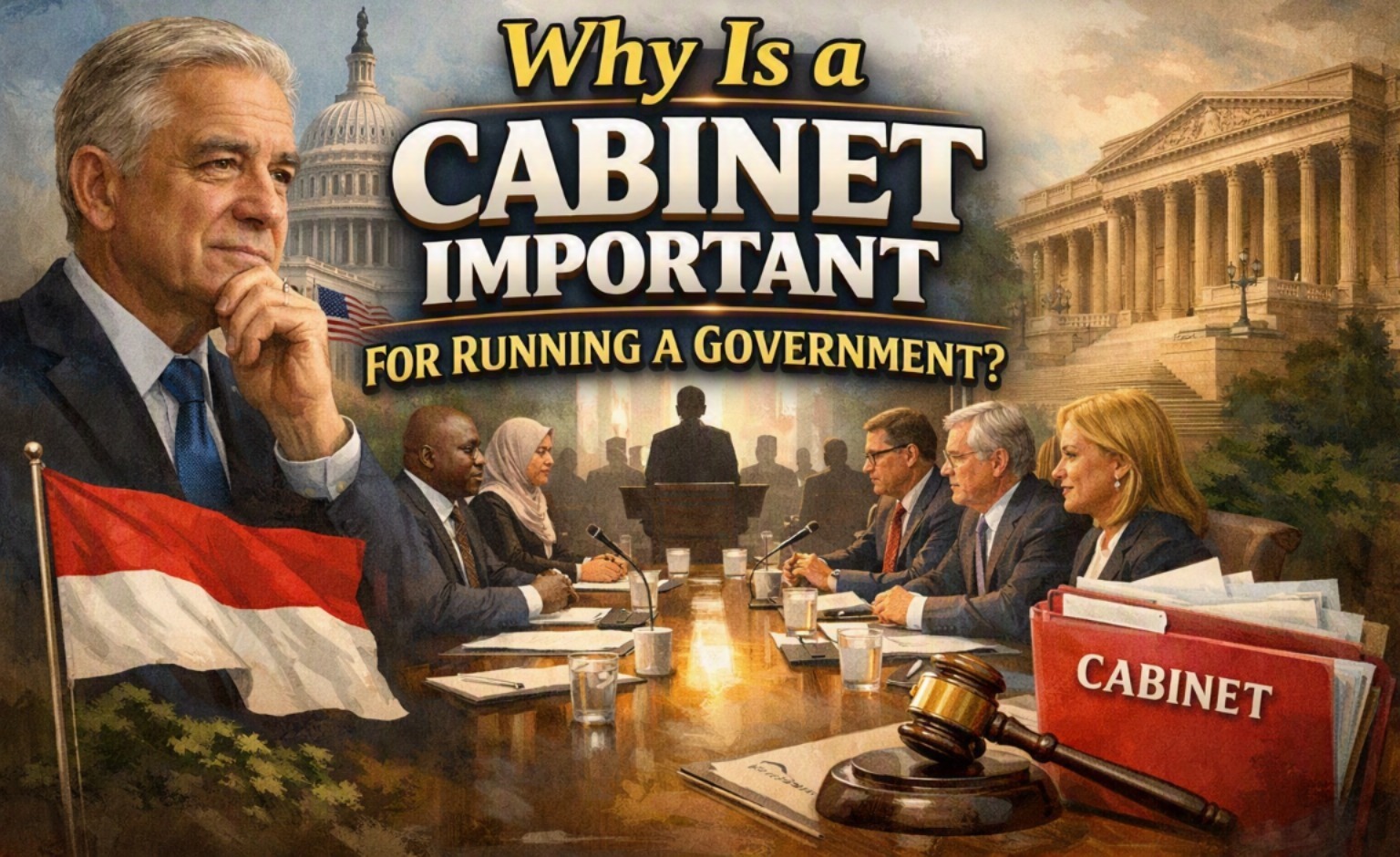
A government cabinet is an important part of how a country is managed and governed. It generally consists of senior government officials, often including ministers who lead specific areas such as finance, education, health, foreign affairs, and transportation. The cabinet helps the head of government coordinate policies, make decisions, and manage national priorities. Without effective coordination between government institutions, public programs can become less organized and difficult to implement. Therefore, understanding the role of a cabinet is essential for seeing how a government turns national goals into practical policies.
WHAT IS A GOVERNMENT CABINET?
A government cabinet is a group of senior officials responsible for helping the head of government manage major areas of public administration. In many countries, cabinet members are ministers who oversee particular government departments or ministries. Their responsibilities can vary depending on the country's political system, constitution, and laws. Some countries use parliamentary systems in which cabinet ministers often come from the legislature, while presidential systems may have different rules for appointing ministers. Despite these differences, the cabinet generally serves as an important mechanism for government coordination and collective decision making.
Cabinet meetings provide an opportunity for ministers to discuss national issues and evaluate proposed policies. They can review economic conditions, public services, national security, infrastructure, international relations, and other important matters. Through this process, different ministries can understand how their decisions may affect other parts of government. This helps reduce conflicting policies and encourages a more coordinated approach to public administration.
WHY IS A CABINET IMPORTANT?
A cabinet is important because modern governments handle many complex responsibilities at the same time. Different ministries often have connected responsibilities, meaning that a decision in one sector can affect several other sectors. For example, an economic policy can influence employment, education, social welfare, and business activity. The cabinet creates a forum where these different perspectives can be considered before major decisions are made. This supports better policy coordination and more consistent government action.
Another important function is helping the head of government establish and implement national priorities. Ministers can provide information, professional advice, and recommendations based on their areas of responsibility. Their discussions can help identify potential challenges before a policy is introduced. Effective cabinet coordination can therefore improve the government's ability to respond to national problems and changing public needs.
HOW DOES A CABINET SUPPORT GOVERNMENT DECISIONS?
Cabinet decision making usually involves discussion, evaluation, and coordination among senior government officials. A ministry may develop a policy proposal based on research, public needs, legal requirements, or government priorities. The proposal can then be discussed with other relevant ministries to identify possible financial, legal, social, or administrative consequences. Cabinet discussions allow government leaders to consider different viewpoints before reaching an official decision. This process can make government decisions more informed and coordinated.
Cabinet decisions also help translate political goals into practical government programs. Once priorities are agreed upon, ministries can work on implementation according to their respective responsibilities. This requires communication, budgeting, monitoring, and cooperation between government institutions. A cabinet can help ensure that ministries are working toward shared national objectives rather than operating independently. Strong coordination is especially important when an issue involves several sectors at the same time.
THE ROLE OF MINISTERS IN THE CABINET
Ministers play a central role because they are usually responsible for leading specific ministries or policy areas. They bring knowledge about their sectors and explain important challenges, opportunities, and policy options to the cabinet. A finance minister, for example, may provide information about government spending and economic conditions, while an education minister may focus on schools, teachers, and learning outcomes. Their expertise gives the cabinet a broader understanding of the potential effects of government policies. Ministers also have a responsibility to implement agreed policies within their areas of authority.
At the same time, ministers need to consider the interests of the government as a whole. A policy that benefits one sector may create challenges for another sector, so cooperation is essential. Ministers can negotiate priorities and coordinate their programs to avoid unnecessary conflicts. They may also communicate cabinet decisions to their ministries and oversee implementation. This makes ministers important links between cabinet policy and public administration.
CABINET COORDINATION AND PUBLIC SERVICES
Effective cabinet coordination can have a direct effect on the quality of public services. Services such as healthcare, education, transportation, housing, and social protection often require cooperation between several government institutions. If ministries fail to communicate, programs may overlap, resources may be wasted, or important needs may be overlooked. Cabinet coordination helps government agencies align their policies and responsibilities. As a result, citizens can benefit from more organized and effective public services.
Coordination is also important during national emergencies or major disruptions. Governments may need to respond quickly to natural disasters, economic crises, public health emergencies, or security challenges. A cabinet can bring relevant ministers together to assess information and coordinate the government's response. Clear responsibilities and communication can help prevent delays and confusion. Strong leadership and cooperation are therefore essential for effective crisis management.
CABINET AND ACCOUNTABILITY
A cabinet is also connected to government accountability, although the exact mechanisms differ between political systems. Ministers may be required to explain government policies, spending decisions, and administrative performance to legislative bodies or other oversight institutions. Public scrutiny, parliamentary debate, audits, and legal review can provide additional checks on government actions. These mechanisms help ensure that government authority is exercised according to laws and established procedures. Accountability is important because government decisions can have significant effects on people's lives.
Transparency can further strengthen public trust in government institutions. Citizens need to understand why major policies are introduced and how public resources are being used. While some cabinet discussions may require confidentiality, governments can provide information about decisions, programs, budgets, and results through appropriate public channels. Effective accountability encourages officials to act responsibly and focus on the public interest. It can also help identify weaknesses and improve government performance over time.
WHY CABINET COORDINATION MATTERS FOR NATIONAL DEVELOPMENT?
National development usually requires progress in several areas at the same time. Economic growth, education, healthcare, infrastructure, environmental protection, and social welfare can influence one another. A cabinet provides a high-level mechanism for connecting these priorities and considering their broader effects. Coordinated policies can make it easier for governments to use public resources according to national development goals. This supports a more integrated approach to national development.
Cabinet coordination can also help governments respond to long-term challenges. Issues such as technological change, demographic shifts, climate risks, and economic transformation may require policies that extend across multiple ministries. Short-term decisions need to be considered alongside long-term national objectives. By encouraging cooperation among senior officials, the cabinet can help maintain policy consistency and strategic direction. This makes the cabinet an important part of building effective and sustainable government programs.
CONCLUSION
A government cabinet plays an important role in helping a country manage complex responsibilities and pursue national priorities. It brings senior officials together to discuss policies, coordinate ministries, evaluate challenges, and support major government decisions. Its effectiveness depends on clear responsibilities, cooperation, competent leadership, and appropriate accountability. Although cabinet structures differ from one country to another, the basic need for coordination remains important in modern government. Ultimately, an effective cabinet can help turn national priorities into coordinated policies and practical public programs that serve society.
About the Author
Gusti Ayu Tita P
Author — STEKOM University
An active author focused on academic issues, educational technology, and human resource development in the campus environment.















