
Why Is A College Degree Often Associated With Social Status?
Gusti Ayu Tita P
21 Agustus 2026
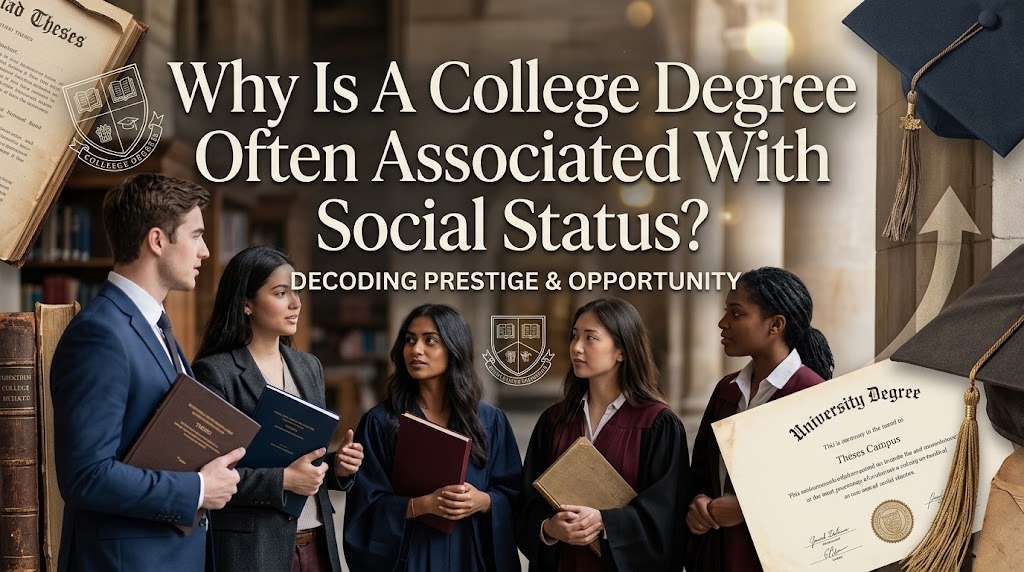
A college degree is often viewed as more than proof of academic achievement. In many societies, it is also connected with social status, career opportunities, and perceptions of personal success. People may associate higher education with intelligence, ambition, discipline, and professional ability. This connection has developed through social expectations, employment systems, and the historical value placed on formal education. However, a degree does not automatically determine a person's value, character, or success.
THE CONNECTION BETWEEN EDUCATION AND SOCIAL STATUS
A college degree can influence how a person is perceived because education is often considered a sign of knowledge, achievement, and personal development. People who complete university are sometimes viewed as having reached an important educational milestone. In some communities, graduating from college can increase a person's social recognition and create a sense of prestige. Families may also consider a degree an important symbol of progress and achievement. As a result, higher education can become closely associated with social status.
This association is also influenced by the fact that universities can provide access to professional networks and communities. Students may meet lecturers, professionals, business owners, and other graduates who can influence their future opportunities. These connections can increase a person's social capital, which refers to useful relationships and networks. Therefore, the value of a degree can extend beyond academic knowledge and influence a person's position within society.
THE INFLUENCE OF FAMILY AND SOCIETY
Family expectations can strongly influence the relationship between college education and social status. In many families, parents encourage their children to attend university because they believe education can create a better future. Graduation may also be celebrated as an achievement that brings pride to the family. In communities where higher education is highly valued, earning a degree can become an important measure of personal and family success.
Social expectations can sometimes create pressure for young people to attend college even when another educational or career path may suit them better. This can lead some students to believe that they are unsuccessful if they do not earn a degree. A healthier perspective is to recognize that education has many forms and that individuals have different strengths, goals, and circumstances. College can be valuable, but it should not be treated as the only path to a successful life.
DOES A COLLEGE DEGREE REALLY DETERMINE SOCIAL VALUE?
Although education can influence social status, a college degree does not determine a person's social value. Character, skills, creativity, experience, relationships, and contributions to society can also shape how a person is respected. Many successful entrepreneurs, skilled workers, artists, and professionals have developed their careers through different educational routes. Their achievements show that formal education is only one factor among many.
It is also important to distinguish between social recognition and genuine personal success. Someone may have an impressive academic qualification but still struggle to find satisfaction or purpose. On the other hand, someone without a university degree may build a successful business, master a valuable skill, or make a significant contribution to their community. Therefore, a degree can open doors, but it should not be considered a complete measurement of human potential.
THE CHANGING VIEW OF HIGHER EDUCATION
The modern job market is gradually placing greater attention on skills and experience alongside formal qualifications. Employers increasingly value communication, problem-solving, adaptability, teamwork, digital skills, and practical knowledge. In some industries, professional certifications, portfolios, training programs, and work experience can be highly important. This development is changing how people understand the relationship between education and career success.
Technology has also made learning more accessible outside traditional universities. Online courses, professional training, apprenticeships, and independent learning can help people develop valuable competencies. As career paths become more diverse, society may increasingly recognize that success can take many forms. A college degree remains valuable for many careers, but its social meaning is becoming more flexible.
CONCLUSION
A college degree is often associated with social status because it represents educational achievement, can provide access to professional careers, and may increase social and economic opportunities. Family expectations, cultural values, employment requirements, and professional networks also strengthen this connection. Nevertheless, a degree does not automatically make someone more valuable or successful than people with different educational backgrounds. Skills, character, experience, and meaningful contributions are equally important in determining a person's achievements. Ultimately, higher education should be viewed as one useful pathway toward personal and professional growth rather than the only definition of success.
About the Author
Gusti Ayu Tita P
Author — STEKOM University
An active author focused on academic issues, educational technology, and human resource development in the campus environment.















