
Why Is a Death Certificate Important for Population Records?
Gusti Ayu Tita P
14 September 2026
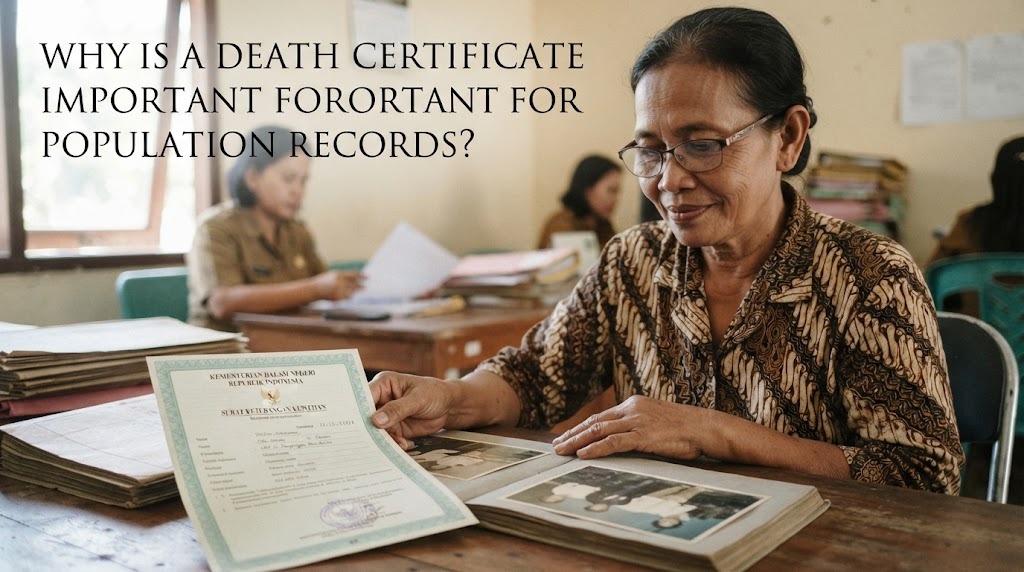
A death certificate is an important document in population administration because it officially records that a person has died. The registration of a death allows the government to update population data and maintain accurate civil records. For families, the document can also support various administrative processes after a family member passes away. Therefore, registering a death is not only about obtaining a document but also about keeping population records accurate and up to date.
KEEPS POPULATION DATA ACCURATE
A death certificate helps ensure that population databases reflect a person's current status. When a death is officially registered, the deceased person's information can be updated in the population administration system. Accurate data is important for government services, planning, and population statistics. Without proper registration, a deceased person may continue to appear as an active resident in administrative records.
SUPPORTS FAMILY DOCUMENT UPDATES
The registration of a death can also help the family update related population documents. For example, information on the Family Card may need to be adjusted after a family member passes away. Updating these records helps ensure that the information about family members remains accurate. This can also prevent difficulties when the family needs to use population documents for future administrative purposes.
HELPS WITH INHERITANCE ADMINISTRATION
A death certificate may be important when a family begins handling inheritance matters. Official proof of death can be requested in various administrative or legal processes related to the deceased person's assets. It can help establish the status of the deceased before other procedures are carried out. However, additional documents may still be required depending on the type of inheritance process and applicable regulations.
SUPPORTS INSURANCE AND FINANCIAL CLAIMS
Families may also need a death certificate when handling insurance, pension, banking, or other financial matters. Institutions may require official documentation to verify that the policyholder, account holder, or beneficiary-related individual has died. Having an official death record can make the verification process more orderly. The specific documents required will depend on the policies of each institution.
PREVENTS ADMINISTRATIVE PROBLEMS
Failure to register a death can create problems because population data may remain inconsistent. Incorrect records can make it more difficult for families to complete certain administrative procedures. Updating the information as soon as possible reduces the possibility of discrepancies between population documents and other records. Proper death registration therefore helps create a more reliable administrative history.
HELPS GOVERNMENT MAINTAIN POPULATION STATISTICS
Death registration is also important for the government because it contributes to accurate population statistics. Recorded deaths provide information that can be used to understand changes in population size and demographic conditions. Reliable population data can support government planning and public services. For this reason, individual death registration also contributes to the accuracy of population administration on a broader scale.
CONCLUSION
A death certificate is important for population records because it officially confirms a person's death and helps keep civil registration data accurate. The document can also support family document updates, inheritance administration, insurance claims, and other financial or administrative matters. Proper death registration helps prevent discrepancies in population records and supports reliable government data. Families should therefore report a death and complete the required registration process according to the applicable Dukcapil procedures.
About the Author
Gusti Ayu Tita P
Author — STEKOM University
An active author focused on academic issues, educational technology, and human resource development in the campus environment.















