
Why Is Bhinneka Tunggal Ika Important for the Younger Generation?
Gusti Ayu Tita P
4 Agustus 2026
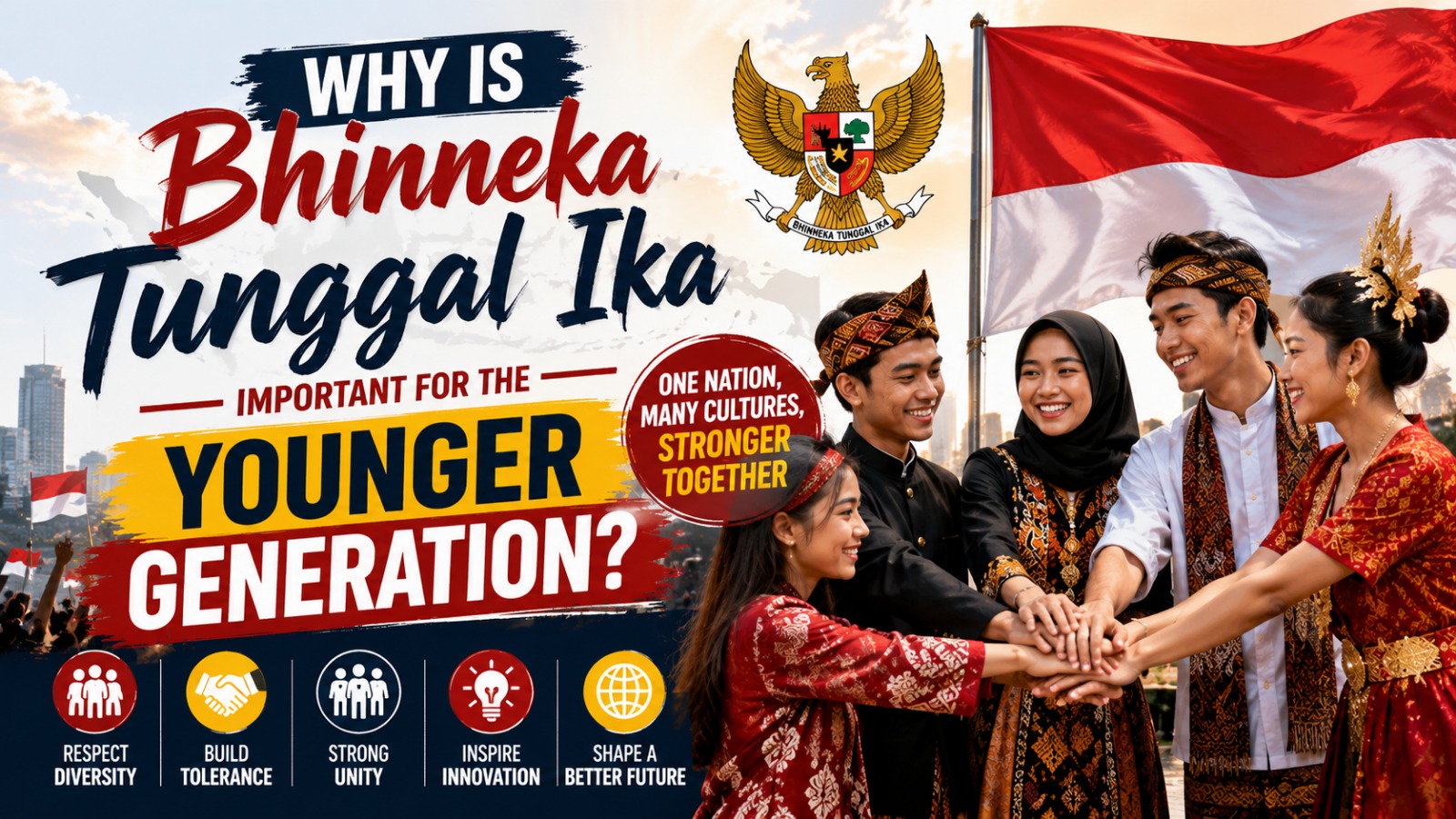
Indonesia is a country with remarkable diversity in ethnicity, religion, language, culture, and tradition. This diversity is an important part of the country’s identity, but maintaining unity requires mutual respect and understanding. Bhinneka Tunggal Ika, which means “Unity in Diversity,” provides an important principle for helping Indonesians live together despite their differences.
The younger generation has an important role in protecting this principle because they will shape Indonesia’s future. Understanding Bhinneka Tunggal Ika can help young people develop tolerance, respect different identities, and build positive relationships with others. These values are especially important in an era when social interaction is increasingly influenced by technology and social media.
UNDERSTANDING BHINNEKA TUNGGAL IKA
Bhinneka Tunggal Ika is Indonesia’s national motto and represents the idea that people with different backgrounds can remain united as one nation. The phrase is commonly translated as “Unity in Diversity” and reflects the multicultural character of Indonesian society. Its historical roots can be traced to the Kakawin Sutasoma, a 14th-century Javanese literary work associated with Mpu Tantular.
The principle does not mean that everyone must have the same beliefs, traditions, or opinions. Instead, it encourages people to respect differences while recognizing a shared identity as Indonesians. For the younger generation, understanding this principle provides a foundation for developing an open-minded and respectful attitude toward others.
BUILDING TOLERANCE AMONG YOUNG PEOPLE
Tolerance is one of the most important values connected to Bhinneka Tunggal Ika. Young people regularly interact with friends and communities that may have different religious, ethnic, cultural, and social backgrounds. Learning to respect these differences can help them build healthier relationships and avoid unnecessary conflict.
Tolerance does not require young people to agree with every opinion or belief. It means giving others the right to have differences while communicating respectfully. By practicing tolerance in schools, universities, families, communities, and online spaces, young people can contribute to a more peaceful society.
STRENGTHENING INDONESIAN UNITY
Indonesia’s unity depends on the ability of its people to work together despite differences. Bhinneka Tunggal Ika reminds the younger generation that diversity should not become a reason for division. Instead, different backgrounds can become a source of strength when people cooperate toward shared goals.
Young people can strengthen unity through simple actions such as joining community activities, working on group projects, helping others, and participating in social programs. These activities allow them to interact with people from different backgrounds. Through cooperation, they can discover shared interests and develop a stronger sense of national belonging.
RESPECTING RELIGIOUS AND CULTURAL DIVERSITY
Indonesia has a wide range of religious traditions and cultural practices. The younger generation needs to understand that these differences are part of the country’s social reality. Respecting religious practices and cultural traditions can prevent stereotypes and reduce the risk of discrimination.
Young people can show respect by learning about different cultures, appreciating traditional arts, and avoiding negative judgments about unfamiliar customs. They can also support cultural preservation by introducing Indonesian heritage through educational activities and responsible digital content. Such actions help ensure that diversity remains a valuable part of Indonesia’s identity.
DEVELOPING POSITIVE CHARACTER
Bhinneka Tunggal Ika can also contribute to the development of positive character among young people. Respecting differences encourages empathy, fairness, openness, and social responsibility. These qualities are valuable not only for maintaining harmony but also for building meaningful relationships in education and professional environments.
Young people who are accustomed to listening to different perspectives can become better communicators and collaborators. They can express their opinions while still considering the feelings and rights of others. Over time, these habits can help create a generation that is confident, responsible, and respectful.
FACING CHALLENGES IN THE DIGITAL ERA
Technology has made it easier for young people to communicate and access information. However, digital platforms can also spread misinformation, hate speech, stereotypes, and discriminatory content very quickly. Without digital awareness, disagreements about identity or beliefs can easily become larger social conflicts.
The values of Bhinneka Tunggal Ika can guide young people when using social media. They should check information before sharing it, avoid insulting groups based on their identity, and respond to disagreements responsibly. Social media can also be used positively to promote cultural diversity, tolerance, and stories that encourage unity.
PREPARING YOUNG PEOPLE FOR A DIVERSE FUTURE
The future will require young people to interact with individuals from increasingly diverse backgrounds. Education, workplaces, technology, and international communication create more opportunities to meet people with different perspectives. Therefore, the ability to respect differences and cooperate across backgrounds is becoming increasingly valuable.
Bhinneka Tunggal Ika can provide a strong foundation for developing these skills. Young people who understand diversity can adapt more effectively to different social environments and collaborate with others. This can support their academic development, career opportunities, and participation in society.
THE ROLE OF EDUCATION AND FAMILY
Education and family environments have a major influence on how young people understand diversity. Schools and universities can teach Bhinneka Tunggal Ika through classroom discussions, cultural activities, collaborative projects, and community programs. These experiences allow students to learn about differences through direct interaction rather than theory alone.
Parents, teachers, and other adults also need to provide positive examples. Young people are more likely to develop tolerance when they see adults treating people fairly and respectfully. Consistent guidance from both family and educational institutions can help turn the values of unity and respect into everyday behavior.
CONCLUSION
Bhinneka Tunggal Ika is important for the younger generation because it provides a foundation for respecting differences while maintaining Indonesian unity. Its values can help young people develop tolerance, empathy, cooperation, and responsible behavior in both real-life and digital environments. These qualities are increasingly important as society becomes more connected and diverse.
The younger generation is not only the recipient of Indonesia’s cultural heritage but also an important part of its future. By practicing tolerance, rejecting discrimination, appreciating cultural diversity, and using technology responsibly, young people can help protect national unity. Bhinneka Tunggal Ika can therefore remain a meaningful guide for building a peaceful, inclusive, and united Indonesia.
About the Author
Gusti Ayu Tita P
Author — STEKOM University
An active author focused on academic issues, educational technology, and human resource development in the campus environment.















