
Why Is Choosing a Legal Online Loan Important?
Gusti Ayu Tita P
6 Agustus 2026
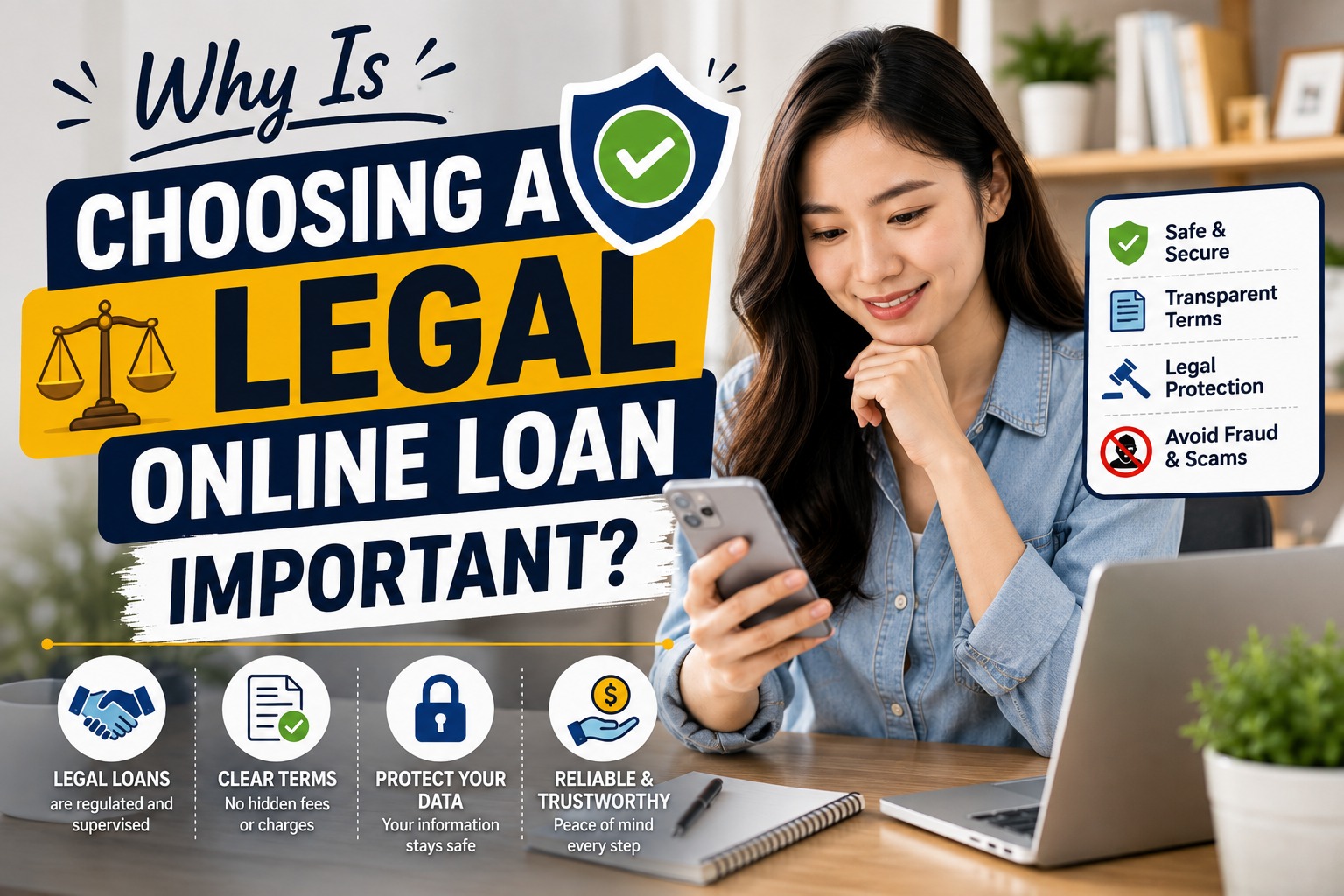
Online loans can make it easier for people to access financing without visiting a physical branch. The digital process may save time and provide a practical way to apply for funds. However, not every online lending service offers the same level of safety and consumer protection. Choosing a legal online loan is important because the provider operates within the applicable regulatory framework and must meet established requirements.
A legal status does not mean that every loan is automatically suitable for everyone. Borrowers still need to compare costs, understand repayment terms, and assess their ability to pay. However, choosing a properly authorized provider can reduce several risks associated with unauthorized lending services. Careful selection is therefore an important part of responsible borrowing.
LEGAL ONLINE LOANS OPERATE UNDER REGULATORY OVERSIGHT
One of the main reasons to choose a legal online loan is regulatory oversight. In Indonesia, licensed fintech peer-to-peer lending or LPBBTI providers are regulated by the Financial Services Authority or OJK. They must comply with applicable requirements and regulatory standards. This provides a formal framework for how the service operates and interacts with consumers.
Borrowers can check the provider's status through official OJK information before applying. This step is important because an application can look professional even when the company behind it is not authorized. Do not rely only on advertisements, logos, or claims of being supervised. Verifying legal status through an official source provides a stronger basis for making a decision.
BETTER CONSUMER PROTECTION
Legal online lending providers operate within rules designed to provide consumer protection. Borrowers can therefore have clearer rights and responsibilities when using regulated services. Information about the product, repayment obligations, and applicable conditions should be presented according to the relevant requirements. Consumers should still read all documents carefully before accepting a loan.
If a problem occurs, borrowers can use the provider's official complaint or customer service channels. Depending on the issue, consumers may also have access to regulatory complaint mechanisms. This does not remove the borrower's responsibility to repay the loan. Instead, it provides a more structured framework for addressing problems fairly and appropriately.
CLEARER INFORMATION ABOUT LOAN COSTS
Understanding the actual cost of borrowing is essential before accepting an online loan. Legal providers are required to operate according to applicable rules regarding their products and disclosures. Borrowers should be able to review relevant information about costs, repayment obligations, and other terms. This makes it easier to calculate whether the loan is affordable.
Do not judge a loan only by its advertised monthly installment. Consider the complete financial obligation, including applicable fees and the total amount that must be repaid. Compare different legal providers when possible to identify a suitable option. A transparent loan agreement helps borrowers make decisions based on information rather than assumptions.
GREATER PROTECTION FOR PERSONAL DATA
Online loan applications may involve personal and financial information, making data protection an important concern. A legal provider operates within the applicable regulatory framework for financial technology services and consumer protection. Borrowers should still review the provider's privacy information before submitting their data. Only provide information that is required through official and verified channels.
Never share passwords, PINs, or one-time passwords with anyone claiming to represent the lender. Be careful with links sent through unknown messages or social media accounts. If someone requests sensitive information outside the official application or website, verify the request first. Good data security practices should always accompany the choice of a legal lending provider.
REDUCES THE RISK OF ILLEGAL COLLECTION PRACTICES
Choosing a legal online loan can reduce the risk associated with unauthorized lending and improper collection practices. Regulated providers must operate according to applicable rules and standards. Borrowers should understand the repayment terms and consequences of late payments before accepting the loan. This makes the collection process more predictable and transparent.
Illegal lenders, on the other hand, operate outside the regulatory framework. Their collection practices may expose borrowers to greater uncertainty and risk. This is one reason consumers should verify the provider's legal status before submitting personal information or accepting a loan. Never assume that an aggressive or suspicious collection message is legitimate without verification.
HELPS BORROWERS MAKE MORE INFORMED DECISIONS
Choosing a legal provider encourages borrowers to evaluate the loan based on clearer information. Applicants can compare the loan amount, costs, tenor, repayment schedule, and other conditions before making a decision. This makes it easier to determine whether a particular loan matches their financial needs. A trusted provider should not require consumers to make decisions without sufficient information.
Borrowers should also consider their own financial ability before taking any loan. A legal provider can still offer a product that is unsuitable for someone whose income cannot comfortably cover the repayment. Calculate essential expenses, existing debt, and the proposed installment before applying. Responsible borrowing requires both a trustworthy provider and realistic financial planning.
MAKES IT EASIER TO VERIFY THE PROVIDER
A legal online loan provider can be verified through official regulatory information. This gives consumers a reliable starting point before they submit identity documents or financial information. Verification is especially important when advertisements promise fast approval or unusually attractive terms. A provider's professional appearance is not enough to prove its legitimacy.
Check the company name and service details against official information from OJK. Make sure the application or website being used is actually connected to the verified provider. Avoid links from suspicious messages or accounts that cannot be confirmed. Taking time to verify the provider can prevent unnecessary financial and data security risks.
HELPS PREVENT FINANCIAL PROBLEMS
Choosing a legal online loan is one part of responsible financial management. Before borrowing, consumers should calculate how much they need and how much they can realistically repay. Borrowing more than necessary can increase the repayment burden. A legal provider cannot prevent financial problems if the borrower takes on debt beyond their ability.
It is also important to avoid using new loans repeatedly to pay previous debts. This can create a cycle that makes financial obligations increasingly difficult to manage. Borrowers should maintain a budget and monitor payment due dates throughout the loan period. Combining a legal provider with disciplined financial planning can help reduce unnecessary debt risks.
CONCLUSION
Choosing a legal online loan is important because it provides a stronger regulatory and consumer protection framework than unauthorized lending services. Legal providers operate under applicable rules, provide clearer information, and offer official channels for customer service and complaints. They can also reduce some risks involving data protection and inappropriate lending practices.
However, legality alone should not be the only consideration. Borrowers must still compare costs, understand the agreement, protect personal information, and ensure that repayments fit their financial ability. By verifying the provider through official OJK information and borrowing responsibly, consumers can make safer and more informed online lending decisions.
About the Author
Gusti Ayu Tita P
Author — STEKOM University
An active author focused on academic issues, educational technology, and human resource development in the campus environment.















