
Why Is Cleanliness Important in an Adiwiyata School?
Gusti Ayu Tita P
15 September 2026
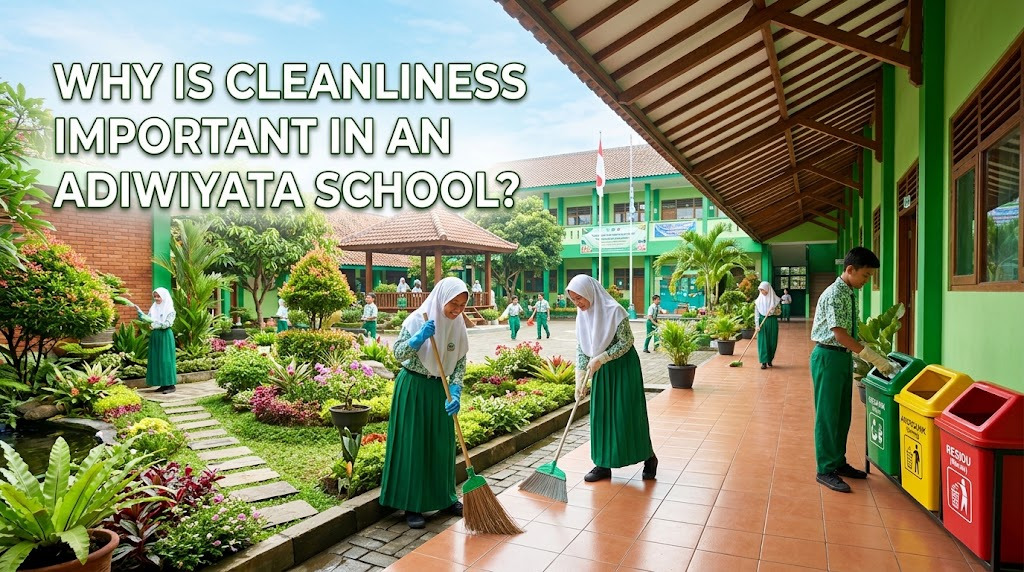
Cleanliness is one of the important elements in creating a healthy and comfortable educational environment. In an Adiwiyata School, cleanliness is not only the responsibility of cleaning staff but also a shared responsibility among students, teachers, and other school members. A clean school can support comfortable learning activities and encourage students to develop positive habits. Through regular environmental practices, students can understand the relationship between cleanliness and environmental responsibility. Therefore, maintaining school cleanliness is an important part of developing an environmentally friendly school.
WHY IS CLEANLINESS IMPORTANT IN AN ADIWIYATA SCHOOL?
Cleanliness is important because a well-maintained school environment can provide a more comfortable place for learning and daily activities. Classrooms, corridors, school yards, toilets, and other facilities need to be maintained regularly. Waste that is left in inappropriate places can make the environment unpleasant and may attract pests. Good cleanliness practices can also support proper sanitation and reduce avoidable environmental problems. For these reasons, cleanliness management should become part of the school's daily routine.
Cleanliness also teaches students valuable habits that can be useful beyond school. When students become accustomed to keeping their surroundings clean, they can carry these habits into their homes and communities. They learn that environmental care begins with simple actions performed consistently. This understanding can strengthen environmental awareness among students. As a result, cleanliness becomes not only a physical condition but also part of responsible behavior.
HOW DOES CLEANLINESS SUPPORT STUDENT HEALTH?
A clean school environment can support healthy and hygienic conditions for students and school staff. Properly managed waste can help prevent unpleasant odors and reduce conditions that may attract insects and other pests. Clean toilets and handwashing facilities are also important for maintaining good hygiene. Students should be encouraged to wash their hands properly and keep shared facilities clean after use. These habits can contribute to a healthier school environment.
However, cleanliness alone cannot prevent every health problem. Schools also need proper sanitation, safe facilities, adequate ventilation, clean water, and appropriate maintenance. Students should understand that keeping the environment clean is one part of maintaining overall hygiene. Teachers can reinforce these practices through education and daily examples. A combination of cleanliness, hygiene, and responsible behavior can create better conditions for school activities.
WHAT ROLE DOES WASTE MANAGEMENT PLAY?
Waste management is closely connected to cleanliness in an Adiwiyata School. Students should learn to place waste in the correct containers according to the school's waste separation system. Schools can encourage students to reduce unnecessary waste and use reusable products when practical. Recyclable materials can be collected and processed through suitable recycling activities. Proper management helps prevent waste from accumulating in classrooms and other school areas.
Waste management should also include regular monitoring and appropriate handling after waste is collected. Students can participate in environmental campaigns and educational activities about reducing and sorting waste. Teachers can explain why different types of waste require different handling methods. School staff can support the system by ensuring that waste collection areas and facilities are properly maintained. Through consistent practices, responsible waste management can become part of the school's environmental culture.
HOW CAN STUDENTS MAINTAIN SCHOOL CLEANLINESS?
Students can make a direct contribution by keeping their personal and shared spaces clean. They should avoid littering and clean up after eating, studying, or participating in activities. Students can also participate in scheduled classroom cleaning and school environmental programs. If they find waste in an inappropriate place, they can help move it to the correct container when it is safe to do so. These simple actions can strengthen student responsibility toward the school environment.
Students can also help identify environmental problems that require assistance from teachers or school staff. For example, they can report damaged waste bins, blocked drains, leaking taps, or other maintenance issues. They should not attempt to repair potentially dangerous facilities themselves. Instead, reporting problems allows the responsible staff to handle them safely. Through active participation, students can help create a clean and comfortable learning environment.
HOW CAN TEACHERS AND SCHOOL STAFF SUPPORT CLEANLINESS?
Teachers can support cleanliness by providing clear guidance and demonstrating good environmental habits. They can remind students to clean their surroundings and explain why cleanliness is important. Environmental topics can also be connected with relevant classroom lessons and student projects. Teachers should encourage positive behavior rather than relying only on punishment. Consistent guidance can help students understand that cleanliness is a shared responsibility.
School staff and management also have an important role in providing suitable facilities and maintaining them properly. Waste containers, toilets, handwashing areas, drainage systems, and green spaces need regular attention. School management can establish practical rules and evaluate whether environmental practices are working effectively. Cooperation between management, teachers, students, and staff can make cleanliness programs more consistent. This teamwork helps strengthen the overall Adiwiyata School culture.
WHAT ARE THE LONG-TERM BENEFITS OF SCHOOL CLEANLINESS?
Maintaining cleanliness consistently can create long-term benefits for the school community. Students can develop habits of discipline, responsibility, cooperation, and environmental care through regular participation. A clean environment can also make students and teachers more comfortable during daily school activities. When cleanliness becomes part of school culture, environmental practices are more likely to continue even without constant reminders. These habits can remain valuable after students leave school.
The long-term impact can extend into the wider community. Students who understand the importance of cleanliness may encourage their families and friends to practice similar habits. Environmental responsibility can therefore spread from school to homes and other public spaces. This can help develop a generation that is more aware of the consequences of its everyday actions. In this way, school cleanliness can become an important foundation for sustainable environmental behavior.
CONCLUSION
Cleanliness is an essential part of creating a successful Adiwiyata School because it supports a comfortable, healthy, and environmentally responsible learning environment. Proper waste management, good hygiene, regular maintenance, and student participation all contribute to maintaining school cleanliness. Teachers and school staff also have important roles in providing guidance, facilities, and consistent environmental management. Most importantly, cleanliness should be treated as a daily responsibility rather than an activity performed only during special programs. By developing consistent habits, schools can build a strong environmental culture that benefits students, the school community, and the environment in the long term.
About the Author
Gusti Ayu Tita P
Author — STEKOM University
An active author focused on academic issues, educational technology, and human resource development in the campus environment.















