Why Is Cooperation Between Schools and the Education Office Important?
Gusti Ayu Tita P
15 September 2026
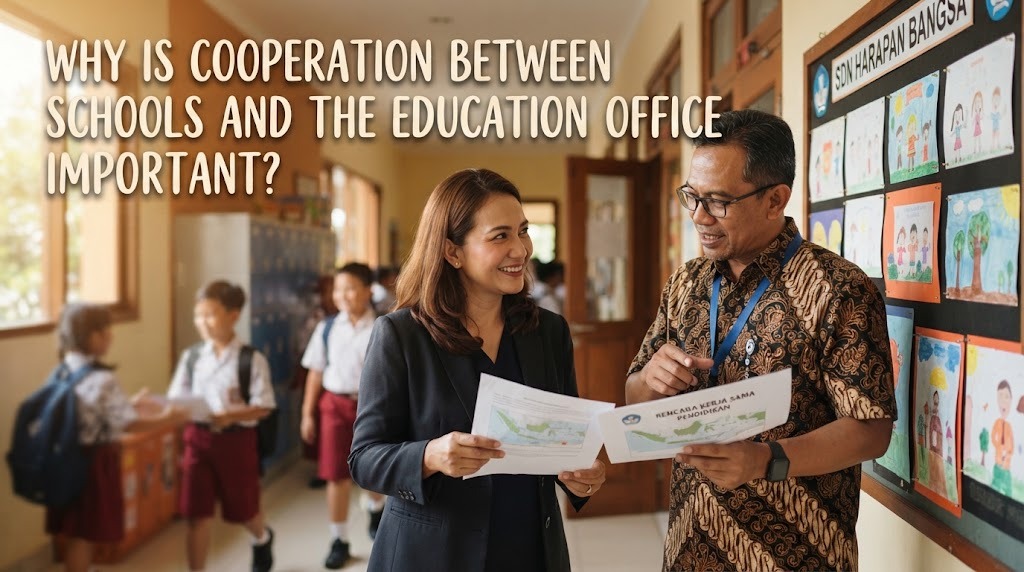
Cooperation between schools and the Education Office is important for creating effective and well-managed education services. Schools understand the daily needs of students and teachers, while the Education Office supports education programs, policies, and public services. Strong cooperation allows both sides to communicate and coordinate their responsibilities more effectively. It also helps identify challenges that schools may face during the implementation of education programs. Through continuous cooperation, education quality can be improved in a more organized way.
IMPROVING EDUCATION PROGRAMS
Schools and the Education Office need to work together to ensure that education programs match actual needs. Schools can provide information about student conditions, teacher needs, and available resources. The Education Office can use this information to develop or improve appropriate programs. Regular communication can help both sides understand whether a program is working effectively. Education Programs become more relevant when they are based on real conditions in schools.
Cooperation also makes it easier to identify problems during program implementation. Schools can report difficulties and provide suggestions for improvement. The Education Office can then provide guidance or appropriate support. Evaluation should be conducted regularly to measure program results. Continuous coordination helps education programs become more effective and sustainable.
SUPPORTING TEACHER DEVELOPMENT
Teachers need continuous support to improve their knowledge and professional skills. The Education Office can provide training, workshops, and professional development opportunities for teachers. Schools can identify the specific skills that their teachers need to develop. This information can help the Education Office design more relevant training programs. Teacher Development becomes more effective when school needs are considered.
Cooperation can also encourage teachers to share experiences and teaching strategies. Schools can create professional learning activities where teachers discuss challenges and solutions. The Education Office can support these activities through resources and guidance. Continuous professional development can help teachers adapt to changes in education and technology. Better teacher competency contributes directly to improved learning quality.
IMPROVING SCHOOL MANAGEMENT
Effective school management requires good communication between schools and education authorities. The Education Office can provide guidelines related to administration, planning, reporting, and education programs. Schools can communicate their management challenges and request appropriate support. Clear coordination can reduce misunderstandings and improve administrative efficiency. School Management becomes stronger when responsibilities are clearly coordinated.
Schools also need accurate information about policies and administrative requirements. The Education Office can provide updated guidance through official communication channels. School staff can use this information to complete administrative tasks correctly. Regular monitoring can help identify areas that require improvement. Good coordination supports more organized and accountable school management.
EXPANDING EDUCATION SUPPORT
Cooperation can help schools receive the resources and support they need. The Education Office may provide information about facilities, educational programs, training, and other forms of assistance. Schools can communicate their priorities based on actual conditions. This allows available support to be directed toward areas that need it most. Education Support can therefore become more targeted and useful.
Support should be planned according to school conditions and student needs. Regular communication can help prevent gaps between available resources and actual requirements. Schools can also provide feedback about the effectiveness of support they receive. The Education Office can use this feedback to improve future assistance. Effective cooperation can help create fairer and more sustainable education development.
STRENGTHENING EDUCATION QUALITY
The main purpose of cooperation is to support better education quality. Schools can provide information about learning conditions, student development, and challenges in the classroom. The Education Office can use this information to develop policies and programs that support improvement. Joint evaluation can help identify successful practices and areas that need attention. Education Quality can improve when decisions are based on accurate information and collaboration.
Strong cooperation also creates shared responsibility for education development. Schools and the Education Office can work together to solve problems rather than handling challenges separately. Communication should remain open, respectful, and consistent. Regular evaluation can ensure that cooperation continues to provide meaningful results. A collaborative education system can create better opportunities for students and teachers.
CONCLUSION
Cooperation between schools and the Education Office is important for improving education programs, teacher development, school management, education support, and education quality. Schools provide valuable information about conditions and needs, while the Education Office provides guidance, policies, and support. Effective communication allows both sides to respond to challenges more quickly. Continuous evaluation can also help improve programs and services. Through strong cooperation, schools and the Education Office can build a more effective and sustainable education system.
About the Author
Gusti Ayu Tita P
Author — STEKOM University
An active author focused on academic issues, educational technology, and human resource development in the campus environment.