
Why Is Greening Important for Creating an Adiwiyata School?
Gusti Ayu Tita P
15 September 2026
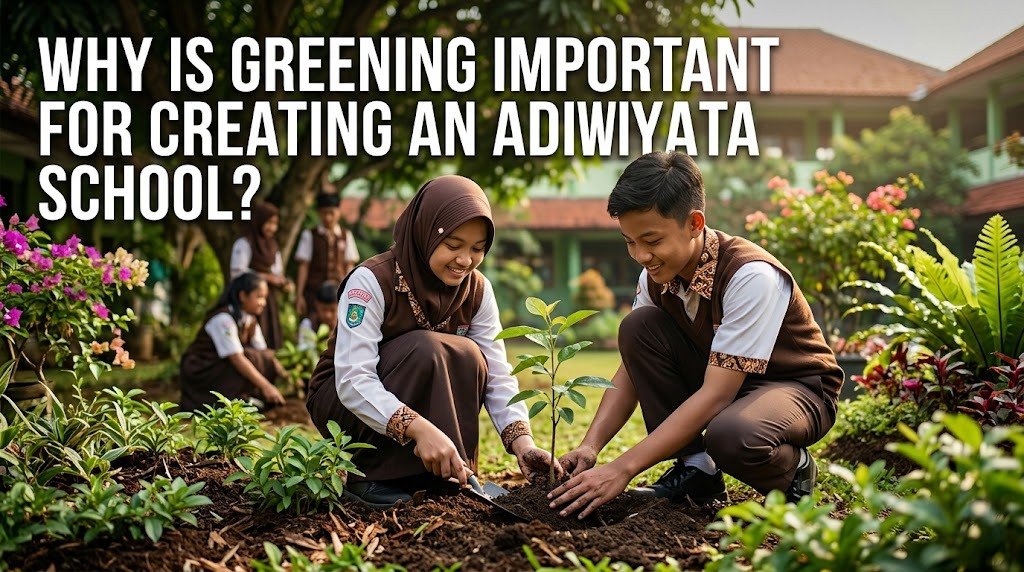
Waste is one of the environmental issues that schools need to manage carefully because daily school activities can produce different types of waste. The Adiwiyata Program encourages schools to develop responsible environmental habits, including proper waste management. Students, teachers, and school staff can work together to reduce waste and keep the school environment clean. Effective waste management does not only focus on collecting garbage but also includes reducing, sorting, reusing, and recycling suitable materials. Through consistent practices, schools can create a stronger environmental culture and teach students to care for their surroundings.
WHY IS WASTE MANAGEMENT IMPORTANT IN THE ADIWIYATA PROGRAM?
Proper waste management is important because unmanaged waste can make school areas dirty and uncomfortable. Waste that is thrown carelessly may also create unpleasant odors and attract pests. A school needs a clear system so that waste can be handled safely and responsibly. Students can learn that every piece of waste has an environmental impact when it is not managed properly. Therefore, waste management should become part of the school's daily environmental activities.
Waste management also provides practical learning opportunities for students. They can understand the importance of reducing waste through simple actions such as using reusable items and avoiding unnecessary disposable products. Teachers can connect these activities with environmental education so students understand the reasons behind waste reduction. When environmental habits are practiced every day, students are more likely to apply them outside school. This makes waste management an important part of building responsible behavior.
HOW CAN SCHOOLS REDUCE THE AMOUNT OF WASTE?
The first step in effective waste management is reducing the amount of waste produced. Schools can encourage students to bring reusable bottles, lunch containers, and shopping bags when appropriate. School events can also minimize unnecessary disposable materials by choosing reusable or recyclable alternatives. Teachers and school staff can provide simple reminders about responsible consumption. These efforts can reduce the amount of waste that needs to be collected and processed.
Schools can also examine which activities produce the most waste and identify practical solutions. For example, unnecessary paper use can be reduced by using digital materials when suitable. Food waste can be minimized by encouraging students to take reasonable portions and avoid wasting food. The goal is not only to manage waste after it is produced but also to prevent unnecessary waste from being created. This approach supports a more sustainable school environment.
HOW SHOULD STUDENTS SEPARATE SCHOOL WASTE?
Waste separation can make the waste management process more organized and effective. Schools can provide clearly labeled containers based on their own waste management system. Students should learn to place different types of waste in the appropriate containers instead of mixing everything together. Teachers can explain the purpose of waste separation through classroom discussions and practical demonstrations. Clear instructions can make it easier for students to develop consistent habits.
Not every material can be recycled in the same way, so students should follow the system established by their school. Materials that may be recyclable can be collected for appropriate recycling channels, while other waste should be handled according to local procedures. Students should not handle hazardous materials without proper training and supervision. Good waste separation can reduce contamination and make suitable materials easier to recover. It can also help students understand the importance of responsible waste disposal.
HOW CAN SCHOOLS ENCOURAGE RECYCLING AND REUSE?
Recycling and reuse can become useful activities within an Adiwiyata School when they are organized safely and realistically. Schools can collect suitable materials such as paper, cardboard, plastic containers, or other recyclable items according to local recycling facilities. Students can participate in creative projects that turn selected used materials into useful objects. Such projects can develop creativity while introducing the principles of resource conservation. However, schools should avoid recycling methods that may create health or safety risks.
Reuse is another simple way to reduce waste. Students can reuse materials that are still safe and useful instead of immediately throwing them away. Schools can also organize educational campaigns explaining how reuse can reduce the demand for new materials. These activities can help students recognize that responsible consumption includes thinking about what happens to products after they are used. Through practical experience, recycling education can become more meaningful and easier to remember.
WHAT ROLE DO TEACHERS AND SCHOOL STAFF PLAY?
Teachers have an important role in teaching students how to manage waste responsibly. They can explain waste categories, demonstrate correct disposal practices, and encourage students to maintain clean classrooms. Teachers can also include waste-related topics in projects or lessons when they are relevant to the subject. Consistent examples from teachers can reinforce the environmental behavior expected from students. This can help create a stronger school culture of environmental responsibility.
School staff and management are responsible for supporting the system with suitable facilities and regular maintenance. Waste containers should be placed in practical locations and clearly identified according to the school's system. Collection areas also need to be maintained so that waste does not accumulate or create environmental problems. School management can monitor the program and improve procedures when necessary. Cooperation among students, teachers, staff, and management is essential for successful school waste management.
HOW CAN TECHNOLOGY SUPPORT SCHOOL WASTE MANAGEMENT?
Technology can provide additional support for environmental management when it is used appropriately. Schools can use digital platforms to share information about waste reduction, recycling schedules, or environmental campaigns. Students can also create digital posters, videos, and educational content to promote responsible waste habits. Simple digital records may help schools monitor environmental activities and identify areas that need improvement. These tools can make environmental communication more engaging for students.
Technology should support, rather than replace, practical environmental action. Students still need to practice sorting waste, reducing consumption, and keeping their surroundings clean. Schools can combine digital education with real activities such as recycling projects and cleanliness programs. This combination can make the Adiwiyata Program more relevant to modern students. With appropriate use, technology can strengthen environmental awareness and encourage sustainable behavior.
CONCLUSION
Schools can manage waste through the Adiwiyata Program by reducing waste, separating materials, reusing suitable products, recycling responsibly, and improving disposal practices. The success of these efforts depends on cooperation between students, teachers, school staff, and management. Clear facilities, environmental education, and consistent daily habits can make school waste management more effective. Technology can also support communication, education, and monitoring when used appropriately. Ultimately, responsible waste management can help create a clean, healthy, and environmentally friendly school while teaching students valuable habits for a more sustainable future.
About the Author
Gusti Ayu Tita P
Author — STEKOM University
An active author focused on academic issues, educational technology, and human resource development in the campus environment.















