
Why Is Illegal Parking Still Common in Big Cities?
Gusti Ayu Tita P
29 Agustus 2026
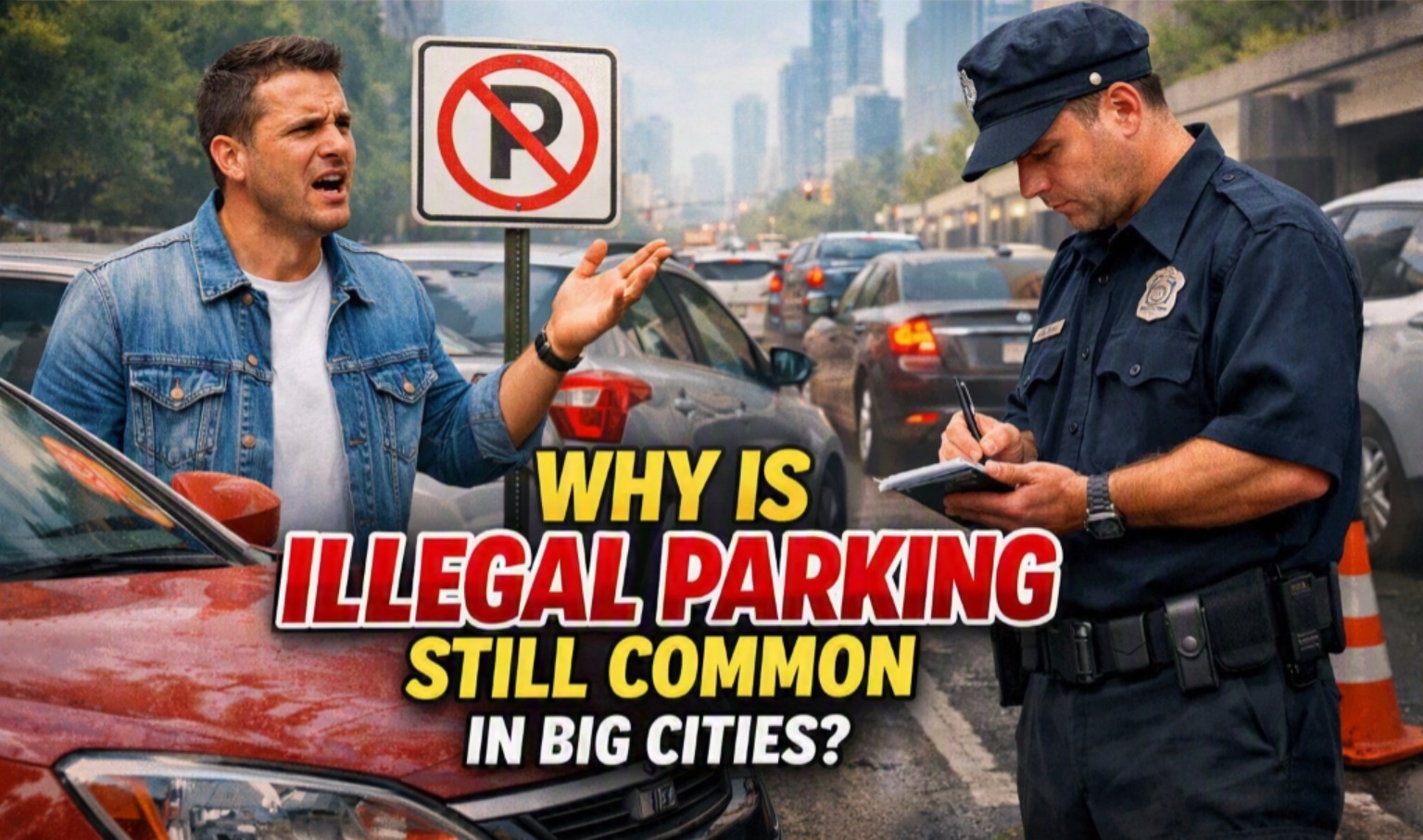
Illegal parking remains a common problem in many big cities. Streets that should support smooth traffic often become crowded because vehicles are parked in places that are not designated for parking. This situation can create traffic congestion, reduce road capacity, and make pedestrians less safe. Although many cities have parking regulations and enforcement systems, illegal parking continues to appear. Understanding the reasons behind this problem is important for finding more effective solutions.
LIMITED PARKING SPACE IN URBAN AREAS
One major reason illegal parking remains common is the limited availability of legal parking spaces. Big cities have high population densities, busy commercial areas, offices, schools, restaurants, and shopping centers that attract large numbers of vehicles every day. When drivers cannot easily find an available parking space, some choose to park on the roadside, sidewalks, or other restricted areas. This decision may seem convenient for a short time, but it can create serious problems for other road users.
The problem becomes more complicated when the number of vehicles grows faster than the development of parking facilities. Some older urban areas were not designed to accommodate today's level of car ownership. As a result, parking demand can exceed available capacity, especially during busy hours. Providing additional parking facilities can help, but cities also need better land-use planning and efficient public transportation to reduce excessive dependence on private vehicles.
CONVENIENCE OF PARKING CLOSE TO DESTINATIONS
Convenience is another important factor behind illegal parking. Many drivers prefer to park as close as possible to their destination because they want to save time and avoid walking long distances. Even when a legal parking facility is available nearby, some people may still choose an easier location, such as the roadside in front of a shop. This behavior is often driven by the belief that parking illegally for only a few minutes will not cause significant harm.
However, repeated short-term parking can have a major effect on traffic. A single vehicle may block part of a lane, forcing other drivers to slow down or change direction. In busy areas, several illegally parked vehicles can significantly reduce road capacity and contribute to congestion. Therefore, convenience for one driver can create inconvenience and safety risks for many other people.
WEAK OR INCONSISTENT ENFORCEMENT
Effective enforcement plays an important role in controlling illegal parking. When parking rules are rarely enforced, some drivers may assume that the risk of receiving a penalty is low. If violations continue without meaningful consequences, illegal parking can gradually become a normal part of daily traffic behavior. This makes enforcement consistency just as important as the existence of parking regulations.
Enforcement does not necessarily mean relying only on fines or vehicle removal. Cities can use parking officers, surveillance systems, clear signs, electronic payment systems, and other technologies to improve compliance. At the same time, enforcement should be transparent and applied fairly to different road users. Consistent implementation can strengthen public awareness that parking regulations are practical rules rather than optional guidelines.
UNCLEAR PARKING RULES AND POOR SIGNAGE
Drivers may also park illegally because parking restrictions are not clearly communicated. Signs that are difficult to see, damaged, poorly positioned, or inconsistent can make it harder for drivers to understand where parking is permitted. Road markings can have the same problem when they are faded or missing. In crowded urban environments, unclear information can increase confusion and accidental violations.
Cities therefore need clear parking signs and easily recognizable road markings. Information should be placed where drivers can see it before they decide where to stop or park. Digital maps and parking applications can also provide useful information about available parking areas. Better communication can reduce unintentional violations while making enforcement easier to understand.
LOW PUBLIC AWARENESS OF PARKING IMPACTS
Another reason illegal parking continues is that some drivers underestimate its broader consequences. A driver may think that parking on a sidewalk or blocking part of a lane is only a minor violation. In reality, the consequences can affect pedestrians, cyclists, public transportation, emergency vehicles, and other motorists. Road safety can decline when vehicles occupy spaces that should remain accessible.
Public awareness campaigns can help explain these consequences in simple and practical ways. People need to understand that parking rules are designed not only to organize vehicles but also to protect other road users. Education can be especially useful when combined with visible enforcement and convenient legal parking options. When people understand the reason behind a rule, they may be more willing to follow it.
URBAN TRANSPORTATION HABITS ALSO MATTER
Illegal parking is closely connected to the way people move around cities. In places where private cars and motorcycles are heavily relied upon, demand for parking naturally becomes higher. Limited access to reliable public transportation can make people more dependent on personal vehicles for work, education, shopping, and other activities. More vehicles then compete for limited road and parking space.
Improving public transportation can reduce some of this pressure. Convenient buses, trains, walking routes, and cycling infrastructure can give residents alternatives to driving everywhere. Cities can also introduce policies that manage parking demand, such as regulated parking zones and appropriate parking fees. A combination of transportation planning and parking management is generally more effective than relying on enforcement alone.
HOW CAN CITIES REDUCE ILLEGAL PARKING?
Reducing illegal parking requires a combination of infrastructure, enforcement, education, and transportation policies. Cities should provide sufficient legal parking in areas where demand is high while protecting sidewalks, intersections, bus stops, and emergency access. Parking rules should be easy to understand, supported by visible signs, and enforced consistently. Authorities can also use technology to monitor violations and improve parking management.
At the same time, cities should address the reasons people choose to park illegally. Better public transportation, pedestrian-friendly streets, digital parking information, and reasonable parking policies can reduce pressure on limited spaces. Businesses can also help by informing customers about nearby legal parking facilities. When legal options are convenient and violations are consistently addressed, illegal parking is more likely to decline.
CONCLUSION
Illegal parking remains common in big cities because the problem is influenced by several factors rather than a single cause. Limited parking spaces, convenience, weak enforcement, unclear regulations, low public awareness, and dependence on private vehicles can all contribute to the situation. Simply increasing penalties may not solve the problem if drivers still lack convenient legal alternatives. Cities need a balanced approach that combines enforcement with better urban planning and transportation options.
A successful parking strategy should make legal behavior easy, clear, and practical. With sufficient parking facilities, reliable public transportation, clear regulations, consistent enforcement, and stronger public awareness, cities can reduce parking violations and improve traffic conditions. Ultimately, better parking management benefits not only drivers but also pedestrians, businesses, public transport users, and the wider urban community.
About the Author
Gusti Ayu Tita P
Author — STEKOM University
An active author focused on academic issues, educational technology, and human resource development in the campus environment.















