
Why Is Love Language Often Misunderstood in Relationships?
Gusti Ayu Tita P
11 September 2026
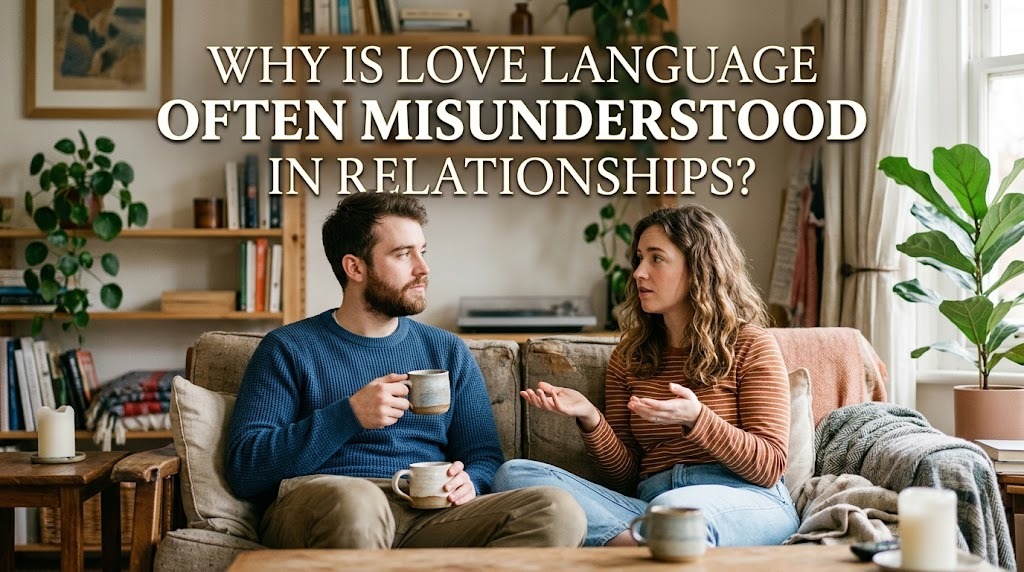
Love language describes the different ways people show and receive affection in a relationship. It can help partners understand why certain actions feel meaningful while others may not have the same effect. However, love language is often misunderstood because people can express love differently from how their partner expects to receive it. Different habits, expectations, communication styles, and emotional needs can make simple acts of affection easier to misinterpret.
PEOPLE EXPRESS LOVE IN DIFFERENT WAYS
One reason love language is misunderstood is that people do not always show affection in the same way. Someone may express love through helping with daily tasks, while their partner may expect kind words or quality time. Both actions can come from genuine care, but they may feel very different to the person receiving them. This difference can make someone think their partner does not care, even when the intention is positive.
For example, a person who values acts of service may show love by preparing food or helping with an important task. Their partner may prefer words of affirmation and feel more appreciated when they hear encouragement or compliments. Without understanding these differences, both people may feel that they are giving enough while still feeling emotionally unsatisfied.
EXPECTATIONS CAN CHANGE HOW LOVE IS INTERPRETED
People often develop expectations about what love should look like based on their family, friendships, past relationships, or personal experiences. These expectations can influence how they judge their partner's behavior. If their partner does not behave according to those expectations, they may assume that something is wrong with the relationship.
For instance, someone may believe that a loving partner should always spend a lot of time together. Another person may believe that giving personal space is a healthy way to show respect. Neither approach automatically means more or less love. The important part is understanding what each partner needs and discussing those needs openly.
LOVE LANGUAGE IS NOT A FIXED PERSONALITY LABEL
Another misunderstanding happens when people treat love language as a permanent label. A person may prefer one way of receiving affection, but that does not mean they only appreciate that one form. Emotional needs can change depending on circumstances, stress, life stages, and the situation within the relationship.
Someone who usually enjoys quality time may appreciate practical help when they are overwhelmed with work. Similarly, a person who often values words of affirmation may need quiet companionship during a difficult moment. Love language should therefore be treated as a guide for understanding affection, not as a strict rule for how someone must behave.
SMALL ACTIONS CAN HAVE DIFFERENT MEANINGS
The same action can have different meanings for different people. Sending a message every morning may feel caring to one person but ordinary to another. Giving a gift may make someone feel deeply appreciated, while another person may value a sincere conversation more. These differences can create confusion when partners assume that their own interpretation of affection is universal.
This is why couples should pay attention to how their partner responds to different forms of affection. If an action consistently makes the partner happy, comfortable, or appreciated, it may reveal something about their emotional preferences. Observing these reactions can be more useful than simply assuming what the other person wants.
POOR COMMUNICATION CREATES MORE MISUNDERSTANDING
Love language becomes difficult to understand when partners do not communicate their needs clearly. Some people expect their partner to automatically know what makes them feel loved. When those expectations are not met, disappointment can build even though the partner may not realize what went wrong.
Open communication can prevent this problem. Partners can explain which actions make them feel appreciated and which behaviors make them feel ignored or disconnected. Talking about emotional needs is not a sign of weakness, but a practical way to reduce unnecessary misunderstandings and strengthen the relationship.
INTENTION AND IMPACT ARE NOT ALWAYS THE SAME
A person can have good intentions while their actions still fail to make their partner feel loved. Someone might frequently give gifts because they believe gifts show appreciation, while their partner actually wants more meaningful conversations. The intention is caring, but the emotional impact may be different from what was expected.
Understanding this difference can help couples become more considerate. Instead of only asking, “Did I show my love?” it can also help to ask, “Did my partner feel loved by what I did?” This does not mean every action must perfectly satisfy the other person, but it encourages partners to consider how their affection is received.
CONCLUSION
Love language is often misunderstood because people give and receive affection in different ways. Personal expectations, communication habits, changing emotional needs, and different interpretations of small actions can all create confusion. A partner may genuinely show love but use a form of affection that the other person does not immediately recognize.
The best way to understand love language is through communication, observation, and mutual effort. Love language should not be used to label a person or determine whether two people are compatible. Instead, it can become a useful tool for learning what makes each partner feel valued, respected, and emotionally connected.
About the Author
Gusti Ayu Tita P
Author — STEKOM University
An active author focused on academic issues, educational technology, and human resource development in the campus environment.















