
Why Is LRT Important for Future Transportation?
Gusti Ayu Tita P
11 Agustus 2026
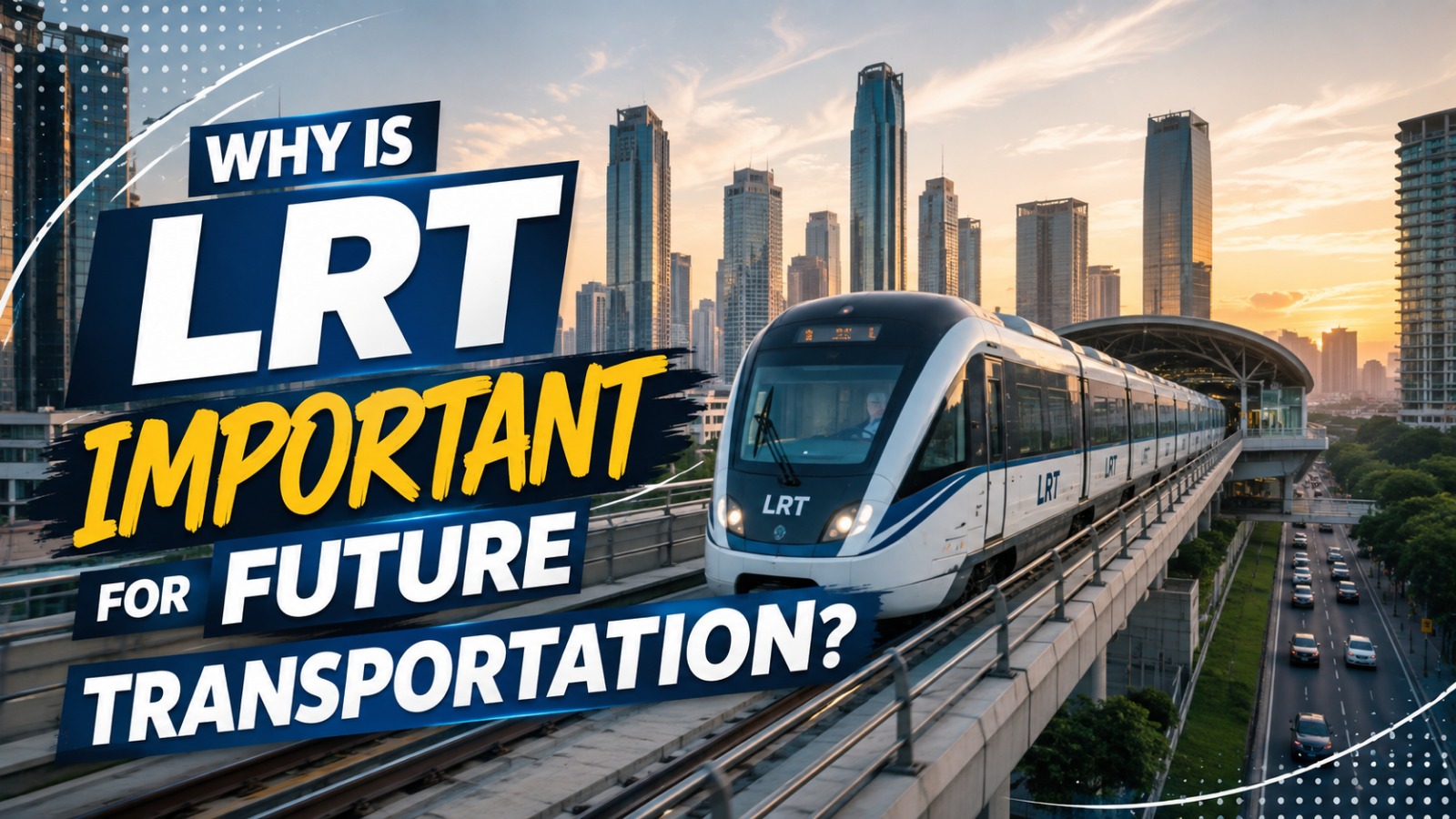
Light Rail Transit or LRT is becoming an important part of modern urban transportation. As cities grow and populations become more concentrated, the demand for efficient public transportation continues to increase. Roads alone may not be enough to handle rising numbers of private cars and motorcycles. LRT provides a rail based alternative that can move many passengers along busy urban corridors. For this reason, LRT has the potential to play an important role in the future of sustainable and connected cities.
REDUCES URBAN TRAFFIC CONGESTION
One of the main reasons LRT is important for future transportation is its ability to move many passengers in a single train. When more people use public transportation, fewer individuals may need to travel separately by private car or motorcycle. This can help reduce the number of vehicles competing for limited road space. LRT also operates on dedicated tracks, so it is generally less affected by road traffic congestion. As a result, it can provide a more predictable option for daily commuters.
Reducing congestion is especially important in rapidly growing cities. Traffic delays can waste time, increase fuel consumption, and affect productivity. A reliable rail system gives residents another option for reaching workplaces, schools, shopping areas, and other destinations. LRT alone cannot eliminate congestion, but it can become an important component of a broader urban mobility strategy.
SUPPORTS CLEANER TRANSPORTATION
Modern LRT systems generally use electric power instead of conventional internal combustion engines. This means they produce no direct tailpipe emissions while operating. The environmental benefits can be greater when electricity comes from cleaner energy sources. However, the total environmental impact also depends on electricity generation, infrastructure construction, and system efficiency. Even with these considerations, electric rail can support cities in reducing their dependence on fossil fuel based transportation.
LRT can also encourage a shift from private vehicles to shared transportation. A single train can carry many passengers during one trip, making efficient use of energy and urban space. If a large number of commuters choose LRT instead of driving alone, transportation related emissions can potentially decrease. This makes LRT relevant to long term efforts to create more sustainable urban mobility.
IMPROVES TRAVEL EFFICIENCY
LRT can provide relatively predictable travel because its trains normally operate on dedicated rail infrastructure. Unlike buses that may share roads with other vehicles, LRT is generally protected from many common traffic delays. This can make travel times easier for passengers to plan. Regular service intervals can also reduce waiting times between trains. These advantages are particularly useful for people who commute every day.
Travel efficiency is not determined by train speed alone. Station locations, service frequency, passenger transfers, and connections with other transportation modes also influence the overall journey. An LRT system with convenient stations and reliable connections can make public transportation significantly more practical. Therefore, effective planning is essential to maximize the benefits of LRT.
SUPPORTS POPULATION GROWTH
Urban populations continue to grow in many parts of the world, increasing the need for transportation systems that can handle more passengers. Expanding roads indefinitely is not always practical because urban land is limited and expensive. LRT provides another way to increase transportation capacity without requiring every passenger to use a separate vehicle. Its ability to carry many people makes it suitable for important urban and metropolitan corridors.
LRT can also connect residential areas with employment and activity centers. Better connectivity can make it easier for people to access jobs, education, healthcare, and commercial areas. When transportation networks grow together with cities, residents can have more mobility choices. This can support more balanced and efficient urban development.
SUPPORTS SMART URBAN DEVELOPMENT
LRT stations can become important points for economic and community activity. Businesses, offices, residential areas, and public facilities may benefit from improved access to reliable transportation. When combined with appropriate land use planning, LRT can encourage development around transit stations. This approach can reduce the need for long car dependent journeys. It can also make certain urban areas more accessible to people who do not own private vehicles.
However, transportation infrastructure by itself does not guarantee successful development. Cities need to consider pedestrian access, local roads, feeder services, land use, and public facilities around stations. Good planning ensures that people can easily reach an LRT station and continue their journey after leaving the train. This makes LRT more valuable as part of a complete urban transportation system.
CONNECTS DIFFERENT TRANSPORTATION MODES
LRT becomes more effective when it is connected to other public transportation services. Passengers may use buses, commuter trains, MRT systems, or other local services to reach an LRT station. Convenient transfers can allow people to travel farther without relying on private vehicles for the entire journey. Integrated ticketing and clear passenger information can make these transfers easier. A connected network gives travelers greater flexibility when planning their trips.
No single transportation mode can efficiently serve every location in a large city. LRT can handle important corridors while buses and other services provide connections to surrounding neighborhoods. When these modes operate as one integrated network, public transportation can become more convenient and competitive. This integration is essential for building an effective transportation system for the future.
USES MODERN TRANSPORTATION TECHNOLOGY
Future LRT systems can benefit from advances in railway technology. Modern systems may use automated train control, digital passenger information, electronic payment systems, and advanced safety technologies. These features can improve operational efficiency and make the passenger experience more convenient. Technology can also help operators monitor services and respond to operational problems more effectively.
However, technology is only one part of a successful LRT system. Reliable maintenance, well trained staff, accessible stations, clear information, and effective safety procedures remain essential. A modern transportation system must combine technology with good planning and high quality service. When these elements work together, LRT can become a dependable part of future urban mobility.
CONCLUSION
LRT is important for future transportation because it can help cities manage congestion, improve mobility, support cleaner transportation, and accommodate growing passenger demand. Its dedicated infrastructure allows trains to operate with less exposure to road traffic, while electric operation supports the transition toward more sustainable mobility. LRT can also encourage development around transit corridors and connect different public transportation modes. However, its success depends on proper route planning, reliable service, convenient stations, and strong integration with other transportation networks. With the right planning and investment, LRT can become an important foundation for efficient, sustainable, and connected cities.
About the Author
Gusti Ayu Tita P
Author — STEKOM University
An active author focused on academic issues, educational technology, and human resource development in the campus environment.















