
Why Is Pancasila Still Relevant as Indonesia’s National Ideology Today?
Gusti Ayu Tita P
4 Agustus 2026
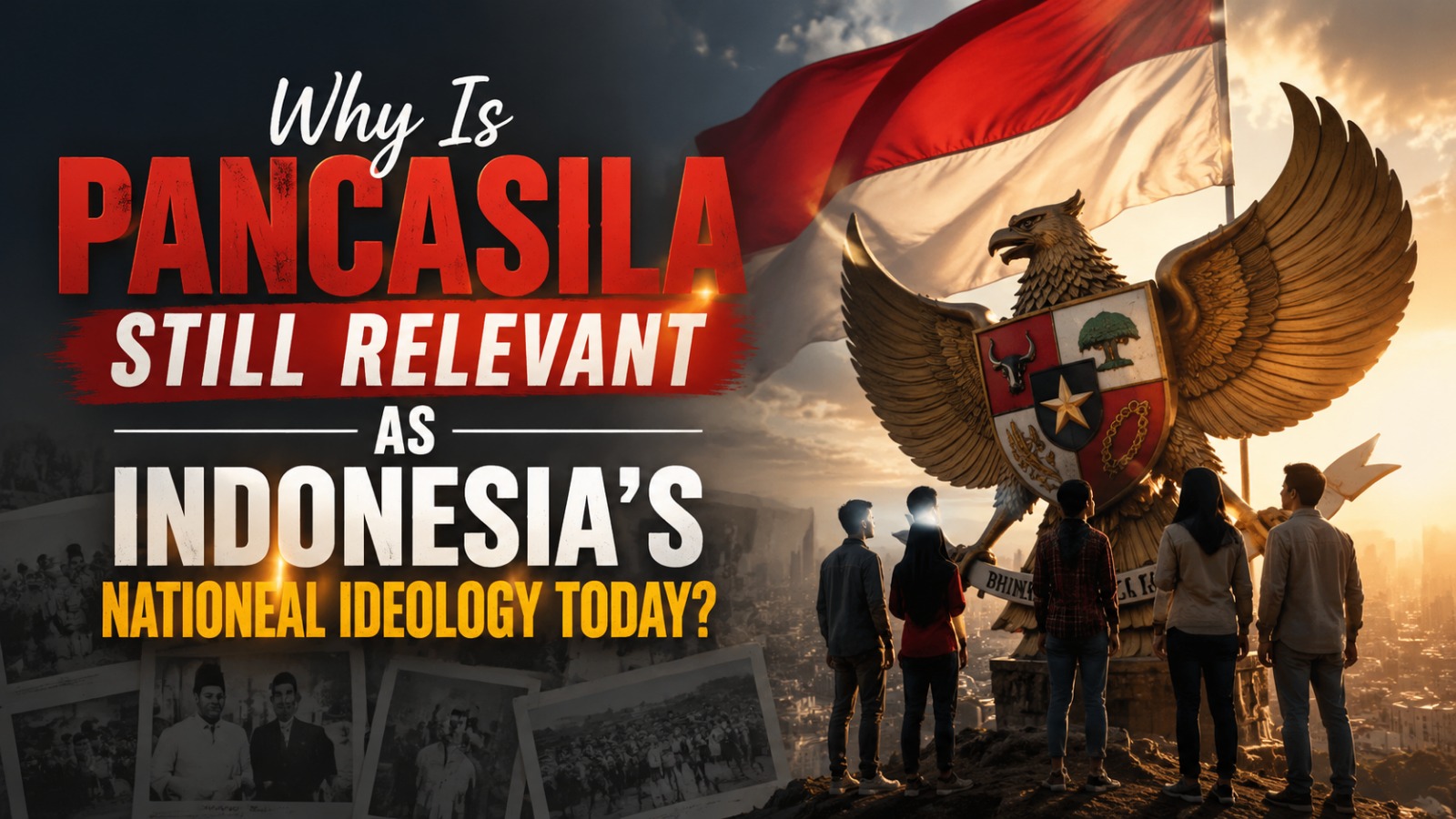
Pancasila is the official foundation and national ideology of Indonesia that contains important values for the life of the nation. Since its establishment, Pancasila has become a guideline that influences the way Indonesian people think, act, and interact with one another. The five principles of Pancasila reflect the identity of Indonesia as a country that respects religious values, humanity, unity, democracy, and social justice. Even though Indonesia continues to experience rapid changes in technology, economy, and global culture, the values of Pancasila remain relevant. This is because Pancasila does not only represent historical ideas but also provides solutions for modern challenges faced by society.
The importance of Pancasila as Indonesia’s national ideology can be seen from its ability to unite people with different backgrounds. Indonesia has thousands of islands, various ethnic groups, languages, cultures, and beliefs. Without a common foundation, diversity could become a source of division. Therefore, Pancasila continues to serve as a strong principle that maintains harmony and strengthens the national identity of Indonesia.
SEO Keywords: Pancasila National Ideology, Indonesian National Identity, Pancasila Values, Unity in Diversity, Social Justice
THE HISTORICAL FOUNDATION OF PANCASILA AS INDONESIA’S IDEOLOGY
The history of Pancasila is closely connected with Indonesia’s struggle to build an independent nation. The five principles were officially introduced as the foundation of the state on June 1, 1945, and later became part of the 1945 Constitution of Indonesia. Pancasila was created through discussions among national leaders who wanted to establish a foundation that represented all Indonesian people. The values within Pancasila were developed from the traditions, cultures, and social life of Indonesian society.
The historical background of Pancasila shows that it was designed as an ideology that could unite differences. Unlike ideologies that focus only on certain groups, Pancasila represents the interests of all citizens. This inclusive characteristic makes Pancasila remain suitable as a national guideline in facing changes throughout different generations.
PANCASILA AS A SYMBOL OF NATIONAL UNITY
One of the strongest reasons why Pancasila remains relevant today is its role in maintaining national unity. Indonesia is a multicultural country where differences in religion, ethnicity, and culture are part of everyday life. The third principle of Pancasila, “The Unity of Indonesia,” encourages citizens to prioritize togetherness and national interests above personal or group interests.
In modern society, conflicts caused by differences can still occur, especially through social media and public discussions. By applying Pancasila values, Indonesian people can learn to respect different opinions and maintain peaceful relationships. Pancasila becomes a reminder that diversity is not a weakness but a valuable strength for the nation.
THE ROLE OF PANCASILA IN THE MODERN DIGITAL ERA
The development of digital technology has changed the way people communicate and access information. Today, Indonesian society faces challenges such as online misinformation, cyberbullying, intolerance, and irresponsible digital behavior. In this situation, Pancasila provides ethical guidance for people to use technology wisely and responsibly.
The values of humanity and justice in Pancasila encourage digital users to respect others and avoid actions that can harm society. For example, spreading accurate information, respecting different opinions, and communicating politely online are forms of applying Pancasila in the digital era. Therefore, Pancasila is not outdated but becomes increasingly important as technology continues to develop.
PANCASILA IN FACING GLOBALIZATION CHALLENGES
Globalization has brought significant changes to Indonesia in various fields, including education, economy, technology, and culture. These changes provide many opportunities but also create challenges for maintaining national identity. Foreign cultures and global influences can affect Indonesian values if society does not have a strong foundation.
Pancasila acts as a national filter that helps Indonesian people accept positive global influences while protecting local values. Through Pancasila, Indonesia can continue to participate in international development without losing its cultural identity. The principles of cooperation, equality, and respect for humanity remain important in building relationships with the global community.
PANCASILA VALUES IN EVERYDAY LIFE
The relevance of Pancasila ideology can be seen through its application in daily activities. Pancasila is not only a theory but also a guide for building positive behavior among citizens. Simple actions such as respecting religious differences, helping others, participating in community activities, and making fair decisions represent the implementation of Pancasila values.
The practice of Pancasila values in everyday life helps create a society that is more peaceful and responsible. When people consistently apply these principles, social relationships become stronger and national unity becomes easier to maintain. Therefore, Pancasila must continue to be understood and practiced by every generation.
THE IMPORTANCE OF PRESERVING PANCASILA FOR FUTURE GENERATIONS
Future generations have an important role in maintaining the existence of Pancasila as Indonesia’s national ideology. Young people need to understand that Pancasila is not only a historical legacy but also a living value that guides the nation. Education about Pancasila helps students develop character, responsibility, tolerance, and national awareness.
In the future, Indonesia will face new challenges that may be different from today. However, the fundamental values of Pancasila will remain useful in solving various problems. By preserving Pancasila, young generations can contribute to creating a stronger, more united, and more prosperous Indonesia.
CONCLUSION
Pancasila remains relevant as Indonesia’s national ideology today because its values continue to support the needs of modern society. The principles of belief, humanity, unity, democracy, and social justice provide guidance in facing technological developments, globalization, and social challenges. Pancasila strengthens Indonesia’s identity while encouraging citizens to respect diversity and maintain harmony.
As Indonesia continues to grow, Pancasila values must be preserved and practiced by all generations. Through consistent implementation in daily life, Pancasila will continue to become the foundation for building a united, fair, and prosperous nation.
About the Author
Gusti Ayu Tita P
Author — STEKOM University
An active author focused on academic issues, educational technology, and human resource development in the campus environment.















