
Why Is Port Infrastructure Important for Indonesia?
Gusti Ayu Tita P
10 Agustus 2026
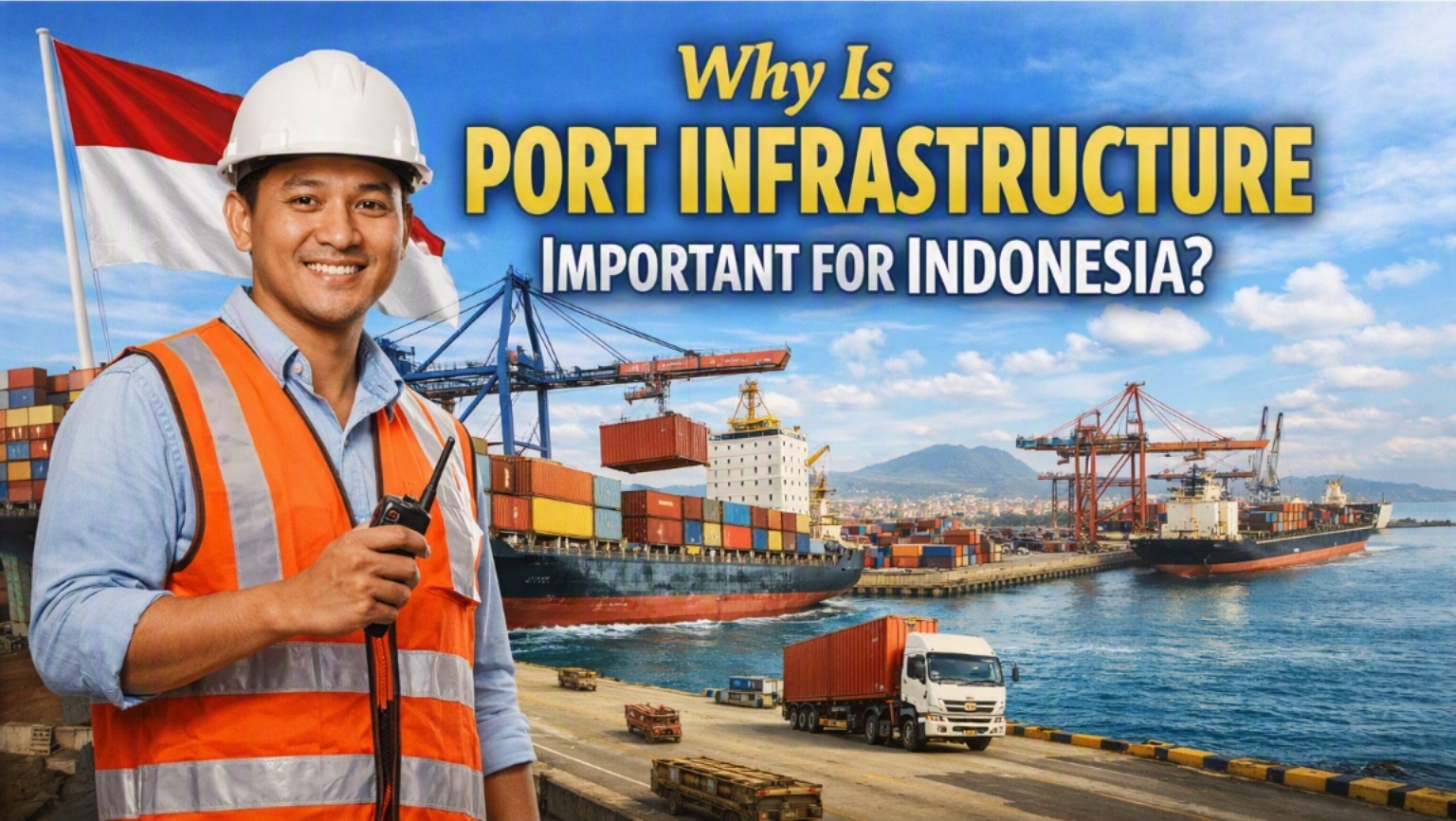
Indonesia is an archipelagic country with thousands of islands spread across a large geographic area. This condition makes port infrastructure essential for connecting regions, moving goods, and supporting economic activities. Ports serve as important links between sea transportation, land transportation, and international trade. Well-developed port facilities can make logistics faster, safer, and more efficient. Therefore, improving port infrastructure is an important part of strengthening Indonesia’s economy and competitiveness.
SUPPORTING NATIONAL LOGISTICS
Port infrastructure plays a major role in moving goods between islands and regions. Modern terminals, cargo handling equipment, storage areas, and efficient transportation connections can reduce delays during the distribution process. This is particularly important for Indonesia because many essential goods must travel across the sea before reaching consumers and businesses.
Efficient ports can also help reduce logistics costs by improving cargo handling and shortening waiting times. When goods can move smoothly from ships to trucks, trains, warehouses, or other transportation networks, the overall supply chain becomes more reliable. This efficiency can benefit businesses as well as consumers by supporting more stable prices and product availability.
CONNECTING INDONESIAN ISLANDS
Indonesia depends heavily on maritime transportation because of its geographical characteristics. Ports connect major islands, smaller islands, industrial areas, cities, and remote communities that may have limited access to other forms of transportation. Reliable port facilities make it easier to transport food, fuel, construction materials, manufactured products, and other essential commodities.
Strong port connectivity also supports regional development. When transportation access improves, businesses can reach wider markets and local producers can distribute their products more easily. This can create new economic opportunities in regions that were previously less connected to major commercial centers.
SUPPORTING INTERNATIONAL TRADE
Ports are essential gateways for Indonesia’s export and import activities. Products such as commodities, manufactured goods, agricultural products, and other merchandise can enter or leave the country through maritime trade routes. Efficient port operations help Indonesian businesses compete in international markets by reducing unnecessary delays and improving supply chain reliability.
Good infrastructure also makes Indonesia more attractive to international businesses and investors. Companies generally need dependable transportation networks to move raw materials and finished products. Ports with adequate capacity, modern technology, and efficient procedures can strengthen Indonesia’s position within regional and global supply chains.
REDUCING LOGISTICS COSTS AND DELAYS
One of the biggest advantages of better port infrastructure is improved logistics efficiency. Outdated facilities, congestion, limited storage capacity, and inefficient cargo handling can increase transportation costs. Businesses may then face higher expenses when moving products between production centers, ports, warehouses, and markets.
Investment in modern equipment and better port management can help reduce waiting times and operational bottlenecks. Digital systems can also improve cargo tracking, documentation, scheduling, and coordination between different parties. As a result, goods can move more efficiently while businesses gain better visibility over their supply chains.
ENCOURAGING REGIONAL ECONOMIC GROWTH
Port development can have a significant impact on local economic growth. The construction and operation of ports can create employment opportunities in transportation, logistics, warehousing, maintenance, security, and other related sectors. Supporting industries such as manufacturing, trading, tourism, and services may also develop around well-connected port areas.
In addition, better ports can help local businesses reach customers outside their immediate region. Small and medium enterprises can benefit when transportation becomes more accessible and affordable. This wider market access can encourage business expansion and contribute to more balanced economic development between regions.
IMPROVING TRANSPORTATION CONNECTIVITY
Ports cannot operate effectively as isolated facilities. Their benefits become greater when they are connected to roads, railways, warehouses, industrial zones, and distribution centers. Strong connections between these transportation modes create a more integrated logistics network.
Improved multimodal connectivity can make cargo transfers faster and more predictable. For example, goods arriving by ship can be transferred efficiently to trucks or trains for inland distribution. This integration helps Indonesia build a more efficient national transportation system and reduces dependence on inefficient distribution routes.
STRENGTHENING PORT SAFETY AND EFFICIENCY
Modern infrastructure is also important for maintaining port safety. Adequate navigation systems, docking facilities, lighting, communication equipment, cargo handling technology, and emergency systems can reduce operational risks. Safe port operations protect workers, ships, cargo, and surrounding communities.
Technology can further improve efficiency through digital port systems. Electronic documentation, automated processes, real-time tracking, and integrated information systems can reduce paperwork and improve coordination. These technologies can support faster services while increasing transparency and operational control.
SUPPORTING SUSTAINABLE PORT DEVELOPMENT
Future port development must consider environmental sustainability alongside economic growth. Port activities can affect coastal ecosystems, air quality, water quality, and surrounding communities if they are not properly managed. Therefore, infrastructure planning should include appropriate environmental protection and responsible resource management.
Ports can adopt cleaner technologies, energy-efficient equipment, better waste management, and environmentally responsible operating practices. The use of green port solutions can help reduce environmental impacts while maintaining efficient maritime services. Sustainable development is increasingly important as Indonesia seeks economic growth without creating unnecessary long-term environmental problems.
STRENGTHENING INDONESIA’S MARITIME COMPETITIVENESS
Indonesia has a strategic location between major Asian and global trade routes. Strong port infrastructure allows the country to take greater advantage of this geographic position. Efficient ports can support domestic trade while also helping Indonesia participate more effectively in international supply chains.
Developing competitive ports requires continuous investment, effective management, skilled workers, reliable connectivity, and appropriate technology. Improvements should also consider the different needs of major commercial ports and smaller regional ports. With consistent development, Indonesia’s maritime sector can become more efficient and contribute more strongly to national economic growth.
CONCLUSION
Port infrastructure is important for Indonesia because it supports logistics, trade, connectivity, regional development, and economic competitiveness. As an archipelagic nation, Indonesia needs reliable maritime transportation to connect its many regions and maintain the flow of essential goods. Modern facilities can reduce logistics costs, improve cargo handling, strengthen safety, and support international trade.
However, port development should not focus only on physical construction. Efficient management, digital technology, multimodal connectivity, skilled human resources, and environmental sustainability are also essential. By developing these elements together, Indonesia can build a stronger maritime logistics system and make better use of its strategic position in global trade.
About the Author
Gusti Ayu Tita P
Author — STEKOM University
An active author focused on academic issues, educational technology, and human resource development in the campus environment.















