
Why Is Team Collaboration Important For Game Developers?
Gusti Ayu Tita P
5 Agustus 2026
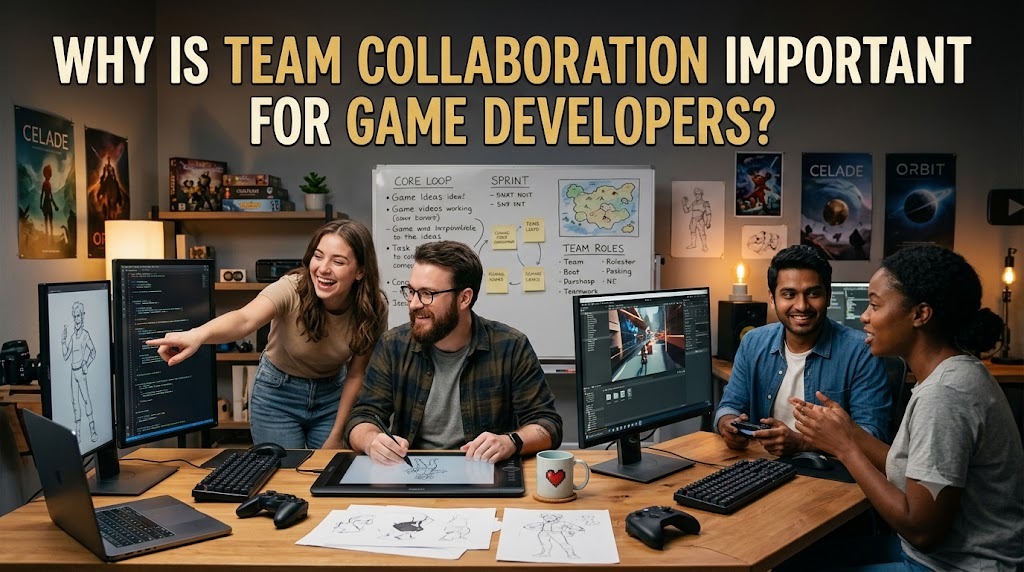
Game development is a complex process that involves many different skills and responsibilities. A modern game may require programmers, game designers, artists, animators, writers, sound designers, testers, and producers to work together. Each professional contributes a different type of expertise to the project. Because of this, effective team collaboration is an important part of creating a successful game.
Good collaboration allows developers to combine their skills and solve problems more efficiently. It also helps ensure that the game's gameplay, visual design, audio, technical systems, and overall player experience work together consistently. Without effective communication, even talented individuals may struggle to complete a large project. For this reason, team collaboration is one of the essential skills for game developers.
UNDERSTANDING TEAM COLLABORATION IN GAME DEVELOPMENT
Team collaboration means working together toward a shared development goal. In a game studio, different departments usually have their own responsibilities, but their work is connected to other parts of the project. For example, programmers need to understand the requirements of designers, while artists need to know the technical limitations of the game engine. Collaboration allows these different responsibilities to become one complete game.
The level of collaboration can depend on the size and structure of the development team. A small indie team may have only a few people who perform multiple roles, while a large studio can have specialized departments with dozens or even hundreds of employees. Regardless of team size, developers need to communicate clearly, share information, and coordinate their work. Effective collaboration helps reduce confusion and keeps the project moving toward its goals.
IMPROVING COMMUNICATION BETWEEN DEVELOPERS
Communication is one of the most important elements of game development collaboration. Developers need to share ideas, explain technical limitations, report problems, and discuss changes throughout production. Clear communication helps team members understand what needs to be done and why it matters. It also reduces the possibility of misunderstandings that could cause unnecessary rework.
Good communication does not mean that everyone must communicate in the same way. Teams can use meetings, project management tools, documentation, chat platforms, version control systems, and other methods to share information. The important thing is that relevant information reaches the right people at the right time. This becomes especially important when a project contains many interconnected systems.
COMBINING DIFFERENT SKILLS AND EXPERTISE
One major advantage of teamwork is the ability to combine different professional skills. Programmers understand technical systems, artists focus on visual elements, designers develop gameplay concepts, and audio professionals create sound experiences. Each discipline provides knowledge that other team members may not have. Combining these skills allows the team to create a more complete and polished product.
Collaboration can also help team members learn from one another. A programmer may gain a better understanding of game design, while a designer may learn about technical limitations. This shared knowledge can improve decision making and encourage more realistic ideas. Cross disciplinary collaboration is especially valuable when a feature requires contributions from several departments.
SOLVING PROBLEMS MORE EFFECTIVELY
Game development often involves unexpected technical and creative problems. A feature may not work as planned, an asset may cause performance issues, or a gameplay mechanic may be difficult to implement. Team collaboration gives developers more perspectives when solving these problems. Instead of relying on one person's approach, the team can discuss multiple possible solutions.
Different perspectives can also help identify problems earlier. Someone from another department may notice a risk that the original creator did not consider. For example, a visually impressive effect may create performance problems that a technical artist or programmer can identify. Working together allows developers to balance creative goals and technical limitations more effectively.
SUPPORTING CREATIVE IDEAS AND INNOVATION
Teamwork can create an environment where developers share and improve ideas. One person's concept may inspire another team member to develop a better solution. Creative collaboration can therefore lead to features that would be difficult for one person to develop alone. Different perspectives can also challenge assumptions and encourage the team to explore new possibilities.
However, creative collaboration requires a respectful environment. Team members should be able to provide feedback without creating unnecessary conflict. Criticism should focus on improving the project rather than attacking individuals. When developers feel comfortable sharing ideas, the team has a greater opportunity to discover innovative approaches.
REDUCING ERRORS AND REWORK
Poor communication can result in mistakes that require significant amounts of rework. For example, an artist may create an asset that does not meet technical requirements because the specifications were unclear. A programmer may build a system based on an outdated design document. These situations can waste time and resources.
Regular collaboration helps developers identify these problems earlier. Documentation, reviews, testing, and progress discussions can provide opportunities to catch mistakes before they affect other parts of the project. Team members should also communicate changes that may influence other departments. Reducing unnecessary rework allows more time to be spent on improving the actual game.
MANAGING LARGE GAME DEVELOPMENT PROJECTS
Large game projects can involve many people working on different systems at the same time. Without effective collaboration, it can become difficult to track progress and understand how changes affect the rest of the project. Teams need organized workflows, clear responsibilities, and reliable project management. These systems help coordinate work across different departments.
Large teams may also use specialized producers or project managers to help organize development. Regular meetings and progress reviews can identify risks before they become major problems. Version control and documentation are also important for managing shared resources. Strong collaboration becomes increasingly important as the size and complexity of a project increase.
BUILDING A HEALTHY WORK ENVIRONMENT
Collaboration is not only about completing tasks but also about creating a healthy professional environment. Developers spend significant amounts of time working with their colleagues, so respect, trust, and constructive communication are important. A team where people feel respected is more likely to share ideas and discuss problems honestly. This can improve both productivity and job satisfaction.
Leaders also play an important role in maintaining a healthy team culture. They can encourage open communication, clarify responsibilities, address conflicts, and recognize valuable contributions. Team members should understand that mistakes can happen during development and that problems should be discussed rather than hidden. A supportive environment can help developers work more effectively toward shared goals.
COLLABORATION BETWEEN INDIE DEVELOPERS AND LARGE STUDIOS
Team collaboration is important in both indie game development and large studio production, although the working style may differ. Indie developers often work with smaller teams where communication can be direct and responsibilities can overlap. One person may handle multiple roles and make decisions quickly. This structure can create flexibility but also requires strong multitasking and coordination.
Large studios usually divide responsibilities among specialized departments. Communication must therefore happen across many roles and sometimes different locations or time zones. Producers, team leads, and project managers may help coordinate these activities. Regardless of the structure, clear communication and shared goals remain essential for successful development.
HOW DEVELOPERS CAN IMPROVE TEAM COLLABORATION
Developers can improve collaboration by establishing clear responsibilities, communication rules, documentation practices, and project goals. Teams should decide how information will be shared and where important files or decisions will be stored. Regular but focused meetings can help identify progress and problems without wasting excessive time. Developers should also communicate changes as soon as they may affect other team members.
Another useful approach is encouraging constructive feedback. Team members should be willing to listen to different perspectives and explain their reasoning clearly. Using project management and version control tools can also make collaboration easier. With consistent processes and a respectful team culture, developers can build a workflow that supports both productivity and creativity.
CONCLUSION
Team collaboration is essential for game developers because creating a modern game requires many different skills to work together. Communication allows programmers, designers, artists, writers, audio professionals, testers, and producers to coordinate their responsibilities. Collaboration also helps teams solve problems, reduce errors, improve efficiency, and maintain a consistent game vision.
Whether a project is created by a small indie team or a large international studio, developers benefit from clear communication, mutual respect, shared goals, and organized workflows. Strong collaboration can turn individual skills into a unified development process. By building a supportive and well-organized team environment, game developers can increase their ability to create high quality games and provide better experiences for players.
About the Author
Gusti Ayu Tita P
Author — STEKOM University
An active author focused on academic issues, educational technology, and human resource development in the campus environment.















