Why Is the Independence Festival Important for Indonesian Society?
Gusti Ayu Tita P
6 Agustus 2026
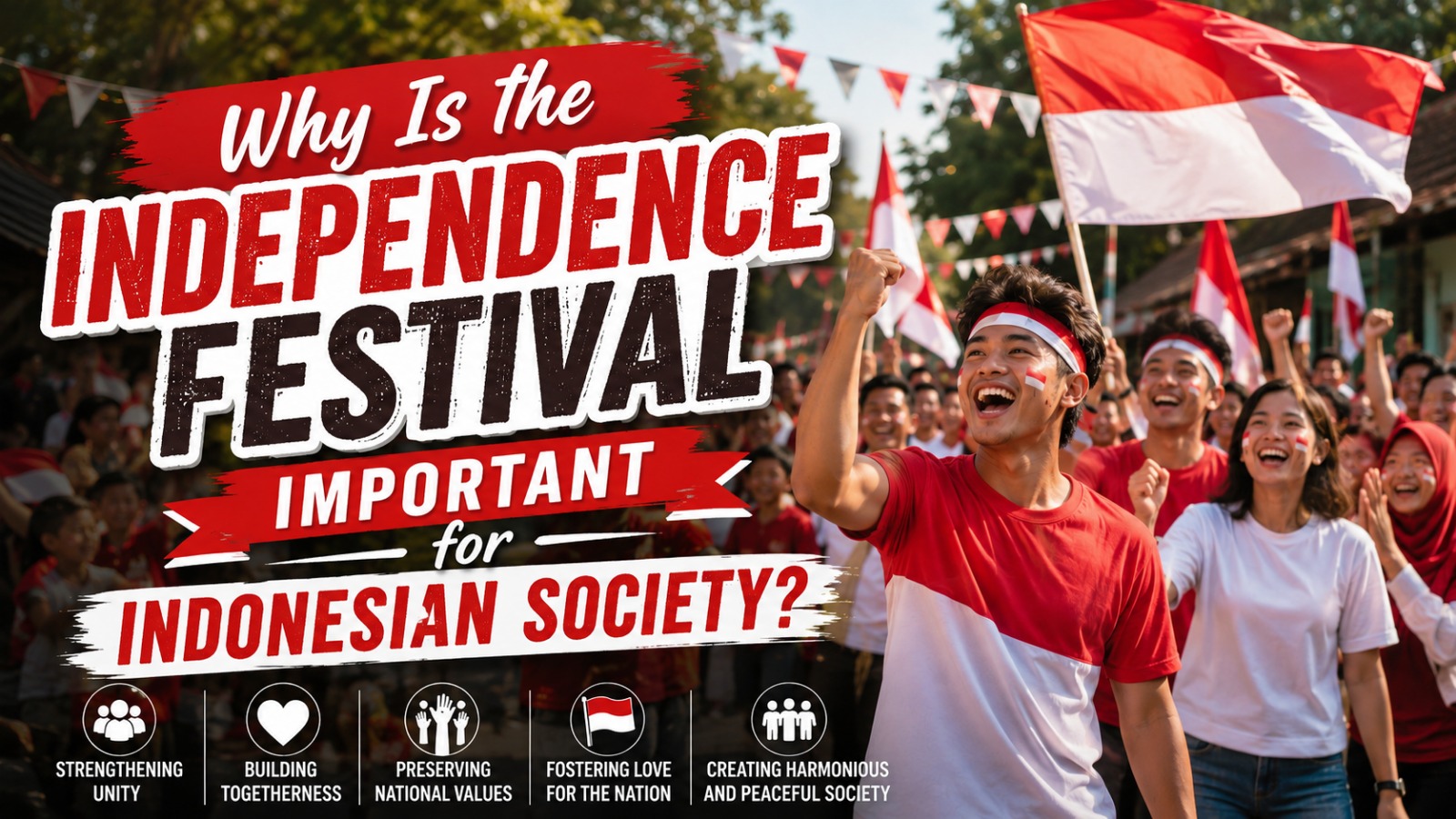
Indonesia’s Independence Festival is more than a yearly celebration filled with competitions, decorations, and community gatherings. Held around Indonesia’s Independence Day on August 17, the festival provides an opportunity for people to remember the nation’s history and appreciate the freedom achieved through the struggle for independence. It also creates a space where communities can strengthen relationships and share positive experiences. From traditional games to cultural performances, various activities can bring people from different backgrounds together. For Indonesian society, the festival can therefore serve as a meaningful combination of history, culture, education, and community spirit.
REMEMBERING INDONESIA’S HISTORY
One of the most important reasons for celebrating the Independence Festival is to remember Indonesia’s struggle for independence. Indonesia proclaimed its independence on August 17, 1945, after a long period of colonial rule and political struggle. Independence celebrations provide an opportunity for people to learn about important historical events and the contributions of national figures. Understanding this history can help younger generations appreciate that independence was not achieved easily. Historical awareness also encourages people to value the freedom and opportunities they experience today.
The festival can introduce history through ceremonies, educational discussions, quizzes, exhibitions, and storytelling. These activities can make historical information easier to understand, especially for children and teenagers. Instead of viewing history only as a subject in school, participants can experience it through community activities. This approach can encourage young people to ask questions and learn more about Indonesia’s past. Remembering history also helps society maintain a connection between past struggles and present responsibilities.
STRENGTHENING NATIONAL UNITY
Indonesia is a diverse country with many ethnic groups, languages, cultures, and traditions. The Independence Festival provides an opportunity for people with different backgrounds to gather and celebrate a shared national identity. Community competitions, cultural performances, and neighborhood events can create opportunities for people to interact in a relaxed atmosphere. These interactions can reduce social barriers and encourage mutual understanding. The festival can therefore strengthen the idea that diversity can exist alongside national unity.
Unity does not mean that everyone must have the same culture or background. Instead, it means that people can respect differences while sharing common goals as citizens. Independence celebrations can reinforce this value by encouraging cooperation among neighbors and community groups. When people work together to organize an event, they learn to communicate, divide responsibilities, and solve problems collectively. These experiences can strengthen social bonds beyond the festival itself.
PRESERVING INDONESIAN CULTURE
Independence Festival celebrations can also support the preservation of Indonesian cultural traditions. Many communities include traditional dances, regional songs, local foods, traditional clothing, and cultural performances in their celebrations. These activities give younger generations opportunities to learn about cultural heritage directly from their families and communities. Cultural activities can also help prevent local traditions from being forgotten as lifestyles change. By introducing traditions in an enjoyable setting, festivals can make cultural learning more attractive.
Traditional games are another valuable part of cultural preservation. Games such as sack races and group competitions can encourage children to participate in activities that have long been associated with community celebrations. Organizers can explain the cultural or social values behind these activities to make them more educational. Local artists and cultural groups can also be invited to perform or teach participants. This makes the Independence Festival a useful platform for maintaining cultural knowledge and appreciation.
BUILDING COMMUNITY SOLIDARITY
Independence Festival activities often depend on cooperation between residents, community leaders, youth groups, schools, and local organizations. Preparing decorations, arranging competitions, managing events, and cleaning public spaces require people to work together. These shared responsibilities can develop a stronger sense of solidarity among community members. People can learn to contribute according to their abilities, whether through time, ideas, skills, or other forms of support. Such cooperation can make neighborhoods feel more connected and supportive.
Community solidarity is especially important because strong relationships can help people respond better to challenges. A festival gives neighbors a positive reason to communicate and build trust with one another. It can also create opportunities for different generations to interact, from children to older adults. Simple activities such as group games, shared meals, and community cleanups can encourage friendly relationships. These connections can remain valuable even after the Independence Festival ends.
TEACHING POSITIVE VALUES TO YOUNGER GENERATIONS
The Independence Festival can be an effective way to introduce positive values to children and teenagers. Activities can teach discipline, responsibility, teamwork, respect, sportsmanship, creativity, and appreciation for national history. For example, team competitions require participants to cooperate and communicate rather than focus only on individual achievement. Cultural activities can encourage respect for diversity and local traditions. Educational contests can also help young people develop confidence and express their ideas.
Parents, teachers, and community members can make these lessons more meaningful by explaining the values behind each activity. Children should understand that Independence Day is not only about winning competitions or receiving prizes. It is also about learning how to become responsible members of society. When these values are introduced through enjoyable experiences, young people may remember them more easily. This makes the festival an opportunity for informal education outside the classroom.
ENCOURAGING CIVIC RESPONSIBILITY
Independence celebrations can remind people that freedom comes with responsibilities. Citizens can contribute to society by respecting others, following rules, protecting public spaces, and participating constructively in their communities. Festival activities can provide simple examples of these responsibilities in practice. Community cleanups, charity programs, neighborhood meetings, and environmental campaigns can connect national celebration with real social contributions. These activities show that patriotism can be expressed through everyday actions.
Civic responsibility is not limited to government institutions or formal organizations. Individuals and communities also have an important role in creating safe, clean, respectful, and supportive environments. Independence Festival activities can encourage people to recognize this role. When residents cooperate to solve local problems, they demonstrate that national values can be practiced at the community level. This can make the meaning of independence more relevant to everyday life.
CONCLUSION
The Independence Festival is important for Indonesian society because it connects national history with community life. It helps people remember the struggle for independence, strengthen national unity, preserve cultural traditions, and build solidarity. The celebration can also teach younger generations about teamwork, responsibility, respect, and civic participation. When communities organize meaningful activities, Independence Day becomes more than an annual celebration. It becomes an opportunity to appreciate Indonesia’s past, strengthen relationships in the present, and encourage positive contributions to the country’s future.
About the Author
Gusti Ayu Tita P
Author — STEKOM University
An active author focused on academic issues, educational technology, and human resource development in the campus environment.