Why Is The Ministry Of Home Affairs Important For National Unity And Government Stability?
Gusti Ayu Tita P
11 Agustus 2026
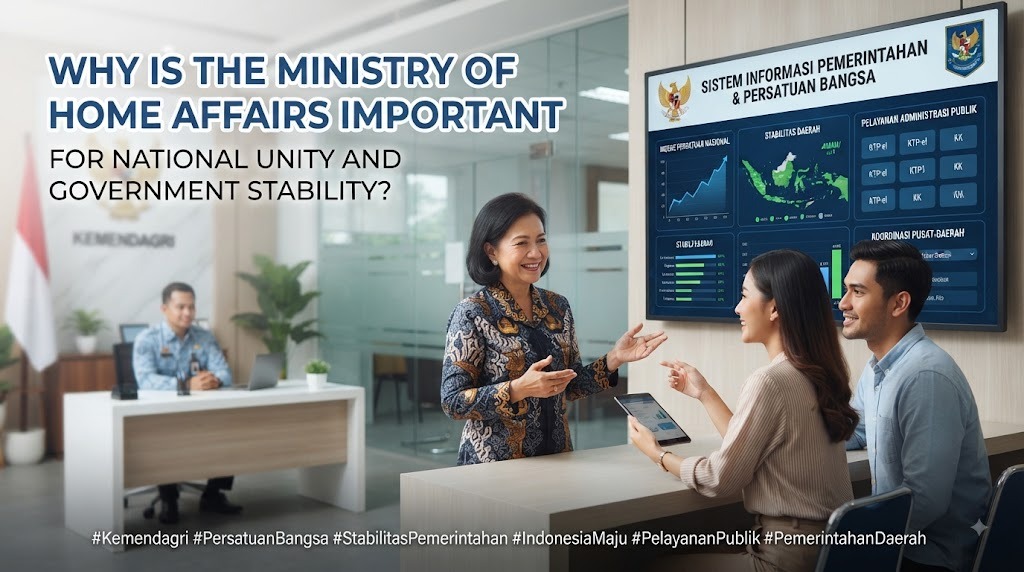
National unity and government stability are important foundations for Indonesia as a large and diverse country. Indonesia has many ethnic groups, languages, cultures, religions, and geographical characteristics. Managing this diversity requires coordination between national and regional governments. The Ministry of Home Affairs has an important role in supporting effective domestic governance and strengthening cooperation between different levels of government.
Government stability does not only depend on political conditions. It also depends on effective public administration, coordination, regional development, community participation, and the ability of institutions to respond to public needs. Through its responsibilities in domestic government affairs, the ministry can help create a more coordinated system of governance. Strong coordination and effective administration can contribute to national unity and public trust.
THE ROLE OF THE MINISTRY OF HOME AFFAIRS
The Ministry of Home Affairs plays an important role in coordinating domestic government affairs and supporting the implementation of regional governance. Its responsibilities include areas related to regional administration, population and civil registration, regional development, and coordination between central and local governments. Government coordination is essential because national policies often need to be implemented at the regional level.
The ministry also provides guidance and administrative frameworks for local governments. Different regions have different characteristics and challenges, so government policies need to be implemented with appropriate consideration of local conditions. Effective coordination can reduce administrative confusion and help governments work toward shared national objectives. This contributes to a more stable and organized system of governance.
STRENGTHENING CENTRAL AND LOCAL GOVERNMENT COORDINATION
Indonesia's government system involves cooperation between central and regional authorities. Clear coordination is necessary to ensure that national policies can be implemented effectively across different regions. Central regional coordination helps align development priorities, public services, and administrative programs.
The Ministry of Home Affairs can facilitate communication and coordination between different levels of government. This is particularly important when regions face problems that require support or cooperation beyond their administrative boundaries. Consistent communication can reduce misunderstandings and improve policy implementation. Strong coordination can also strengthen the sense that regional governments are part of one national governance system.
SUPPORTING REGIONAL AUTONOMY
Regional autonomy gives local governments opportunities to manage many affairs according to local conditions and community needs. Autonomy can encourage innovation and improve responsiveness when implemented responsibly. Regional autonomy also needs to remain consistent with national laws and the broader interests of Indonesia.
The Ministry of Home Affairs supports the governance framework for regional autonomy. It can provide guidance, coordination, and supervision within its authority. A balanced relationship between autonomy and national coordination helps prevent excessive fragmentation. This allows regions to develop according to their characteristics while remaining connected to national priorities.
SUPPORTING NATIONAL UNITY THROUGH DIVERSITY
Indonesia's cultural and social diversity is an important national asset. At the same time, differences can create challenges if they are not managed through dialogue and inclusive governance. National unity requires respect for diversity while maintaining shared constitutional and national values.
Government institutions can support unity by encouraging cooperation between communities and promoting fair public administration. Regional governments also have an important role in maintaining social cohesion. Programs that recognize local characteristics while strengthening national identity can help reduce social divisions. Effective governance can create conditions where diversity becomes a source of strength rather than conflict.
STRENGTHENING POPULATION ADMINISTRATION
Population administration provides important data for government planning and public services. Civil registration records help people obtain documents and access various government services. Population administration also supports accurate planning for education, health, social protection, elections, and regional development.
Digital population systems can improve the accessibility and accuracy of population information when properly managed. Accurate records help governments understand demographic conditions and allocate resources more effectively. The protection of personal data is also essential in population administration. Reliable population services can strengthen the relationship between citizens and government institutions.
SUPPORTING LOCAL GOVERNMENT CAPACITY
Local governments need capable officials and effective administrative systems to provide good public services. Differences in institutional capacity between regions can affect the quality of governance. Local government capacity can be strengthened through training, guidance, technical support, and institutional improvement.
Improving the skills of government officials can help local administrations manage budgets, public services, development programs, and administrative responsibilities more effectively. Strong institutions are better prepared to respond to changing community needs. Capacity building can also improve compliance with regulations and government standards. This contributes to more consistent governance across regions.
PROMOTING EFFECTIVE PUBLIC SERVICES
Government stability is closely connected to the quality of services provided to citizens. People interact with government institutions through services such as population administration, licensing, social programs, and other public services. Public service quality can influence how citizens perceive government performance.
The Ministry of Home Affairs can support local governments in improving administrative processes and service delivery. Digital systems can make some services faster and more accessible. However, services should remain inclusive for people with different levels of digital access and ability. Reliable public services can strengthen public confidence in government institutions.
SUPPORTING REGIONAL DEVELOPMENT
Unequal development can create social and economic gaps between regions. Regional development programs can help improve infrastructure, economic opportunities, public services, and community welfare. Regional development is therefore connected to national unity and government stability.
The ministry can coordinate with regional governments to support development planning and implementation. Development policies should consider local conditions and community priorities. When people see that their regions receive appropriate attention and opportunities, trust in national institutions can increase. More balanced development can strengthen the sense of belonging to one national community.
STRENGTHENING GOVERNMENT SUPERVISION
Supervision is important for ensuring that regional governments follow applicable laws and carry out their responsibilities properly. Government supervision can identify administrative weaknesses and encourage corrective actions. It can also help prevent problems from becoming more serious.
Supervision should focus not only on finding violations but also on improving institutional performance. Guidance and evaluation can help local governments understand weaknesses and develop better administrative practices. Cooperation between relevant oversight institutions can strengthen accountability. Effective supervision contributes to more reliable and stable government administration.
SUPPORTING DEMOCRATIC GOVERNANCE
Democratic governance requires participation, representation, accountability, and respect for applicable laws. Local governments are important in bringing government closer to citizens. Democratic governance can strengthen public participation in local decision-making and public affairs.
The Ministry of Home Affairs has responsibilities related to regional government administration and can support frameworks that encourage effective local governance. Public participation can provide useful information about community needs and concerns. When citizens have appropriate channels to express their views, government decisions can become more responsive. Responsible democratic governance can strengthen trust and social stability.
MANAGING SOCIAL AND POLITICAL CHALLENGES
A diverse country can experience social and political tensions caused by economic differences, identity issues, misinformation, or disagreements over public policies. Government institutions need to respond through communication, coordination, and lawful administrative processes. Social stability depends partly on the ability of government institutions to manage challenges fairly and effectively.
Local governments are often the first institutions to interact with communities during social problems. Coordination with national institutions can provide additional support when issues become more complex. Dialogue and accurate information can help prevent misunderstandings. Effective governance should prioritize peaceful solutions and respect for legal procedures.
USING DIGITAL GOVERNANCE
Digital technology can improve coordination between government institutions and make administrative information easier to manage. Integrated systems can support data exchange, reporting, public services, and government monitoring. Digital governance can therefore contribute to more efficient administration.
However, digital transformation requires reliable infrastructure, skilled personnel, cybersecurity, and responsible data management. Citizens also need access to digital services regardless of their location or economic circumstances. Technology should complement rather than replace essential face-to-face services. Properly implemented digital governance can strengthen administrative efficiency and transparency.
BUILDING PUBLIC TRUST
Public trust is essential for government stability. Citizens are more likely to support government institutions when policies are understandable, services are reliable, and officials act responsibly. Public trust develops through consistent performance rather than through short-term communication campaigns.
The Ministry of Home Affairs and local governments can strengthen trust by improving service quality, transparency, coordination, and responsiveness. Listening to public feedback can help institutions understand problems more accurately. Government institutions should also communicate policies clearly and consistently. Strong public trust can make society more resilient during periods of uncertainty.
RESPONDING TO NATIONAL CHALLENGES
National challenges can affect different regions in different ways. Natural disasters, economic difficulties, public health emergencies, migration, and other situations may require rapid coordination between levels of government. Government resilience depends on institutions being able to respond effectively while maintaining essential services.
The Ministry of Home Affairs can support coordination between central and regional governments within its responsibilities. Clear communication and reliable administrative systems can improve emergency responses. Local governments also need flexibility to respond to specific regional conditions. Strong institutional cooperation can help maintain government continuity during difficult circumstances.
CONCLUSION
The Ministry of Home Affairs is important for national unity and government stability because it supports coordination, regional governance, population administration, local government capacity, public services, supervision, and regional development. These functions help connect national policies with local implementation. Effective domestic governance can strengthen cooperation between government institutions and communities.
National unity requires more than administrative coordination. It also depends on inclusive governance, balanced regional development, respect for diversity, public participation, reliable services, and public trust. By strengthening cooperation between central and regional governments while supporting responsive local administration, Indonesia can build a more stable and cohesive system of governance.
About the Author
Gusti Ayu Tita P
Author — STEKOM University
An active author focused on academic issues, educational technology, and human resource development in the campus environment.