Why Is the True Purpose of Learning Often Ignored in College Life?
Gusti Ayu Tita P
19 Februari 2026
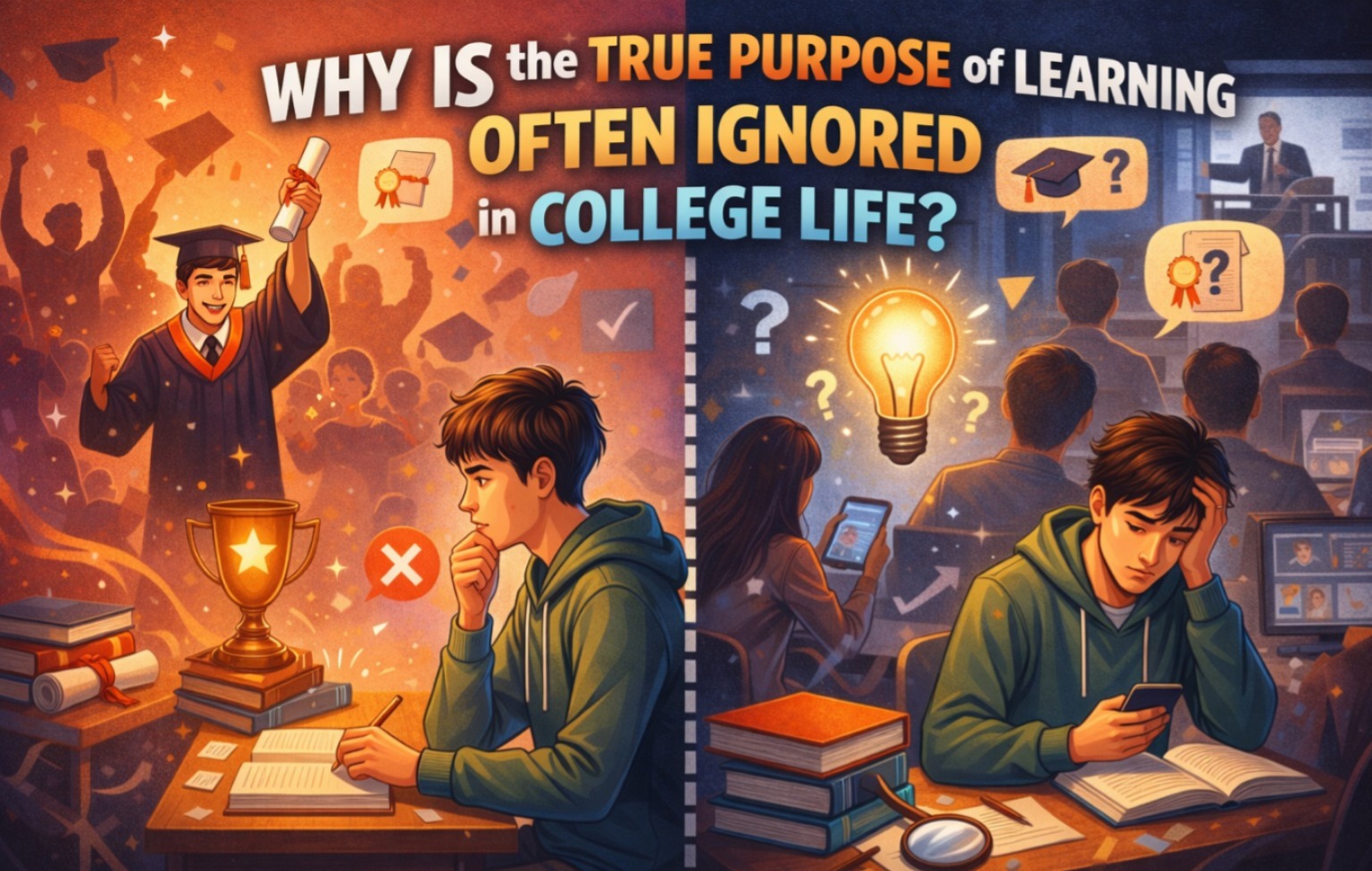
The phenomenon of students prioritizing degrees over deep understanding has become an increasingly discussed issue in higher education. Many observers argue that college is now seen merely as an administrative pathway to obtain a diploma rather than a meaningful learning process. This raises an important question: why is the true purpose of learning often ignored in college life?
This shift in mindset does not occur without reason. Social, economic, and educational system factors all influence how students perceive the value of higher education.
JOB MARKET DEMANDS AND DEGREE-ORIENTED THINKING
One of the primary reasons students focus more on degrees is the demand of the job market. Many companies still require a diploma as an initial screening criterion. Without a degree, candidates may struggle to pass the administrative stage of recruitment.
As a result, students often adopt a pragmatic mindset: the priority is to graduate on time and obtain a bachelor’s degree. Deep understanding is viewed as an added advantage, but not the main goal. Consequently, some students concentrate more on strategies to complete requirements quickly rather than truly mastering their field.
SOCIAL PRESSURE AND FAMILY EXPECTATIONS
In many societies, educational degrees are seen as symbols of success. Families often place high expectations on their children to earn academic titles as a source of pride.
This social pressure can shift students’ focus from the learning process to the final outcome — the diploma itself. Yet the essence of education lies in the journey of understanding knowledge and developing critical thinking skills.
AN EDUCATION SYSTEM FOCUSED ON GRADES
An evaluation system heavily centered on grades and GPA also contributes to this phenomenon. Academic success is frequently measured by numerical indicators.
Unfortunately, grade-oriented learning does not always align with deep comprehension. Many students study primarily to pass exams and quickly forget the material afterward. This pattern reinforces a results-driven academic culture rather than a process-oriented one.
LACK AWARENESS ABOUT REAL COMPETENCE
Some students may not fully realize that the modern workplace values real competence more than academic titles alone. Skills such as communication, analytical thinking, and practical experience often play a more decisive role in career success.
Without this awareness, students may feel that completing academic requirements is sufficient. In reality, deep understanding provides the foundation for long-term professional growth.
HOW CAN THIS MINDSET BE CHANGED?
Change must begin with individual awareness. Students should see college as an opportunity to build competence, not merely to accumulate credit hours. Engaging in discussions, joining organizations, participating in internships, and working on real projects can significantly enhance understanding.
Educational institutions also play a crucial role. By designing curricula that are more relevant to industry needs and incorporating project-based and case-based learning, universities can encourage students to connect theory with practical application.
CONCLUSION
The true purpose of learning is often ignored in college life due to job market demands, social pressure, grade-oriented systems, and limited awareness of real competence. While a degree remains important as a gateway to career opportunities, understanding and practical skills ultimately determine long-term success.
When students learn to balance academic credentials with meaningful intellectual growth, higher education becomes more than a formality — it becomes a valuable investment in the future.
About the Author
Gusti Ayu Tita P
Author — STEKOM University
An active author focused on academic issues, educational technology, and human resource development in the campus environment.