
Why Is Type O Blood Often Called the Universal Donor?
Gusti Ayu Tita P
14 September 2026
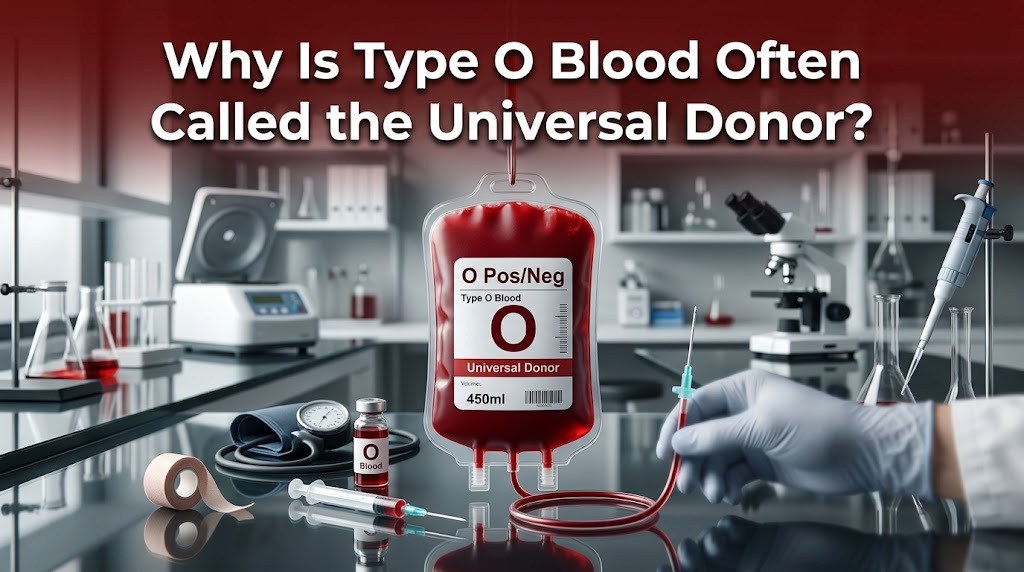
Type O blood is often called the universal donor because type O red blood cells do not have A or B antigens on their surface. This characteristic makes them less likely to be attacked by the anti-A or anti-B antibodies found in many recipients. Among the different blood groups, O-negative red blood cells are especially important because they also lack the RhD antigen. This makes O-negative blood useful in emergency situations when the patient's blood type is not yet known.
However, the term universal donor mainly applies to red blood cell transfusions and should not be understood as meaning that O blood is compatible with everyone in every situation. Blood transfusion also involves the Rh factor, other blood group antigens, and the specific blood component being given. Medical professionals still perform appropriate testing whenever possible. The use of O-negative blood is carefully managed because it is an important resource, especially during emergencies.
WHAT MAKES TYPE O RED BLOOD CELLS DIFFERENT?
The main feature of type O red blood cells is that they do not carry A or B antigens. In contrast, type A cells have A antigens, type B cells have B antigens, and type AB cells have both A and B antigens. Because O red blood cells lack these two major ABO antigens, they are less likely to interact with anti-A or anti-B antibodies in the recipient's plasma. This explains why O red blood cells can be used for a wide range of recipients.
Even though type O cells lack A and B antigens, they can still carry other blood group antigens. This means that O blood is not completely antigen-free. The RhD antigen is particularly important, which is why O-negative red blood cells are considered more broadly compatible than O-positive red blood cells. Additional laboratory testing is still required when determining the safest blood for a specific patient.
WHY IS O-NEGATIVE CALLED THE UNIVERSAL RED CELL DONOR?
O-negative red blood cells are commonly described as the universal red cell donor because they do not have A, B, or RhD antigens. As a result, they can generally be given to patients of any ABO and Rh type when emergency circumstances require immediate red blood cells and the patient's type is not yet available. This makes O-negative units especially valuable in emergency medicine. They may be used for patients with severe bleeding who need blood quickly.
Despite this broad compatibility, O-negative blood should not be used unnecessarily when the patient's actual blood type can be determined. Blood services need to preserve O-negative supplies for situations in which they are most needed. Once the patient's blood type is known, hospitals can usually switch to more specifically matched blood. This helps protect the supply of O-negative blood for future emergencies.
CAN O-POSITIVE BLOOD ALSO BE USED FOR MANY PEOPLE?
Yes, O-positive red blood cells can also be used for many recipients because they lack A and B antigens. However, they carry the RhD antigen, so they are generally suitable for Rh-positive recipients rather than Rh-negative recipients. O-positive blood is therefore widely used when the recipient's Rh status is known to be positive. It can play an important role in emergency and routine transfusion.
The difference between O-positive and O-negative blood is mainly related to the Rh factor. A person with O-positive blood has the RhD antigen, while someone with O-negative blood does not. This distinction is important because Rh-negative patients may develop anti-D antibodies after exposure to Rh-positive red blood cells. For this reason, healthcare professionals carefully consider the patient's Rh status before selecting O-positive blood.
WHAT DOES THE TERM UNIVERSAL DONOR REALLY MEAN?
The phrase universal donor can sometimes be misunderstood because blood transfusion has different rules for different blood components. O-negative is considered the universal red cell donor, but this does not mean O-negative whole blood, plasma, or every other blood product can be given safely to everyone. For example, plasma compatibility follows different principles because plasma contains antibodies. Therefore, the term should be used specifically when discussing red blood cells.
There are also other blood group antigens beyond the basic ABO and Rh systems. A patient may have antibodies against one of these antigens because of previous transfusions, pregnancy, or other exposure. In such cases, additional matching may be necessary even when the donor has O-negative blood. This is why the safest transfusion decision comes from professional laboratory testing rather than relying only on the phrase universal donor.
WHY IS O-NEGATIVE BLOOD IMPORTANT IN EMERGENCIES?
During a serious accident or other emergency, there may not be enough time to complete every blood test before treatment is needed. In these situations, O-negative red blood cells may be used because of their broad ABO and Rh compatibility. This can help doctors begin treatment rapidly when a patient has significant blood loss. Emergency departments and blood banks therefore consider O-negative blood an important part of emergency preparedness.
However, O-negative supplies are limited and must be managed carefully. If testing later shows that a patient can safely receive another blood type, the healthcare team may use blood that more closely matches the patient's own type. This approach helps maintain emergency supplies and reduces unnecessary use of a limited resource. Proper blood management is important for both individual patients and the wider healthcare system.
DOES O BLOOD WORK AS A UNIVERSAL DONOR FOR PLASMA?
No, the concept of a universal donor for red blood cells should not be applied directly to plasma. Plasma contains antibodies, so its compatibility rules are different from those for red blood cells. AB plasma is often considered broadly compatible for plasma donation because it does not contain anti-A or anti-B antibodies. In contrast, type O plasma contains both anti-A and anti-B antibodies and has a more limited recipient range.
This difference demonstrates why blood components must be considered separately. A donor who has O blood may be an excellent red blood cell donor for many recipients, but their plasma has different compatibility considerations. Hospitals therefore identify whether they are transfusing red blood cells, plasma, or another blood component. The appropriate compatibility testing is then performed for that specific product.
WHY SHOULD O-NEGATIVE DONORS CONTINUE TO DONATE BLOOD?
Because O-negative blood is especially important for emergencies, people with this blood type can make a valuable contribution through blood donation when they are eligible. Blood banks need a stable supply of O-negative red blood cells to support patients who require emergency transfusions. Regular donation can help maintain this supply and support hospitals during periods of high demand. However, every blood type is important because patients need many different blood groups.
Donors should follow the eligibility requirements provided by their local blood donation service. Safe donation involves health screening, proper collection procedures, and testing of the donated blood. The blood is then separated or processed into components that can help different patients. In this way, blood donation can support emergency care, surgery, treatment of blood disorders, and many other medical needs.
CONCLUSION
Type O blood is often called the universal donor because O red blood cells lack A and B antigens, while O-negative red blood cells also lack the RhD antigen. This allows O-negative red blood cells to be used broadly in urgent situations, especially when the patient's blood type is not yet known. However, O-negative blood is not automatically suitable for every transfusion because other blood group antigens and antibodies can also affect compatibility.
The term universal donor specifically refers mainly to red blood cell transfusion, not every blood component. O-negative blood remains an important emergency resource, while O-positive blood can also be widely used for appropriate Rh-positive recipients. Proper laboratory testing and professional judgment are still essential to provide the safest possible transfusion.
About the Author
Gusti Ayu Tita P
Author — STEKOM University
An active author focused on academic issues, educational technology, and human resource development in the campus environment.















