
Why KRL Is Important for Sustainable Transportation?
Gusti Ayu Tita P
11 Agustus 2026
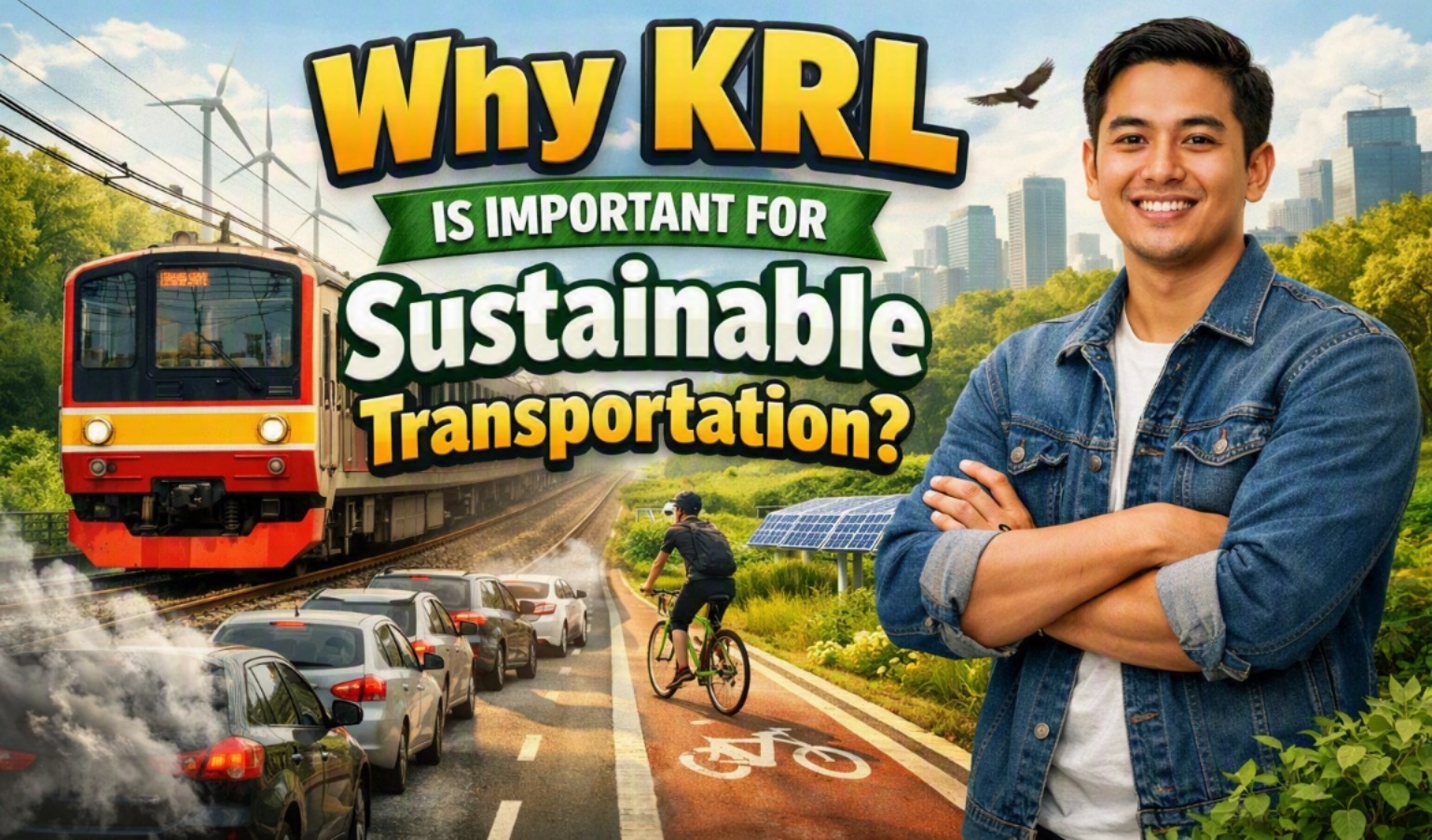
KRL (Electric Rail Train) is an important part of sustainable transportation because it can move many passengers efficiently while reducing dependence on private vehicles. In rapidly growing urban areas, traffic congestion, air pollution, and high transportation demand are major challenges. KRL offers a practical alternative by providing mass public transportation that connects residential areas, business districts, and other important destinations.
The role of KRL is not limited to moving passengers from one place to another. A reliable rail system can support lower emissions, efficient energy use, reduced congestion, and better urban mobility. For this reason, improving KRL services can become an important strategy for building cities that are more efficient, environmentally friendly, and comfortable.
REDUCING AIR POLLUTION
One of the main reasons KRL is important for sustainable transportation is its potential to reduce transportation-related air pollution. Electric trains do not rely on individual gasoline or diesel engines to move each passenger. When many people travel on the same train instead of using separate private vehicles, the number of vehicles operating on roads can decrease. This can help reduce emissions associated with road transportation, especially in densely populated urban areas.
The environmental benefits of electric rail also depend on how the electricity used by the system is generated. As the electricity supply becomes cleaner through greater use of renewable energy, the potential climate benefits of electric rail can increase. Therefore, expanding clean electricity alongside efficient rail networks can strengthen the environmental contribution of KRL.
REDUCING TRAFFIC CONGESTION
KRL can carry a large number of passengers in a single journey, making it more space-efficient than individual cars and motorcycles. This is particularly valuable in cities where road space is limited and traffic demand continues to grow. When more people choose KRL for daily travel, fewer private vehicles may be needed on busy roads. As a result, rail transportation can help reduce pressure on major urban routes.
Reduced congestion can also provide wider economic benefits. People may spend less time stuck in traffic and have more predictable travel schedules. Businesses can benefit when employees and customers can reach destinations more efficiently. In this way, KRL supports not only transportation needs but also urban productivity and economic activity.
SUPPORTING ENERGY EFFICIENCY
KRL uses electric power and is designed to transport many passengers simultaneously. This makes rail transportation an efficient option for moving large numbers of people, particularly along busy urban corridors. Compared with each passenger traveling separately in a private vehicle, a full train can transport passengers using a shared transportation system. The efficiency of the system can become even greater when trains operate with appropriate capacity, frequency, and scheduling.
Energy efficiency is an important part of sustainable transportation because transportation consumes significant amounts of energy. Efficient public transportation can help cities manage energy demand while supporting daily mobility. Combining KRL with other sustainable transportation options can create a more efficient and integrated mobility system.
ENCOURAGING PUBLIC TRANSPORTATION
The availability of reliable KRL can encourage people to choose public transportation instead of using private vehicles for every journey. However, passengers need more than trains alone to make public transportation convenient. They also need comfortable stations, clear information, reasonable schedules, safe facilities, and connections to other modes of transportation. Good service quality can make KRL a more attractive choice for students, workers, and other daily commuters.
An effective public transportation network can also reduce dependence on private vehicles over time. KRL becomes more useful when it is connected with buses, walking routes, cycling facilities, and other forms of urban transportation. This approach creates integrated mobility, allowing passengers to complete their journeys more easily without relying entirely on private cars or motorcycles.
SUPPORTING SUSTAINABLE URBAN DEVELOPMENT
KRL can influence how cities develop by providing efficient connections between residential areas, employment centers, educational institutions, and commercial districts. Areas with good rail access can become easier to reach without requiring extensive road expansion. This supports a more connected and accessible city where transportation infrastructure is integrated with urban planning.
Rail-based transportation can also support more efficient land use because trains can carry many people through relatively limited corridors. When combined with appropriate urban planning, KRL can encourage development around transportation hubs and stations. This can help create neighborhoods where important facilities and services are easier to access by public transportation.
IMPROVING DAILY MOBILITY
Another important benefit of KRL is its ability to provide reliable daily transportation for large numbers of passengers. People can use trains to travel to workplaces, schools, universities, shopping areas, and other destinations. Regular services can make travel more predictable, particularly when road traffic is highly congested. Reliable transportation is especially important for people who do not own private vehicles or prefer not to use them every day.
KRL can also improve mobility when stations are supported by convenient first and last mile connections. Feeder buses, pedestrian paths, cycling infrastructure, and other local transportation services can help passengers reach stations and continue their journeys after leaving the train. This creates a more complete transportation experience rather than treating the railway as an isolated service.
CHALLENGES IN DEVELOPING SUSTAINABLE KRL
Although KRL offers many sustainability benefits, its development still faces several challenges. Overcrowding, service disruptions, limited station capacity, and insufficient connectivity can reduce passenger comfort and discourage people from using public transportation. Infrastructure maintenance and fleet improvements also require significant investment. These challenges need to be addressed to ensure that KRL remains safe, reliable, and attractive.
Sustainable KRL development therefore requires cooperation between transportation authorities, operators, local governments, and communities. Improvements can include increasing service frequency, upgrading infrastructure, improving accessibility, strengthening safety systems, and integrating KRL with other transportation modes. Continuous improvement is essential so that public transportation can meet changing passenger needs.
CONCLUSION
KRL is important for sustainable transportation because it combines mass mobility, energy efficiency, and reduced dependence on private vehicles. A well-managed rail system can help address several urban problems at the same time, including congestion, pollution, and limited road capacity. Its benefits become stronger when the railway is supported by clean electricity, good infrastructure, and integrated public transportation.
For the future, KRL should be viewed as part of a broader sustainable transportation network rather than as a standalone solution. Better connections between trains, buses, walking facilities, cycling infrastructure, and other transportation services can make urban mobility more convenient. By continuing to improve KRL quality and accessibility, cities can move toward transportation systems that are more efficient, environmentally responsible, and beneficial for communities.
About the Author
Gusti Ayu Tita P
Author — STEKOM University
An active author focused on academic issues, educational technology, and human resource development in the campus environment.















