
Why Learning to Let Go Can Help You Overcome Overthinking?
Gusti Ayu Tita P
8 September 2026
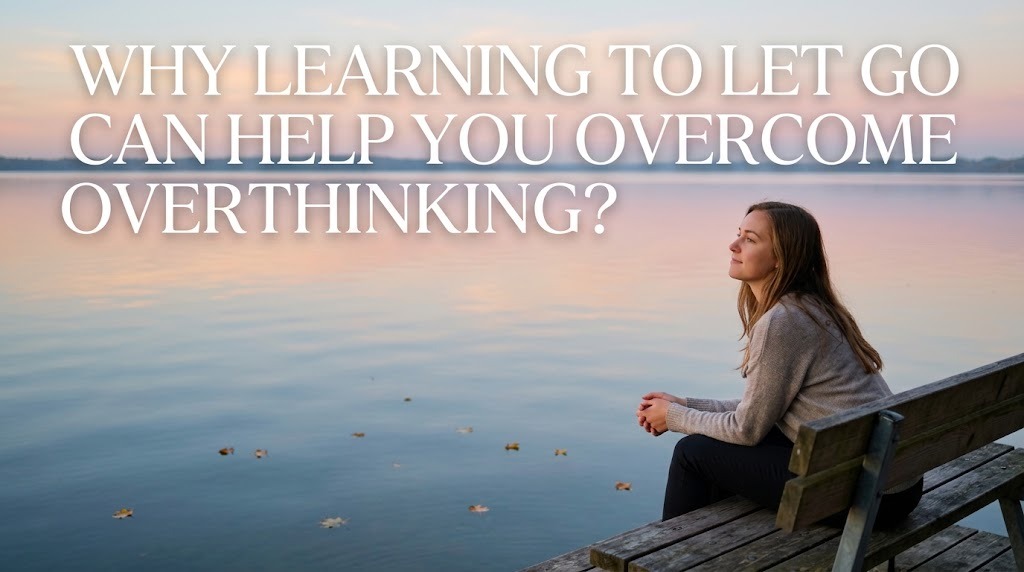
Overthinking can make simple situations feel much more complicated than they really are. A person may repeatedly analyze past events, worry about future possibilities, or imagine negative outcomes that may never happen. This habit can consume mental energy and make it difficult to enjoy the present moment. Learning to let go does not mean ignoring problems or avoiding responsibility. Instead, it means understanding what you can control, accepting what you cannot change, and giving your mind enough space to move forward.
UNDERSTANDING WHY LETTING GO MATTERS
Learning to let go is an important part of managing overthinking because many unnecessary thoughts come from trying to control uncertain situations. People may continue asking themselves what they should have said, what someone else thinks, or what might happen tomorrow. Although reflection can sometimes be useful, repeated thinking without action often creates more stress instead of solving the problem. Letting go helps break this pattern by encouraging people to focus on realistic actions rather than endless possibilities. It also creates a healthier distance between a person and their thoughts.
Letting go does not mean that a person suddenly stops caring about something. It means accepting that some situations cannot be changed through additional thinking. For example, a past mistake cannot be rewritten, but its lesson can still be used to make better choices. Acceptance can reduce the emotional pressure associated with events that are already outside personal control. Over time, this approach can make thoughts feel less overwhelming. A calmer mind is usually better able to recognize practical solutions.
ACCEPTING WHAT YOU CANNOT CONTROL
One major reason people overthink is the desire to have certainty about everything. Unfortunately, life contains many situations that cannot be predicted or controlled. Other people's opinions, unexpected changes, future outcomes, and past events are examples of things that often remain outside personal control. Trying to control these factors through constant analysis can increase mental stress. Recognizing this limitation is an important step toward developing a more balanced way of thinking.
A useful approach is to separate situations into two categories: things you can control and things you cannot control. Your actions, preparation, communication, and daily choices are generally within your control. Meanwhile, other people's reactions or events that have already happened may not be. When a concern appears, ask yourself whether there is a practical action you can take. If there is, focus on that action, and if there is not, practice acceptance instead of continuing the same thought repeatedly.
STOPPING THE HABIT OF REPLAYING THE PAST
Overthinking often involves repeatedly replaying past conversations, mistakes, or uncomfortable experiences. A person may wonder whether they made the right decision or imagine how things could have gone differently. While reviewing an experience can provide useful lessons, repeating the same analysis without a new purpose can become emotionally exhausting. The goal should be to learn from the past without allowing it to control the present. This is where healthy reflection becomes different from overthinking.
When remembering a difficult event, try identifying one clear lesson from it. After finding the lesson, consider what can be done differently in the future and then allow the situation to remain in the past. Writing thoughts in a journal can also help organize emotions and prevent them from continuously circulating in the mind. Instead of asking what you should have done differently forever, ask what you can do better next time. This simple shift can gradually reduce negative thinking and create more emotional space.
FOCUSING ON THE PRESENT MOMENT
Another effective way to let go is to return attention to the present. Overthinking often moves the mind backward toward past mistakes or forward toward imagined problems. Focusing on what is happening now can interrupt this mental cycle and make thoughts easier to manage. Simple activities such as walking, exercising, listening to music, or having a meaningful conversation can bring attention back to the current experience. These activities do not necessarily remove problems, but they can provide the mind with a healthy pause.
Practicing mindfulness can also support this process. Mindfulness involves noticing thoughts and feelings without immediately judging or reacting to them. When an unwanted thought appears, you can acknowledge it and then gently return your attention to what you are doing. Breathing slowly for a few moments may also help create a sense of calm. With regular practice, people can become better at observing thoughts without automatically following every thought that enters their mind.
BUILDING A HEALTHIER WAY OF THINKING
Letting go becomes easier when it is supported by healthier thinking habits. Instead of assuming the worst possible outcome, try considering several realistic possibilities. Avoid treating every thought as a fact because thoughts can be influenced by emotions, fears, and previous experiences. Asking whether a concern is based on evidence can help create a more balanced perspective. It is also useful to replace unrealistic expectations of perfection with self compassion and realistic standards.
Small daily habits can strengthen this healthier mindset. Getting enough sleep, staying physically active, maintaining social connections, and taking regular breaks can support emotional balance. Setting aside a specific time to think about a problem may also prevent worries from taking over the entire day. If a concern requires action, create a simple plan and take one step at a time. These habits can gradually reduce the tendency to become trapped in repetitive thoughts.
LEARNING TO MOVE FORWARD
Learning to let go is not about becoming careless or pretending that difficult experiences do not matter. It is about choosing where to place your attention and energy. Some situations require action, while others require acceptance because they cannot be changed. Understanding this difference can help people stop spending valuable mental energy on questions that have no useful answer. Moving forward becomes possible when the mind is no longer constantly tied to what has already happened.
Overcoming overthinking is usually a gradual process rather than an immediate change. There may still be moments when worries return, especially during stressful periods or major life changes. When that happens, remember to pause, identify what is within your control, and release what is not. If overthinking becomes persistent and seriously interferes with daily life, professional support from a qualified mental health professional may also be appropriate.
CONCLUSION
Learning to let go can be a powerful way to reduce overthinking and create a calmer mental environment. By accepting what cannot be controlled, learning from the past, staying present, and developing healthier thinking habits, people can gradually break repetitive thought patterns. Letting go does not mean giving up; it means recognizing when continued thinking is no longer helpful. With consistent practice, the mind can become more focused, flexible, and peaceful. Ultimately, letting go allows people to spend more energy on the present and the possibilities that still remain.
About the Author
Gusti Ayu Tita P
Author — STEKOM University
An active author focused on academic issues, educational technology, and human resource development in the campus environment.















