Why Peaceful Protests Matter in a Democratic Society?
Gusti Ayu Tita P
10 Juli 2026
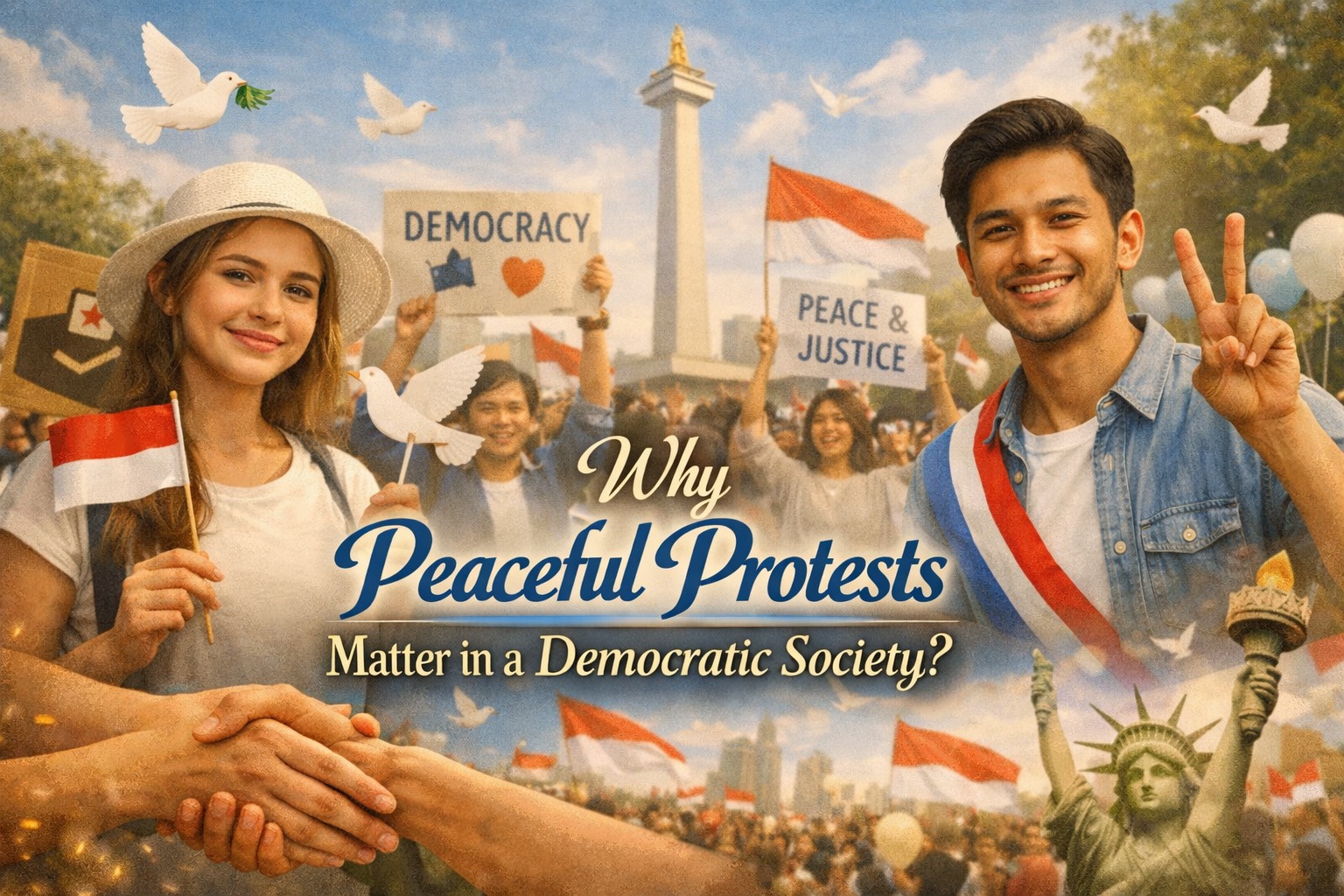
Peaceful protests are one of the most important ways for people to express their opinions in a democratic society. They give citizens the opportunity to raise concerns, demand justice, and encourage governments to address public issues without using violence. Throughout history, many meaningful social and political changes have started with peaceful demonstrations led by ordinary people. These actions show that citizens have the right to participate in shaping the future of their communities. Understanding why peaceful protests matter helps everyone appreciate the value of democracy, freedom, and responsible civic engagement.
THE MEANING OF PEACEFUL PROTESTS
A peaceful protest is a public demonstration where participants express their opinions without causing violence or damaging property. People may gather in streets, parks, or public spaces while carrying signs, giving speeches, or marching together. The primary purpose is to communicate a message clearly while respecting the rights and safety of others. Peaceful protests are considered a legitimate form of freedom of expression in many democratic countries. They provide a lawful way for citizens to voice concerns about political, economic, environmental, or social issues.
Unlike violent actions, peaceful demonstrations encourage dialogue instead of conflict. They allow different groups to present their perspectives while maintaining public order. Organizers often cooperate with local authorities to ensure the event remains safe and organized. This approach helps build public trust and increases the likelihood that important issues will receive attention. As a result, peaceful protests become an essential part of healthy democratic participation.
HOW PEACEFUL PROTESTS STRENGTHEN DEMOCRACY
Democracy depends on the active participation of its citizens. Peaceful protests allow people to communicate directly with leaders when they believe changes are necessary. By gathering together peacefully, citizens demonstrate that public opinion deserves to be heard and considered in decision-making processes. This strengthens accountability because governments become more aware of the concerns affecting their communities. Public participation also encourages greater transparency and responsiveness.
Peaceful demonstrations create opportunities for discussion between governments, organizations, and citizens. They remind elected officials that democracy involves listening as well as leading. Even when immediate changes do not occur, protests often raise public awareness and encourage future policy improvements. They inspire more people to become informed about important issues and participate responsibly in civic life. In this way, peaceful protests help democracy remain active, inclusive, and representative.
THE POSITIVE IMPACT OF PEACEFUL PROTESTS ON SOCIETY
Many significant social improvements have resulted from peaceful civic movements. Peaceful protests have helped promote equal rights, improve working conditions, protect the environment, and encourage legal reforms in various countries. These demonstrations often bring overlooked issues into public discussion, encouraging media coverage and broader community awareness. Increased attention can motivate institutions to review existing policies and consider meaningful improvements. As more people understand the issues, public support for positive change often grows.
Peaceful protests also strengthen community solidarity. Individuals from different backgrounds can unite around shared goals while respecting each other's differences. Working together peacefully builds cooperation, empathy, and mutual understanding among participants. These experiences encourage responsible citizenship and inspire future generations to solve challenges through dialogue rather than confrontation. Society benefits when disagreements are addressed constructively instead of violently.
THE RESPONSIBILITIES OF PEACEFUL PROTEST PARTICIPANTS
Every participant has an important role in maintaining a peaceful demonstration. Protesters should respect the law, follow agreed routes when required, and avoid actions that could endanger others. They should communicate respectfully, even when expressing strong disagreements with government policies or public decisions. Responsible behavior helps protect both participants and the wider community. Maintaining discipline also increases the credibility of the protest's message.
Organizers share responsibility for ensuring safety and order throughout the event. They often provide guidance, coordinate with authorities, and encourage participants to remain calm if tensions arise. Peaceful communication reduces misunderstandings and helps prevent unnecessary conflict. Respecting public property and the rights of others demonstrates that meaningful change can be pursued responsibly. These actions reinforce the positive image of peaceful civic participation.
WHY PEACEFUL PROTESTS REMAIN ESSENTIAL TODAY
Modern societies continue to face challenges such as climate change, economic inequality, education, healthcare, and human rights concerns. Peaceful protests give citizens an effective way to encourage discussion and advocate for practical solutions. Digital technology has also expanded the reach of peaceful movements by allowing information to spread quickly across communities and countries. Online platforms help organize events, educate the public, and connect people with shared concerns. However, responsible online communication remains just as important as peaceful behavior during public demonstrations.
As democracies continue to evolve, peaceful protests remain a powerful symbol of public participation and civic responsibility. They remind governments that citizens have valuable perspectives and deserve opportunities to contribute to public policy discussions. Respectful demonstrations promote dialogue instead of division and cooperation instead of hostility. By supporting peaceful participation, democratic societies become more resilient, transparent, and responsive to the needs of their people. Ultimately, peaceful protests help protect the principles of freedom, justice, and democratic values for future generations.
About the Author
Gusti Ayu Tita P
Author — STEKOM University
An active author focused on academic issues, educational technology, and human resource development in the campus environment.