Why Should Residents Participate in Neighborhood Watch Activities?
Gusti Ayu Tita P
18 September 2026
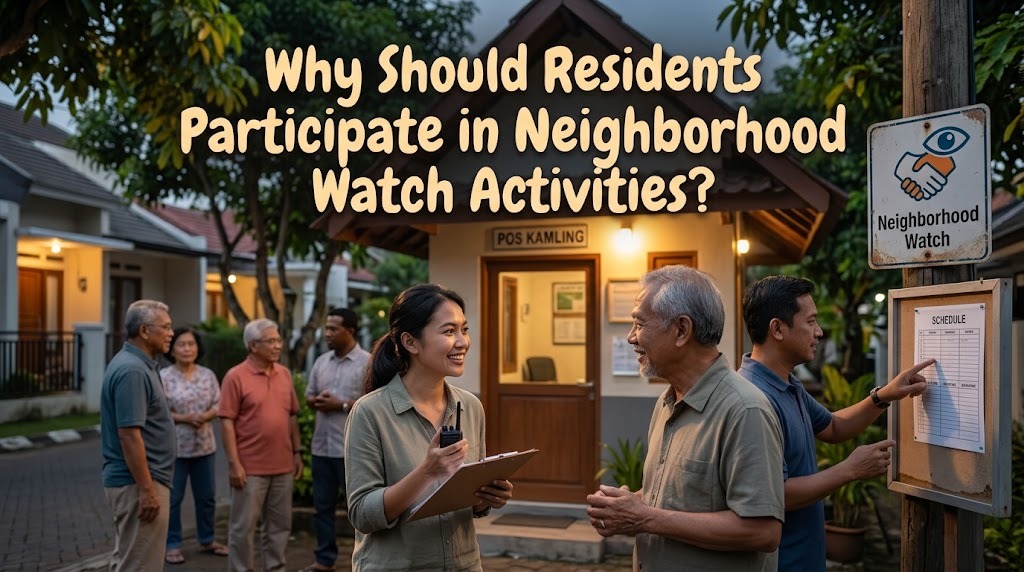
Community safety depends not only on law enforcement but also on the active participation of residents. Neighborhood watch activities provide a practical way for people to work together, observe their surroundings, and respond responsibly to potential safety concerns. When residents communicate regularly, they can become more aware of unusual situations and understand how to report problems appropriately. Participation can also create stronger relationships among neighbors, making the community more connected and prepared. For these reasons, neighborhood watch activities can become an important part of maintaining a safe and comfortable environment.
BUILDING COMMUNITY AWARENESS
One important reason residents should participate in neighborhood watch activities is to improve community awareness. Residents who regularly interact with their neighbors are more likely to notice changes or unusual situations in the surrounding area. This does not mean residents should investigate suspicious situations themselves, but they can remain alert and report concerns through appropriate channels. Shared awareness can help communities respond more quickly when problems occur. It also encourages people to understand that safety is a shared responsibility rather than the duty of one person.
Neighborhood watch participation can also improve communication between residents. Regular meetings and patrol schedules give neighbors opportunities to exchange useful information about local safety concerns. Clear communication can prevent misunderstandings and help residents coordinate their actions during emergencies. When information is shared responsibly, people can make better decisions without creating unnecessary fear. Over time, this communication can contribute to a more aware and prepared community.
STRENGTHENING RELATIONSHIPS BETWEEN NEIGHBORS
Neighborhood watch activities can encourage residents to develop stronger social connections. People who participate in patrols, meetings, or community discussions have more opportunities to know the people living around them. Familiarity can make it easier for neighbors to communicate when assistance is needed. Strong relationships can also encourage residents to care about the safety and well-being of others. A community with good social connections may be better prepared to cooperate when facing unexpected situations.
Participation also helps create a sense of trust and cooperation. Residents can divide responsibilities according to their availability, ensuring that safety activities do not become the responsibility of only a few individuals. Working together can reduce misunderstandings and make community programs easier to maintain. Young people, adults, and older residents can contribute in different ways according to their abilities. This collaborative approach makes neighborhood watch activities more inclusive and sustainable.
HELPING PREVENT POTENTIAL SECURITY PROBLEMS
Resident participation can support crime prevention efforts by increasing the presence of responsible community members in the neighborhood. Regular observation can make residents more aware of changes in their surroundings and encourage them to report concerning situations. However, neighborhood watch members should not act as law enforcement officers or confront suspected offenders. Their role is primarily to observe, communicate, and report through appropriate authorities when necessary. This approach allows residents to contribute to safety while reducing unnecessary risks.
A consistent neighborhood watch system can also help identify recurring safety concerns. For example, residents may notice poorly lit areas, damaged public facilities, or locations where unusual incidents frequently occur. These observations can be discussed with community leaders or relevant authorities so that practical improvements can be considered. Better lighting, improved communication, or increased awareness may help address certain vulnerabilities. Therefore, participation can contribute to preventive community safety without encouraging residents to take dangerous actions.
ENCOURAGING QUICKER COMMUNITY RESPONSE
Residents who participate in neighborhood watch activities can become more familiar with emergency procedures. They may learn how to contact emergency services, communicate important information, and assist vulnerable neighbors when appropriate. Having people who understand basic procedures can make a community more organized during unexpected events. This preparation is useful not only for security incidents but also for situations such as fires, natural disasters, or medical emergencies. A prepared community can respond more calmly because residents already understand their basic responsibilities.
Neighborhood watch activities can also establish clearer communication channels. Residents can know whom to contact when they observe a problem and how information should be passed to community leaders. This reduces the possibility of important information being delayed or misunderstood. Technology such as messaging groups can support communication, although information should be verified before being shared widely. Responsible communication is essential because inaccurate reports can create unnecessary panic or conflict.
DEVELOPING A CULTURE OF SHARED RESPONSIBILITY
Participating in neighborhood watch activities teaches residents that community safety requires cooperation. A safe environment cannot depend entirely on security personnel because residents are the people who live in the area every day. By taking part in appropriate activities, residents can contribute their time, attention, and ideas to improve local conditions. Even simple actions, such as attending meetings or reporting damaged street lighting, can support broader safety efforts. This creates a culture in which residents are more willing to help one another.
Shared responsibility does not mean that every resident must participate in patrols every night. Communities can create flexible schedules and provide different ways to contribute based on residents' abilities and availability. Some people may help with communication, while others may participate in meetings or maintenance activities. This flexibility can encourage broader participation and prevent volunteers from becoming overwhelmed. When responsibilities are distributed fairly, neighborhood watch programs are more likely to remain active over time.
CONCLUSION
Residents should participate in neighborhood watch activities because their involvement can support community awareness, cooperation, communication, and prevention. Active participation allows neighbors to understand local safety concerns and coordinate responsible responses when problems arise. It can also strengthen relationships and create a stronger sense of shared responsibility. At the same time, residents should remember that neighborhood watch members are not substitutes for professional law enforcement and should avoid confronting suspected offenders. With consistent participation and responsible communication, neighborhood watch activities can contribute to a safer, more connected, and more prepared community.
About the Author
Gusti Ayu Tita P
Author — STEKOM University
An active author focused on academic issues, educational technology, and human resource development in the campus environment.