Why Should Students Participate in LDKS at School?
Gusti Ayu Tita P
19 September 2026
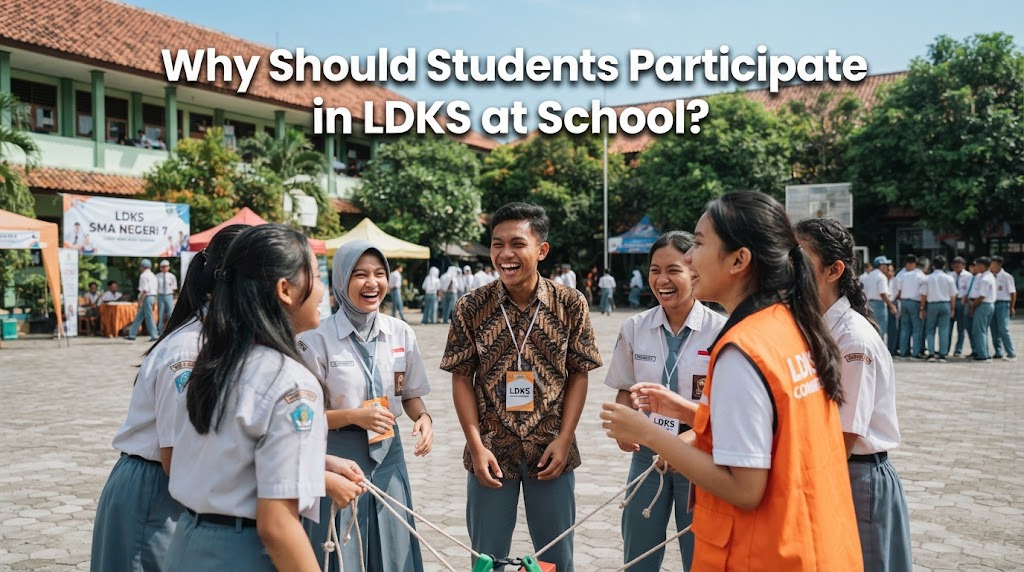
LDKS, or Student Leadership Training, is a school activity designed to help students develop leadership skills, discipline, responsibility, and teamwork. This program usually includes activities that encourage students to communicate, solve problems, make decisions, and work with others. For many students, LDKS provides valuable experiences that may not be fully learned through regular classroom lessons. Student leadership training can also help students become more confident when facing different situations at school and in daily life.
WHAT IS LDKS AND WHY IS IT IMPORTANT FOR STUDENTS?
LDKS is a training program that introduces students to the basic principles of leadership development. The activities can include group discussions, teamwork exercises, presentations, problem-solving tasks, and other educational activities. Students are encouraged to understand how a good leader should communicate, cooperate, and take responsibility. The program is important because leadership is not only about giving instructions but also about listening, helping others, and making responsible decisions.
Through LDKS, students can gain practical experience in working with different personalities and opinions. They may also learn how to manage challenges without immediately giving up. These experiences can support students in becoming more independent and responsible. Therefore, LDKS can become an important part of student character development at school.
HOW DOES LDKS IMPROVE STUDENT LEADERSHIP SKILLS?
One of the main purposes of LDKS is to improve leadership skills among students. During the program, students may receive tasks that require them to organize activities, divide responsibilities, and make decisions with their teams. These activities teach students that leadership requires responsibility, communication, and cooperation. Students can also learn to consider different ideas before choosing a solution.
LDKS also gives students opportunities to practice leadership directly instead of only learning its theory. They may experience situations that require them to stay calm, communicate clearly, and complete tasks within a specific time. Such experiences can help students understand their strengths and areas that still need improvement. Over time, these lessons can support better leadership behavior in school organizations and group activities.
WHY CAN LDKS BUILD STUDENT CONFIDENCE?
Participating in LDKS can help students develop self-confidence through various individual and group activities. Students may be asked to speak in front of others, share opinions, lead discussions, or present the results of teamwork. These activities encourage students to express their thoughts more clearly. Repeated practice can make students more comfortable when communicating in front of classmates and teachers.
Confidence is also developed when students successfully complete challenging tasks. Even when they make mistakes, they can learn that mistakes are part of the learning process. Support from teammates and instructors can create a positive environment where students feel encouraged to participate. As a result, student confidence can grow through experience and active participation.
HOW DOES LDKS TEACH DISCIPLINE AND RESPONSIBILITY?
Discipline and responsibility are important parts of LDKS activities. Students usually need to follow schedules, rules, instructions, and agreements during the training. They also have responsibilities within their groups, such as completing assignments or helping organize activities. These habits teach students that every responsibility has an impact on the people around them.
LDKS can also introduce students to the importance of time management. Completing tasks on schedule requires students to organize their priorities and use their time effectively. Students learn that being responsible means not only finishing their own work but also contributing to the success of the team. These lessons can be applied to academic activities, school organizations, and everyday situations.
HOW DOES LDKS DEVELOP TEAMWORK AND COMMUNICATION?
Teamwork is another important skill that students can develop through LDKS. Many activities require students to work in groups and cooperate to achieve a shared goal. They need to listen to different opinions, divide tasks, and support team members when difficulties occur. This helps students understand that successful teamwork depends on effective communication and mutual respect.
LDKS can also teach students how to handle differences within a group. Students may have different ideas, personalities, and ways of solving problems. Instead of ignoring these differences, they can learn to discuss them and find solutions together. These experiences can strengthen teamwork skills and prepare students to cooperate effectively in future educational and professional environments.
WHAT BENEFITS CAN STUDENTS GET FROM PARTICIPATING IN LDKS?
There are many potential benefits of LDKS for students, especially in personal and social development. Students can improve leadership, communication, teamwork, discipline, responsibility, confidence, and problem-solving abilities. The activities can also encourage students to become more active in school organizations and other positive activities. These skills are useful not only during school years but also when students continue their education or enter the workplace.
LDKS can also help students discover abilities that they may not have recognized before. A student who is usually quiet, for example, may discover that they can lead a discussion or coordinate a group effectively. The experience can encourage students to become more willing to take positive challenges. In this way, LDKS can support student development through practical and meaningful experiences.
CONCLUSION
Participating in LDKS can provide students with valuable opportunities to develop leadership, confidence, discipline, responsibility, communication, and teamwork skills. The activities allow students to practice these abilities through real situations rather than learning only from classroom explanations. LDKS can also encourage students to become more independent and active in school activities. With consistent practice, the skills gained from LDKS can become useful for education, relationships, and future careers.
For these reasons, students can view LDKS as more than just a school program. It can be a learning experience that helps them understand their abilities, responsibilities, and role within a team. Active participation can make the experience more meaningful and give students practical lessons that can be used in many aspects of life.
About the Author
Gusti Ayu Tita P
Author — STEKOM University
An active author focused on academic issues, educational technology, and human resource development in the campus environment.