
Why Should Young People Learn About and Preserve Historic Tombs?
Gusti Ayu Tita P
4 September 2026
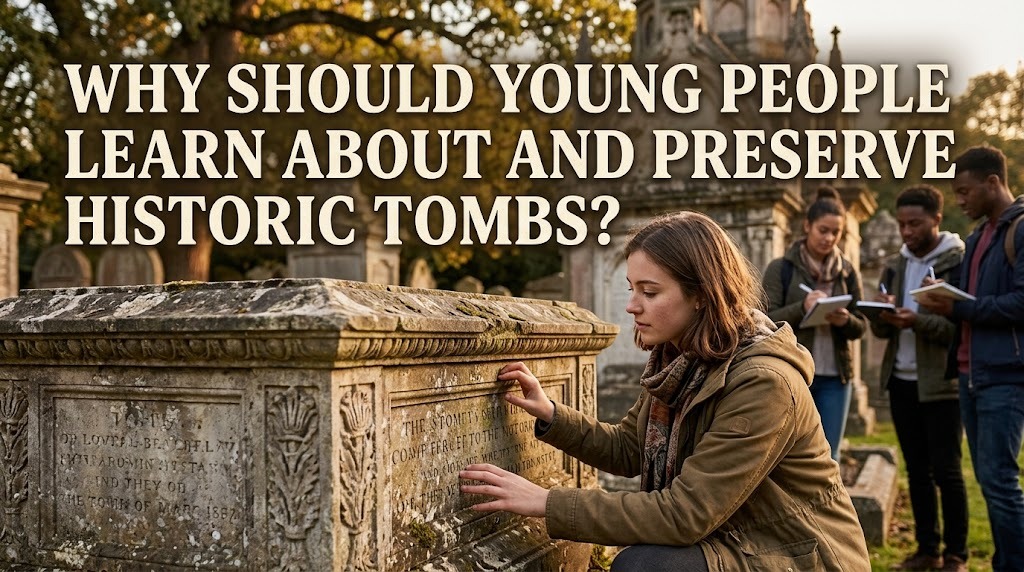
Historic tombs are important parts of cultural heritage that can help young people understand the past. They contain information about historical figures, communities, traditions, architecture, beliefs, and burial practices. Unfortunately, many historic sites face risks from neglect, environmental changes, development, and inappropriate human activities. Young people can play an important role in protecting these places through education, responsible visits, documentation, and community activities. Learning about historic tombs is therefore not only about understanding history but also about developing a sense of responsibility toward cultural heritage.
HISTORIC TOMBS PROVIDE REAL HISTORICAL EVIDENCE
Historic tombs can provide physical evidence that helps people understand events and societies from the past. Inscriptions, tombstones, architectural features, and surrounding structures may contain valuable historical information. Researchers can study these elements together with written records and other sources to develop a better understanding of history. For young people, visiting or learning about these sites can make historical subjects more concrete and easier to understand. Instead of seeing history only through textbooks, students can recognize that historical evidence can still exist in real locations.
Historic tombs can also reveal information about individuals and communities. The design of a tomb may reflect social status, cultural traditions, religious practices, or artistic influences. Materials used in construction can provide clues about technology and resources available during a particular period. Studying these details encourages young people to observe historical evidence carefully. This approach can develop historical thinking and critical analysis skills.
HISTORIC TOMBS STRENGTHEN CULTURAL IDENTITY
Cultural heritage plays an important role in connecting people with their communities and historical backgrounds. Historic tombs can represent the stories and traditions of people who lived in earlier periods. Learning about these places can help young people understand how their local communities developed over time. This knowledge can create greater appreciation for cultural diversity and historical identity. It can also encourage young people to become more interested in local history.
Understanding cultural identity does not mean simply accepting every historical story without examination. Young people should learn to compare information from reliable sources and recognize different perspectives. This can help them develop a balanced understanding of heritage. Respectful learning can strengthen appreciation without creating unnecessary misunderstandings about the past. Cultural awareness and historical knowledge can become valuable foundations for responsible citizenship.
EDUCATION MAKES HERITAGE PRESERVATION MORE MEANINGFUL
Education is one of the most effective ways to introduce young people to the importance of historic tombs. Schools can include local heritage topics in history, social studies, art, geography, or project-based learning activities. Teachers can use photographs, historical documents, maps, interviews, and site visits to make lessons more engaging. Students can also create presentations or research projects about nearby historic locations. These activities allow young people to learn while actively exploring historical information.
Digital education can provide additional opportunities for heritage learning. Students can use online archives, digital maps, virtual tours, and historical databases to explore sites that they cannot visit directly. Technology can also help them organize research and create educational content. However, digital information should be checked against reliable sources before being used. Combining traditional education with digital learning can make historic tombs more accessible to younger audiences.
YOUNG PEOPLE CAN SUPPORT RESPONSIBLE PRESERVATION
Young people can contribute to heritage preservation through simple but meaningful actions. They can follow site regulations, avoid touching fragile structures, dispose of waste properly, and respect local customs when visiting historic tombs. They can also encourage friends and family members to treat heritage locations responsibly. Small actions can help reduce damage caused by inappropriate tourism or careless behavior. Responsible visits demonstrate that cultural heritage belongs to the wider community and deserves protection.
Young people can also participate in preservation programs organized by schools, communities, museums, or heritage organizations. Activities may include educational campaigns, documentation projects, clean-up programs, cultural events, or public awareness projects. Participation gives young people practical experience while helping them understand preservation challenges. It can also introduce them to possible careers related to history, archaeology, museums, and conservation. Active participation can turn historical knowledge into real contributions.
DIGITAL TECHNOLOGY CAN CONNECT YOUTH WITH HERITAGE
Digital technology provides new ways for young people to learn and share information about historic tombs. Photography, video, digital mapping, three-dimensional documentation, and online storytelling can make heritage information easier to access. Young people who are familiar with digital media can use these skills for educational projects. They can create informative content that introduces historical sites to wider audiences. When used responsibly, digital platforms can increase public interest in cultural heritage.
However, digital content about historic sites should be created carefully. Information should come from reliable sources, and photographs or recordings should respect site rules and local customs. Young creators should avoid spreading unsupported claims simply because they appear interesting online. They should also avoid presenting sacred or sensitive locations as entertainment without appropriate context. Responsible digital communication can help protect the reputation and meaning of historic heritage.
PRESERVING HISTORIC TOMBS FOR FUTURE GENERATIONS
Preserving historic tombs is a long-term responsibility that requires cooperation between communities, heritage professionals, governments, educational institutions, and younger generations. Young people who understand the value of historic sites are more likely to support preservation efforts in the future. Their involvement can provide fresh ideas for education, technology, documentation, and public engagement. They can also become future researchers, archaeologists, conservators, teachers, museum professionals, and heritage managers. This makes youth education an important part of long-term heritage protection.
Preservation is not only about maintaining old buildings or physical structures. It is also about protecting the historical information, cultural meaning, and community memories connected to a site. Young people can help ensure that these values are not forgotten as society changes. By learning about historic tombs today, they can develop the knowledge and skills needed to protect them tomorrow. Future generations will benefit when heritage is preserved with care, respect, and informed participation.
CONCLUSION
Young people should learn about and preserve historic tombs because these sites contain valuable evidence about history, culture, architecture, and community traditions. Education can help them understand the importance of heritage while responsible activities can encourage practical involvement. Digital technology also provides new ways to document and share historical information. Most importantly, young people can become an important part of long-term preservation efforts. By developing historical awareness, cultural respect, and preservation skills, they can help ensure that historic tombs remain meaningful sources of knowledge for future generations.
About the Author
Gusti Ayu Tita P
Author — STEKOM University
An active author focused on academic issues, educational technology, and human resource development in the campus environment.